- The U.S. has reached a landmark nuclear deal with Saudi Arabia, which includes provisions for the kingdom to potentially enrich uranium domestically.
- President Trump stated that the nuclear deal is contingent upon Saudi Arabia joining the Abraham Accords to normalize relations with Israel.
- White House press secretary Karoline Leavitt confirmed that the deal with Saudi Arabia is now contingent on joining the Abraham Accords, emphasizing ongoing discussions with Saudi officials.
- The Saudi kingdom has long insisted it will not normalize relations with Israel without a clear pathway to establish a Palestinian state.
- Israeli Prime Minister Benjamin Netanyahu welcomed Trump's condition for Saudi Arabia to join the accords, which would establish relations with Israel.
- The deal still requires review by the U.S. Congress, which could oppose it due to concerns about potential nuclear arms race implications.
- The nuclear agreement allows Saudi Arabia to enrich uranium and build nuclear reactors using U.S. technology, which has raised concerns about nuclear proliferation.
- Nonproliferation experts have criticized the deal for lacking sufficient safeguards to prevent uranium enrichment to weapons-grade levels.
- Saudi Arabia's longstanding position has been that it would not sign the Abraham Accords unless there was an agreement on a roadmap to Palestinian statehood.
President Trump stated that the proposed civil nuclear deal with Saudi Arabia is contingent on the kingdom joining the Abraham Accords to normalize relations with Israel.2
“The Civil Nuclear Deal... will be approved, but is totally subject to Saudi Arabia joining the very respected and successful Abraham Accords,” Trump wrote on Truth Social.
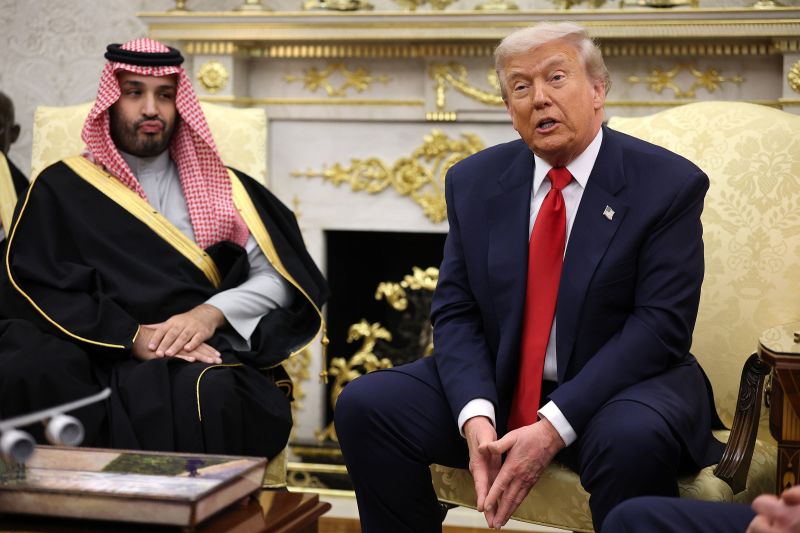
The deal, which aims to establish a decades-long partnership, has raised alarms regarding nuclear proliferation, particularly concerning Saudi Arabia's potential to enrich uranium domestically.

“There will be no enrichment of material!” Trump asserted, despite reports suggesting otherwise.
White House press secretary Karoline Leavitt emphasized that the administration will continue discussions with Saudi officials, while Israeli Prime Minister Benjamin Netanyahu welcomed the condition.35
However, Saudi Arabia has maintained that it will not normalize relations without a clear pathway to Palestinian statehood.
“In the fallout of the Israeli war in Gaza... Saudi Arabia has maintained that it will not normalize relations without Israel agreeing to a pathway for Palestinian statehood,” noted reports.
Critics argue that the deal could spark a nuclear arms race in the region, especially if it allows for domestic uranium enrichment.

“Nonproliferation experts have raised concerns that the deal fails to include guardrails to prevent enrichment of uranium to weapons-grade levels,” they warned.8
The agreement must pass through Congress before it can be finalized, and its implications for regional stability remain uncertain.
“The deal reportedly allows Saudi Arabia to enrich uranium domestically, raising nonproliferation concerns and fears of a regional arms race. Iran warned it would have 'more freedom of action' if an arms race takes hold, while Saudi Crown Prince Mohammed bin Salman previously said the kingdom would seek a nuclear bomb if Iran develops one.”



 NPR
NPR



