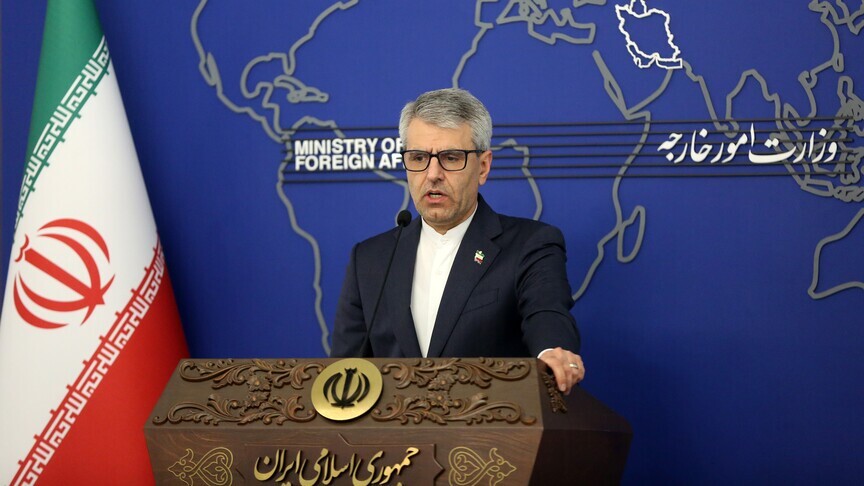
- Iran said on Monday it was still in control of the Strait of Hormuz and not seeking to resume peace talks with the United States, after President Donald Trump halted a two-week bombing campaign.
- Esmaeil Baqaei stated, "We will not allow the United States to determine the time of peace and war," according to the semi-official Mehr news agency.
- Trump halted the bombing campaign over the weekend following 13 nights of intensifying bombing that provoked Tehran to fire on U.S. bases.
- Iran stated it would maintain control of the strait for as long as the U.S. pause in bombing endures.
- Mike Waltz, the U.S. ambassador to the United Nations, indicated that Trump paused the campaign to allow room for negotiations.
- Iranian state media reported that Iran turned back six 'offending ships' attempting to cross the strait without permission.
- Iran aims to formalise its control over the strait by reaching an agreement with Oman, which controls the opposite shore.
Iran's Foreign Ministry spokesman Esmaeil Baqaei emphasized that the U.S. will not dictate the timing of war or peace, asserting Iran's control over the Strait of Hormuz. This statement comes after a pause in U.S. military actions following a series of bombings and Iranian counter-responses.12347
Baquaei stated, "We will not allow the United States to determine the time of peace and war," during a press conference. He criticized the U.S. for being "stuck in a self-made quagmire after five months." The Iranian military spokesperson, Amir Mohammad Akraminia, noted that U.S. attacks had ceased over the previous two nights, coinciding with Iran's own cessation of "counter-operations."
The U.S. had been conducting a bombing campaign for nearly two weeks, which was halted by President Donald Trump after military advisors indicated it had run its course. The U.S. ambassador to the United Nations, Mike Waltz, suggested that the pause was intended to allow for negotiations. However, Baqaei clarified that Iran had not requested to resume peace talks with the U.S.5
Additionally, Iranian state media reported that Iran had turned around six ships attempting to cross the strait without permission, reinforcing its claim to control the vital waterway. Iran aims to formalize this control through an agreement with Oman, which governs the opposite shore of the strait.6
“Iran's Foreign Ministry spokesman Esmaeil Baqaei emphasized that the US is "stuck in a self-made quagmire after five months" of conflict. Meanwhile, Iranian military spokesperson Amir Mohammad Akraminia reported that US attacks had ceased, and Iran's counter-operations had also stopped, indicating a temporary pause in hostilities.”






