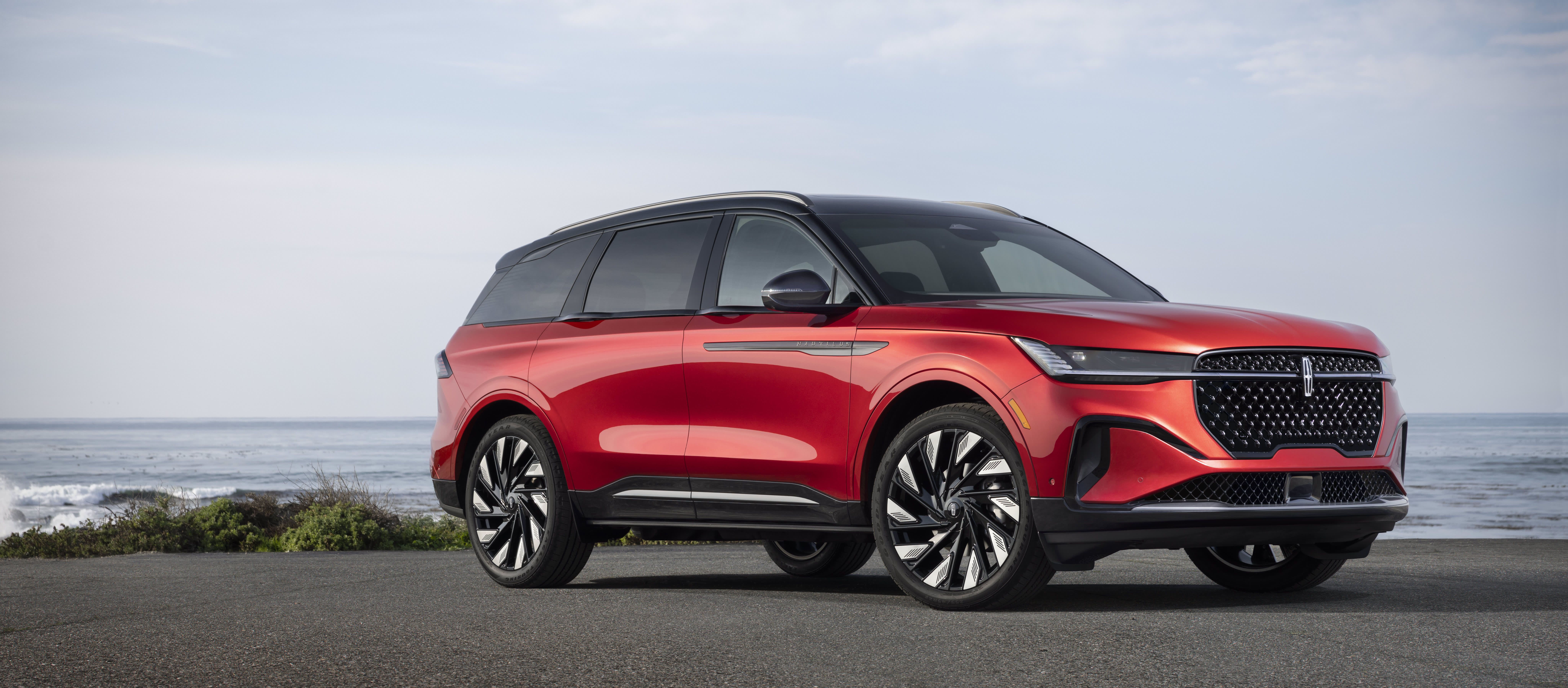
- Ford said Wednesday that it's increasing production of its Lincoln vehicles in the U.S. beginning in 2030.
- The company also said it is phasing out imports of the vehicles from China for the U.S. market, which it said will "further strengthen Ford's position as America's No. 1 auto producer."
- Ford CEO Jim Farley stated that the decision was made as soon as the administration's tariff policy was set, citing tariffs as the driving factor.
- Ford expects the increased production to generate "thousands of direct and indirect U.S. jobs."
- In 2023, Ford announced that its next-generation Lincoln Nautilus would be imported from China, marking the first time the brand was bringing a vehicle from China to the U.S.
- Ford currently builds the Lincoln Nautilus in Hangzhou, China, and the Lincoln Z in China through a joint venture.
Ford Motor Co. plans to shift Lincoln production from China to the U.S. starting in 2030, a move expected to create thousands of jobs. CEO Jim Farley stated, "Lincoln is a quintessentially American brand, and Ford is America's automaker." The decision comes amid rising tariffs on imported vehicles, which have significantly impacted costs for the automaker.1456
Currently, Ford assembles the Lincoln Nautilus in Hangzhou, China, and imports it to the U.S., where it sold about 34,000 Nautilus vehicles last year. The U.S. tariff on the Nautilus is a staggering 52.5%, prompting the company to reconsider its production strategy. Farley noted, "This wasn't necessarily the easiest path... But Ford builds in America because we believe in America, and we're betting on that belief again."
The shift will not only enhance Ford's manufacturing footprint but also strengthen its position as the leading U.S. automaker, having produced over 2 million vehicles in the U.S. last year. The company is also phasing out imports of Lincoln vehicles from China, which it claims will further solidify its status in the market. While specific production locations have not been disclosed, the move aligns with broader trends in the auto industry, as competitors like General Motors also shift production back to the U.S.2
As Ford navigates these changes, it aims to leverage domestic manufacturing advantages, with U.S. Commerce Secretary Howard Lutnick stating, "Ford's got an edge. Domestic manufacturing has an edge."
“The move comes as Ford faces a 52.5% tariff on the Lincoln Nautilus, its main import from China, which cost the company roughly $2 billion. Ford also assembles the Navigator in Louisville and Aviator in Chicago, and will continue exporting both to markets like Canada and Mexico.”
 cnbc.com