
- Meta said Wednesday it will invest more than $9.1 billion to build its first artificial intelligence data centre in Canada and its largest outside the United States.
- The facility will be built in Sturgeon County, Alberta, and powered by a natural gas-fired plant being developed by a consortium that includes Calgary-based Pembina Pipeline Ltd.
- Meta will invest $42 million in local infrastructure, including roads and water systems.
- The data centre is expected to create over 300 operational jobs.
- The 1-gigawatt data center will have the ability to scale up to 1.8 gigawatts, making it one of Meta's largest AI-focused infrastructure projects globally.
- The project represents an investment of C$ 13 billion (US$ 9.18 billion) and is part of Meta's strategy to support its expanding AI ambitions.
- Meta has committed to minimizing the environmental impact of its data centres, focusing on reducing environmental impact from design and construction through operations.
Meta Platforms is investing over C$13 billion to construct its first AI data center in Sturgeon County, Alberta, marking a significant expansion of its infrastructure outside the U.S. The facility will support AI workloads and is designed to consume electricity equivalent to 800,000 homes.2
The data center, which will create 300 operational jobs, is part of a broader strategy to enhance Meta's computing capacity amid the global AI boom. Technology and Innovation Minister Nate Glubish hailed the project as a major development for Alberta, emphasizing the province's regulatory framework aimed at attracting such investments.
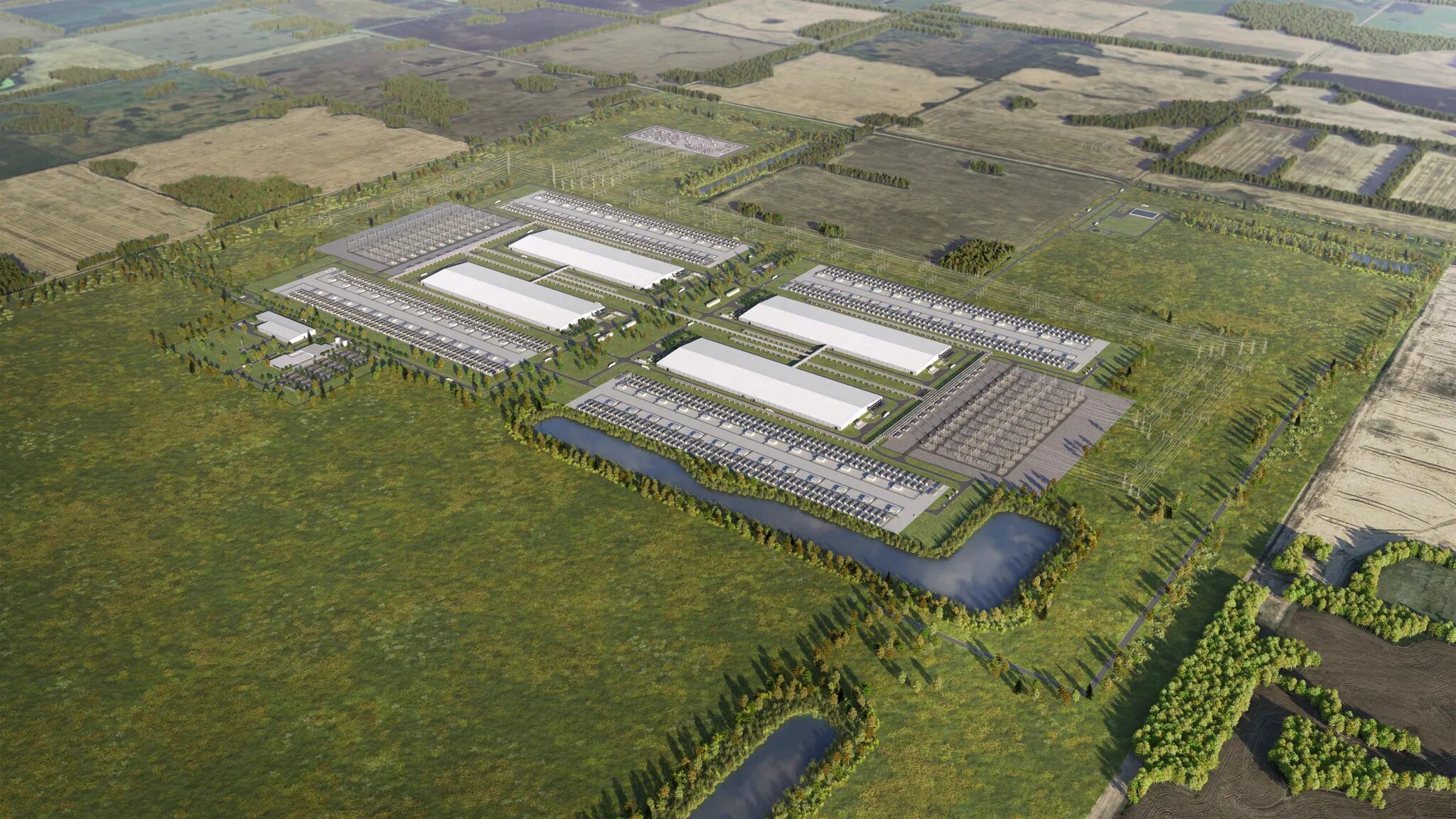
The facility will utilize a closed-loop cooling system and will be powered by a natural gas-fired plant developed in partnership with Pembina Pipeline. This plant is expected to begin operations in the second half of 2030 and will require approximately 150 million cubic feet of natural gas per day.
In addition to the data center, Meta plans to invest around C$60 million in local infrastructure improvements, including roads and water systems, further benefiting the community. The project is anticipated to support over 3,000 construction workers at its peak, showcasing the scale of this investment.
Meta's commitment to minimizing environmental impact includes paying full costs for energy use and aiming to become water positive by 2030. The project highlights Alberta's energy advantages and favorable business environment for technology firms, with Glubish noting that this is just the beginning of similar initiatives in the province.7
“The new data centre in Sturgeon County will have an initial capacity of 1 gigawatt, scalable to 1.8 gigawatts, and is expected to consume electricity equivalent to 800,000 homes. Alberta's Technology Minister Nate Glubish emphasized the project as a significant step for the province, which has created a regulatory framework to attract such investments.”
 Yahoo Finance
 AP News
 simplywall.st



