- Peeyush Sharma, founder of House of Creators, initially considered a menstrual leave policy three years ago but decided they couldn't afford it at the time after a lengthy discussion.
- Three years later, after the company had grown, several women employees raised the issue of menstrual leave again, leading to a formal proposal by colleague Nikita.
- Six months ago, the company introduced menstrual leave, allowing employees to take up to four days a year without needing to explain their absence.
- After a conversation with colleague Shruti, Peeyush Sharma shared employees' heartfelt reactions on LinkedIn, which went viral and earned widespread praise.
- Peeyush admitted that he was not fully satisfied with the policy, stating that four leaves a year were not enough and he had not shared it publicly before.
- Reflecting on the positive employee responses, Peeyush realized he had been focusing on what the policy lacked rather than its impact on those it was meant to support.
- One employee noted that in ten years of working across various companies, they had never seen a company offer this type of leave, highlighting its significance.
House of Creators, a Bengaluru startup, recently implemented a menstrual leave policy allowing employees to take up to four days off annually without needing to provide an explanation. This initiative, proposed by employee Nikita, was introduced after discussions among the founders and feedback from female employees.34
Founder Peeyush Sharma initially hesitated to adopt the policy due to operational costs when the company was in its infancy. However, after three years and a conversation with colleague Shruti, he recognized the importance of supporting women in the workplace. “If someone has a fever, we call it sickness and provide sick leave. But women dealing with severe menstrual pain often don’t get that same understanding,” he noted.1278
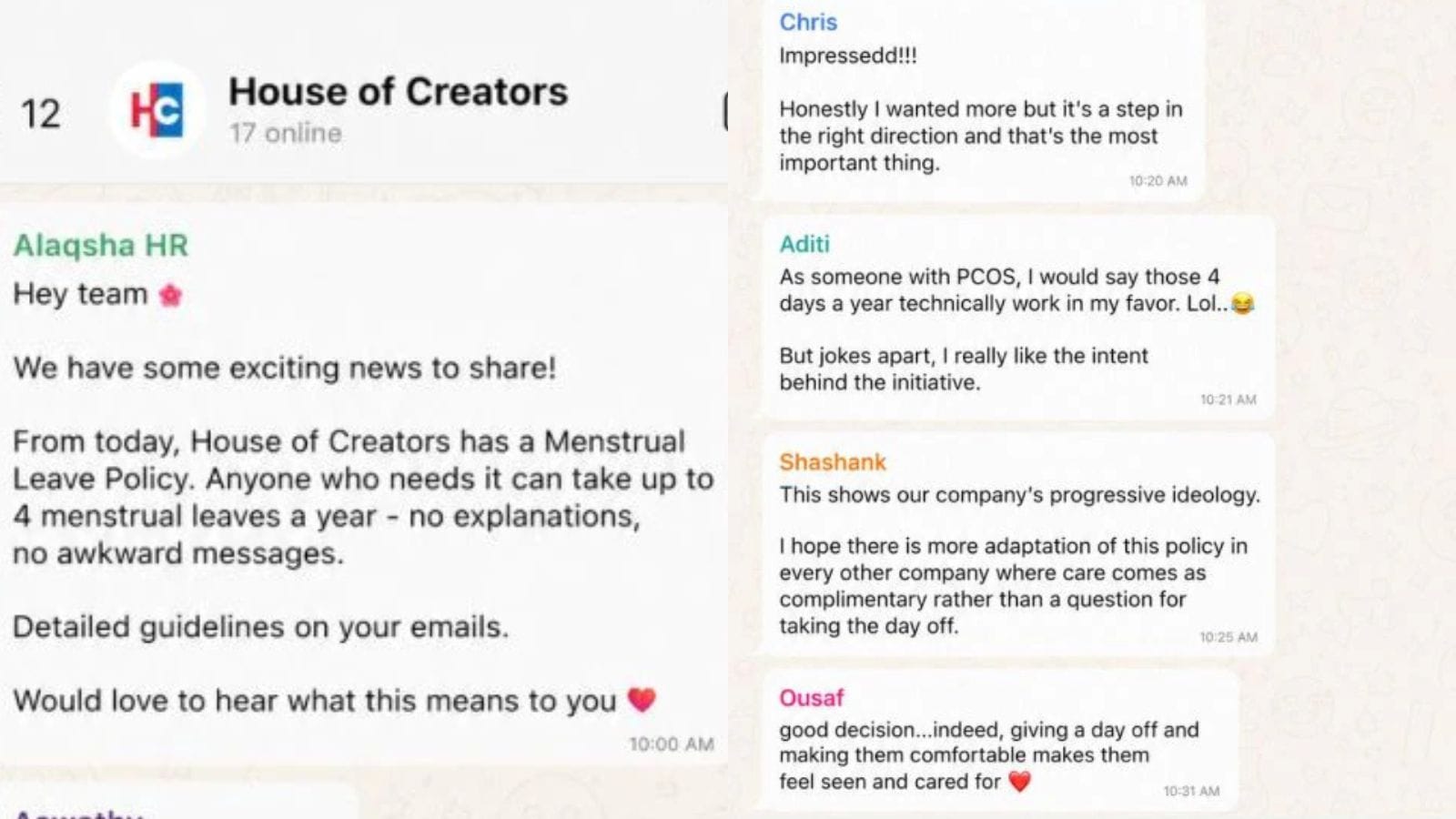
The policy has received an overwhelmingly positive response, with employees expressing gratitude for the initiative. One employee remarked, “In ten years of working across startups, Indian companies and multinational firms, I have never seen a company offer this type of leave.” Another stated, “While four days were not enough, the company deserves credit for introducing the policy and called it a great start.”11
Peeyush reflected on the feedback, stating, “I realized I’d been focusing on what this policy lacked instead of what it already meant to people.” He emphasized that even small policies can make employees feel seen and valued, marking a significant step towards women's empowerment in the workplace.
“Peeyush Sharma shelved the idea three years ago after a two-hour cost discussion; six months ago he introduced up to four menstrual leave days a year without explanation. One employee said they had never seen such leave in a decade across startups and multinationals, and another said four days were insufficient but a great start.”
 News18



