TNO Celebrates 60 Years of Space Innovation with Pioneering Contributions to Astronomy and Earth Observation
 1620+ Words Refined into 7 Facts by AI • 1 source • 0m ago
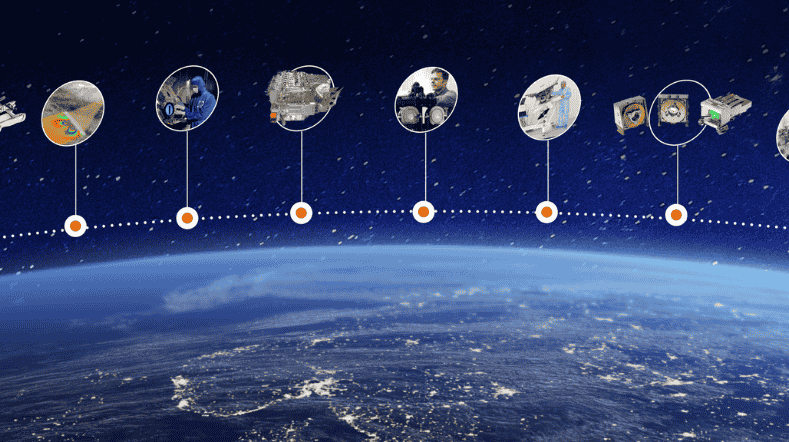
- This year marks the 60th anniversary of TNO’s first space instrument, the S59 spectrometer, which initiated TNO's significant contributions to space instrumentation. TNO has developed various technologies, including sun sensors and advanced Earth observation systems, shaping the future of space exploration and global communication.
- TNO's collaboration with the European space sector began in 1964 with the development of the S59 spectrophotometer, which was launched aboard the TD-1A satellite in 1972. This mission laid the foundation for TNO's future advancements in space research and instrumentation.
- Significant projects include the Cluster mission, which studied Earth’s magnetosphere, and the BepiColombo mission, launched in 2018 to explore Mercury. TNO's technology is crucial for precise orientation control in these missions, enhancing our understanding of planetary structures and solar phenomena.
- The Solar Orbiter mission, launched in 2020, aims to study the Sun's polar regions and magnetic activity, with TNO's contributions focusing on systems that withstand extreme environments. This mission is vital for understanding solar wind and its effects on Earth.
- TNO also plays a key role in the Gaia mission, launched in 2013, which maps over one billion stars in the Milky Way. TNO’s Silicon Carbide Basic Angle Monitoring system ensures the stability of Gaia's telescopes, providing unprecedented accuracy in measuring star positions.
- Looking ahead, TNO is involved in the LISA mission, scheduled for the 2030s, which aims to detect gravitational waves. TNO's expertise in high-precision systems is essential for the mission's success, promising new insights into cosmic events.
- TNO's advancements extend to ground-based astronomy, including the development of deformable mirrors for adaptive optics, enhancing the capabilities of Earth-based telescopes. This technology allows ground-based observatories to rival space-based ones, broadening astronomical research.
The sources of this summary are listed below. Click to view.
Condense into Facts