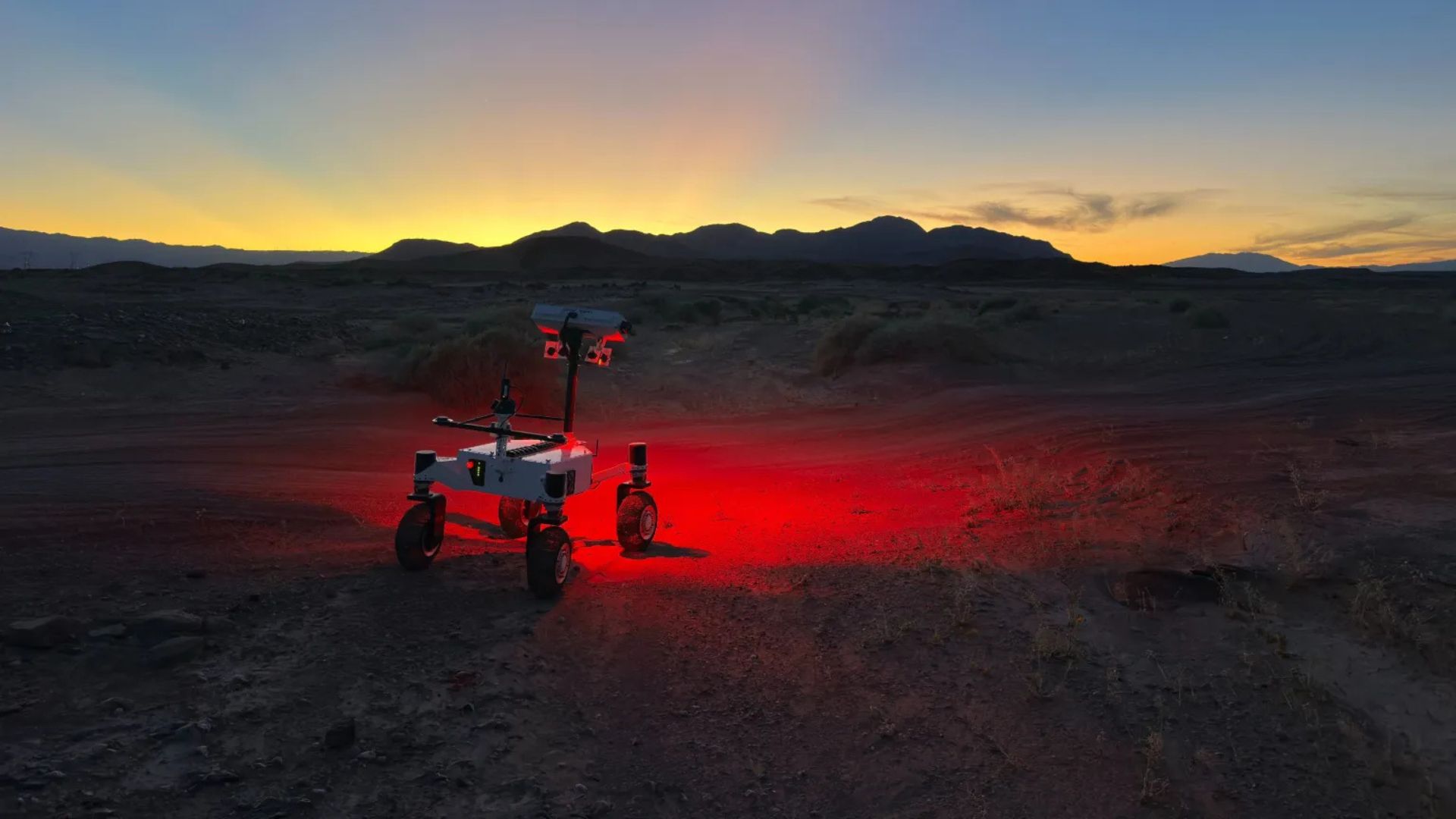
- NASA's ERNEST rover successfully navigated 16 miles in a desert field test, enhancing its capabilities for future lunar and Mars missions.
- The robotic rover traveled 16 miles over 37 hours with minimal human intervention, demonstrating significant advancements in mobility and autonomy.
- ERNEST was tested in the Colorado Desert, where it clocked speeds up to 0.6 mph (1 kph), which is significantly faster than current Mars rovers.
- The rover's testing is crucial for refining mobility hardware and autonomy software to navigate extreme distances and varied terrain expected on the Moon and Mars.
- Work on ERNEST began in 2022 with internal JPL financing, later receiving support from NASA’s Mars Exploration Program.
- ERNEST is designed to navigate steep slopes, having already tackled inclines of 35 degrees and obstacles nearly as tall as its wheels.
- The rover's active suspension technology allows it to maintain traction and stability across challenging terrains.
NASA's ERNEST rover, or Exploration Rover for Navigating Extreme Sloped Terrain, recently completed a significant field test in the Colorado Desert, covering 16 miles in 37 hours with minimal human intervention. This test is crucial for refining the rover's mobility hardware and autonomy software for future lunar and Mars missions.13456
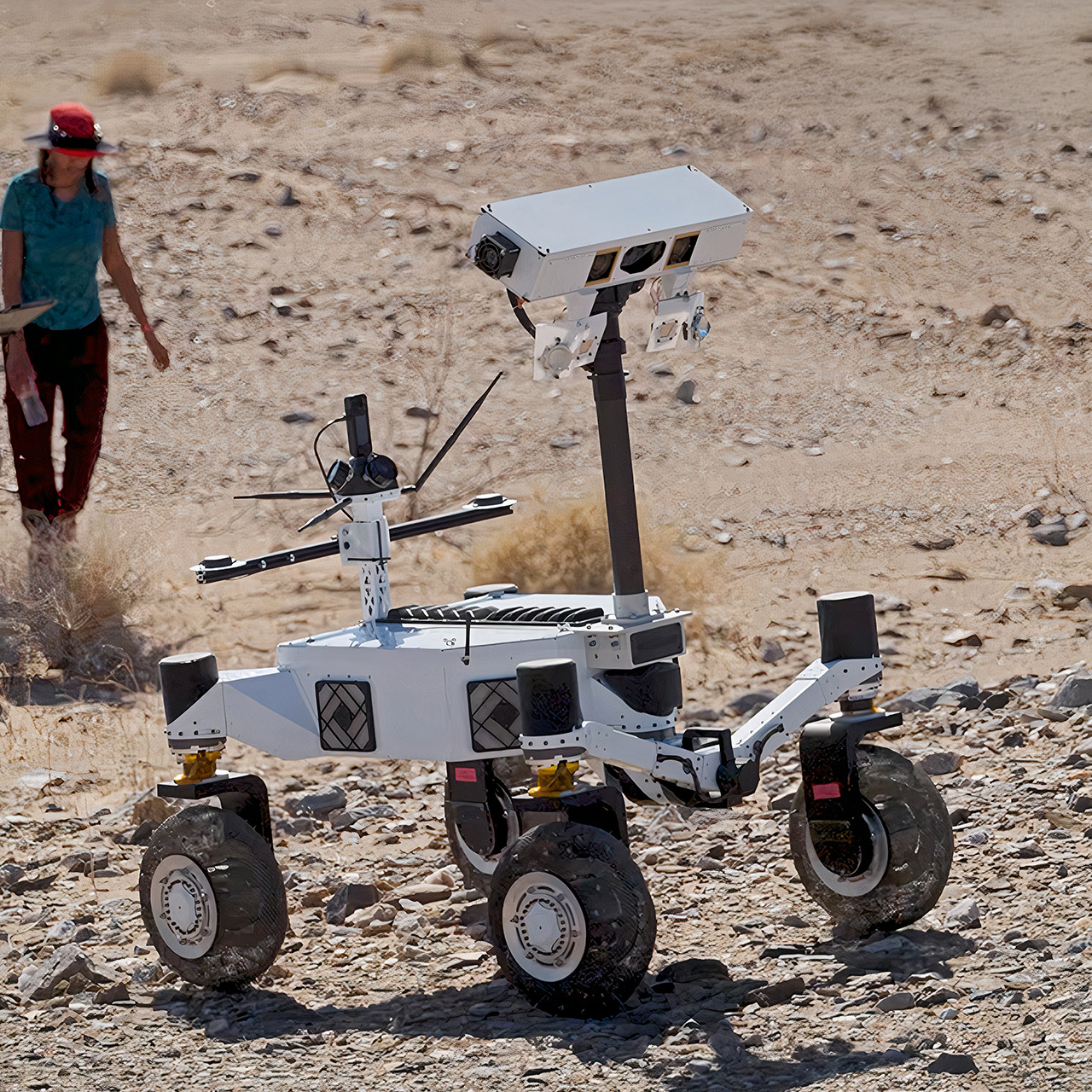
During the test, ERNEST achieved speeds of 0.6 mph (1 kph), which is more than 10 times the speed of NASA's current Mars rovers, Curiosity and Perseverance. The rover's ability to navigate autonomously, handling route planning and obstacle avoidance, marks a significant advancement in robotic exploration technology.
“You could do a science road trip across the Moon — or Mars — with this vehicle,” said James Keane, a JPL planetary scientist. The rover's design allows it to traverse challenging terrains, including slopes as steep as 35 degrees, and it has been tested under various lighting conditions to simulate the lunar environment.

“This testing is helping us refine the mobility hardware and autonomy software to navigate extreme distances across a wide range of terrain and lighting conditions anticipated on the Moon,” stated Issa Nesnas, a principal technologist at JPL. The advancements made with ERNEST could pave the way for future missions to previously inaccessible areas of the Moon and Mars.
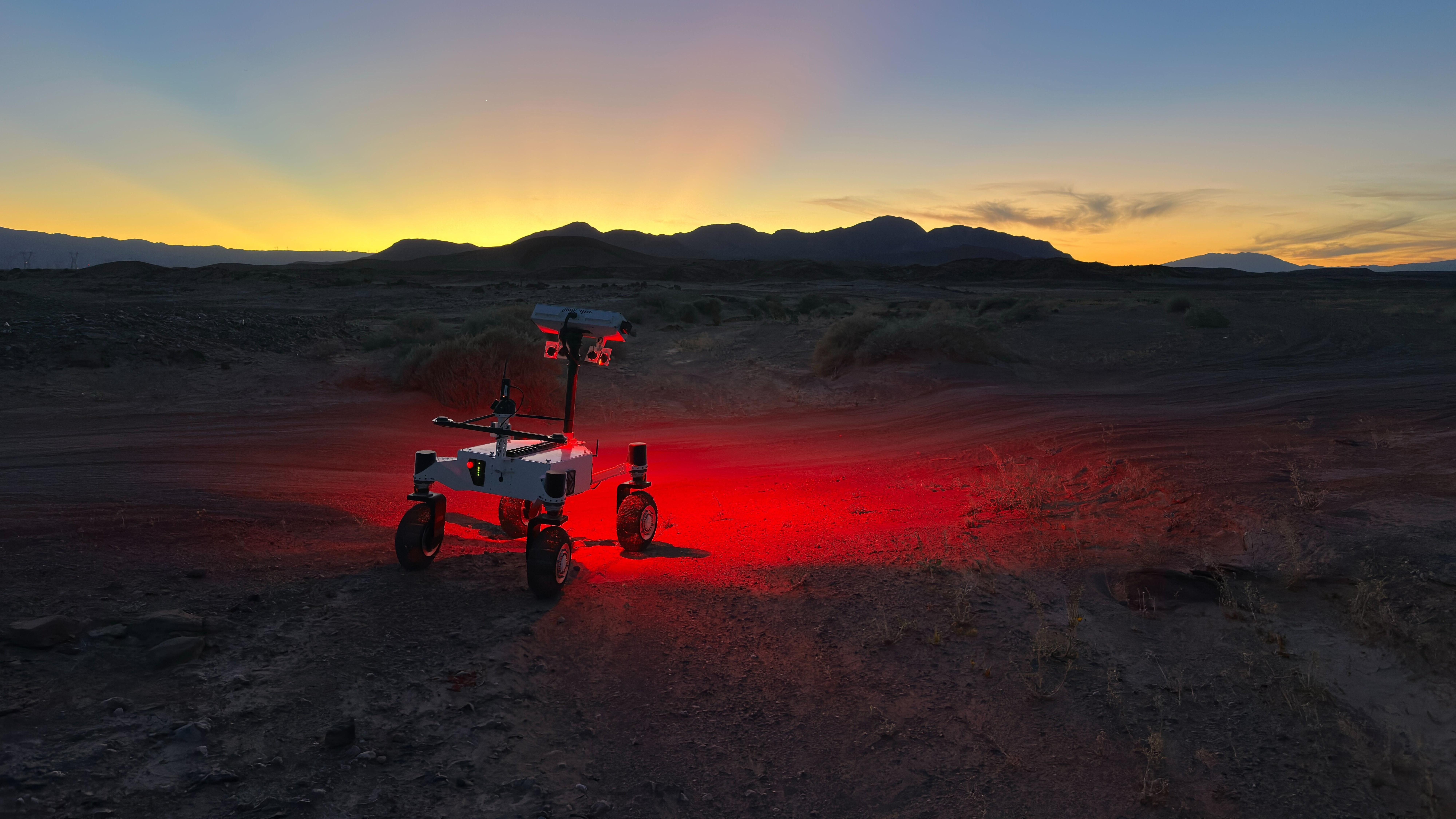
Work on ERNEST began in 2022, with internal JPL financing, before receiving additional resources from NASA’s Mars Exploration Program. The rover's development involved testing various active suspension configurations to enhance its performance in extreme conditions.
“NASA's ERNEST rover successfully traveled 16 miles over 37 hours in a desert field test, showcasing advanced mobility and autonomy. This testing aims to refine technologies for future missions to navigate extreme terrains on the Moon and Mars.”
 TechEBlog -