Sources: 

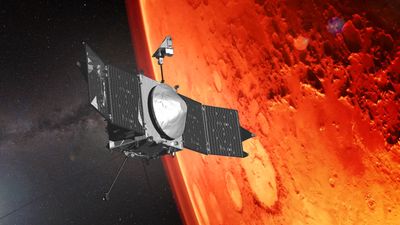
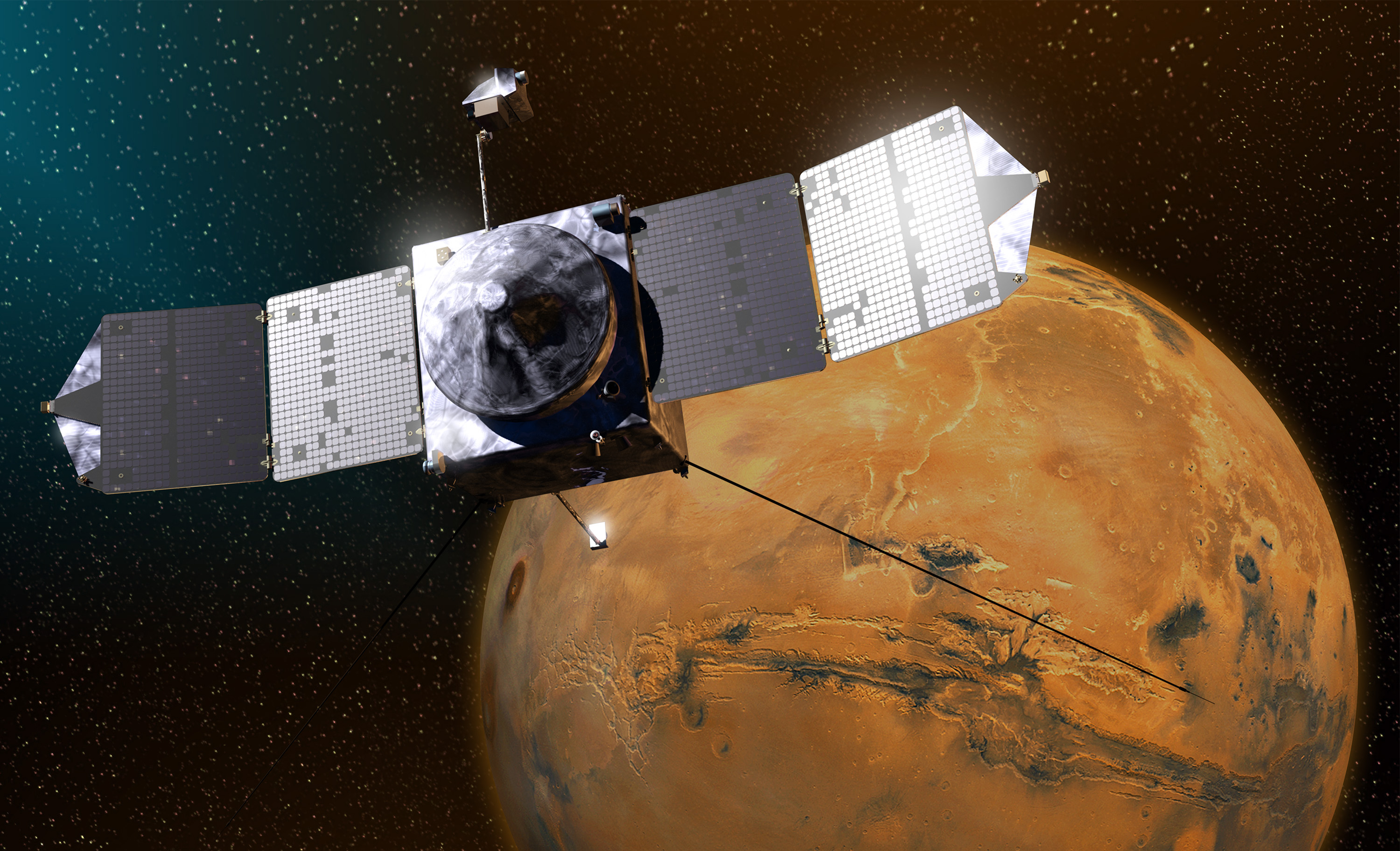
MAVEN (Mars Atmosphere and Volatile Evolution), launched in 2013, has officially ended its operations after over a decade of providing crucial data on Mars' atmosphere. The spacecraft, which exceeded its initial one-year mission by ten years, was pivotal in understanding the planet’s climatic history and its capacity to support liquid water.
On June 3, NASA decided to conclude the MAVEN mission after a review board deemed the spacecraft unrecoverable following a loss of signal on December 6, 2022. The review confirmed it could no longer perform its scientific duties.
Bruce Jakosky, the former principal investigator, remarked, “We saw the effect of a solar storm hit, and when it did, it increased the loss rate by a factor of 10 or 20.” This provided vital insights into how the solar wind strips away the Martian atmosphere.
During its operational life, MAVEN's team produced over
800 scientific publications, significantly enhancing our understanding of Mars. Its findings are essential for future human missions to the planet.
Louise Prockter, director of the Planetary Science Division at NASA Headquarters, stated, “The science MAVEN has given us is key to informing what kind of radiation protection and safety measures we must take before sending humans to Mars.”
A media conference is scheduled for 2 p.m. EDT today to discuss MAVEN’s achievements and the future of Mars exploration.
Sources: NASA has officially concluded the MAVEN Mars mission after more than 11 years of studying the Martian atmosphere, revealing key insights into atmospheric loss and planetary habitability. A media call is scheduled for today to discuss MAVEN's achievements and data collected during its extended mission.