- NASA is set to launch a rescue mission on June 30 to save the Swift space telescope from burning up in Earth's atmosphere.
- The Swift Observatory, launched in November 2004, has been losing altitude faster than expected and is at risk of re-entering the atmosphere.
- NASA's rescue mission will cost approximately $30 million and aims to boost Swift back into orbit to extend its scientific lifetime.
- The Katalyst Space Technologies has been contracted to assist in the mission, using its Link spacecraft to boost Swift from about 230 miles to its original altitude of 370 miles.
- If successful, the mission could pave the way for similar operations on other telescopes, such as the Hubble Space Telescope, which is also facing orbital decay.
- The Swift Observatory was launched to study gamma-ray bursts and other high-energy events across the universe, costing around $500 million.
- NASA has turned off all scientific instruments on Swift to slow its descent, as the telescope is expected to hit a point of no return by October.
- Katalyst's Link spacecraft is expected to take about a month to rendezvous with Swift and another couple of months to raise its orbit to the desired altitude.
NASA is launching a $30 million rescue mission on June 30 to save the Swift space telescope, which has been losing altitude faster than expected. The mission, involving Katalyst Space Technologies, aims to boost Swift's orbit from 360 km to 600 km, ensuring its continued operation.134
Launched in November 2004 at a cost of about $250 million, Swift has been pivotal in studying gamma-ray bursts and other cosmic events. The telescope must remain above 185 miles to avoid a point of no return, expected by October. NASA states, "If we let Swift re-enter, we would lose that telescope. We would lose a lot of capability."

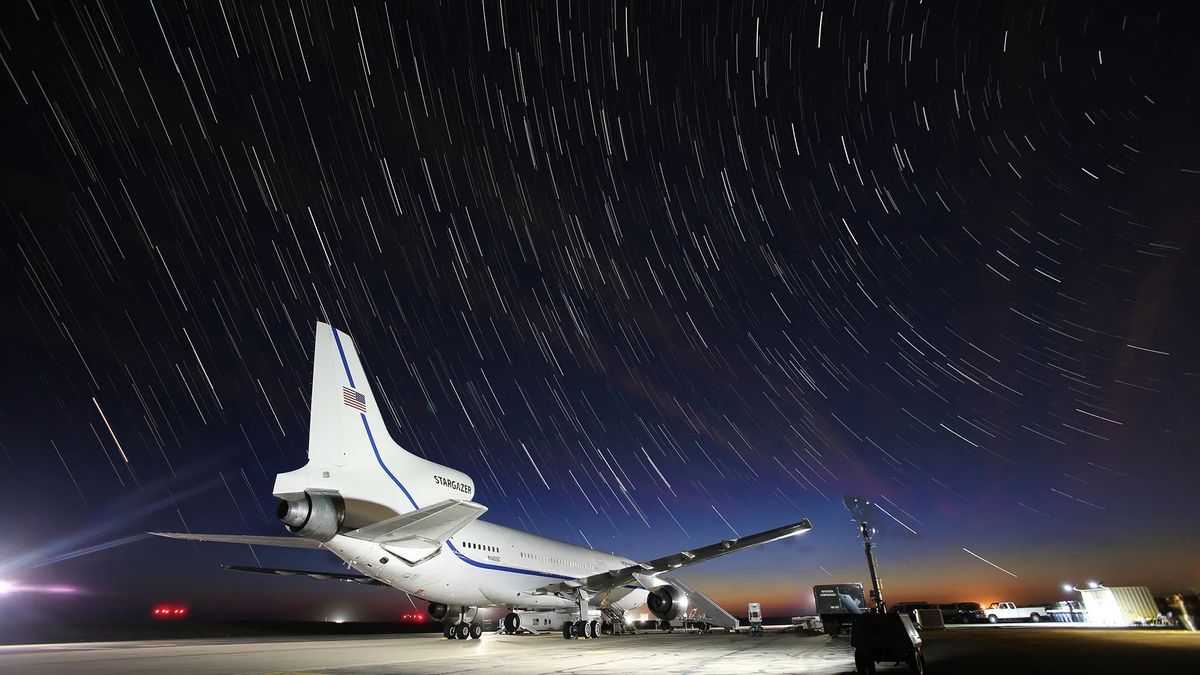
Katalyst's Link spacecraft is set to launch aboard a Northrop Grumman Pegasus XL rocket from Kwajalein Atoll. It will take about a month to rendezvous with Swift and a couple of months to raise its orbit. If successful, Swift could resume operations by September, extending its scientific lifetime and demonstrating a key capability for future space exploration.8
The mission is seen as a potential model for future satellite repairs, with Katalyst planning to develop a next-generation robotic rescuer for higher orbits next year. NASA maintains that Swift is worth saving, as it can rapidly pivot to capture various cosmic signals when other telescopes detect sudden events.
If the mission succeeds, Nasa’s Hubble Space Telescope could be next in line for a similar boost, further enhancing our understanding of the universe.5
“NASA is set to launch a rescue mission on June 30 to save the Swift space telescope from re-entering Earth's atmosphere. The mission aims to boost Swift back into orbit, preventing its fiery demise.”

 Australian Broadcasting Corporation



