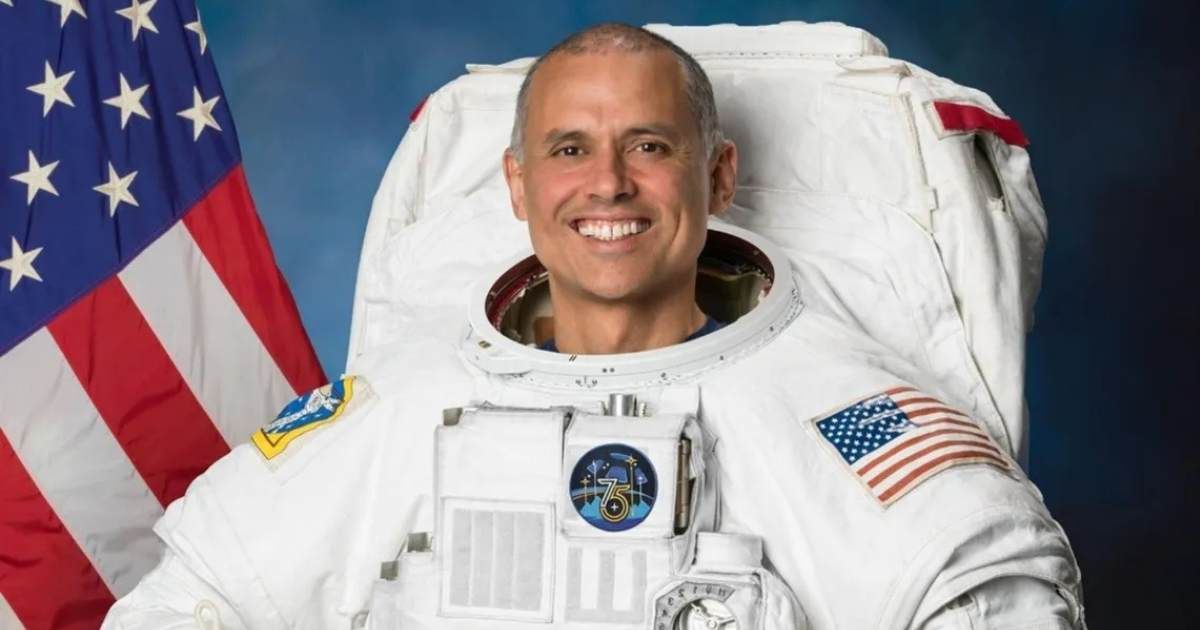
- Anil Menon will spend eight months aboard the International Space Station (ISS) as part of Expedition 74/75, focusing on health research for future Moon and Mars missions.
- Menon is set to launch on July 14 aboard the Roscosmos Soyuz MS-29 spacecraft.
- During his time in orbit, Menon will participate in research examining how astronauts' veins, blood flow, and blood composition change in microgravity.
- He will also help test if the ISS's water supply can be used to produce intravenous fluids.
- Menon emphasized the importance of team preparation and compared it to how hospitals function, stating that collaboration leads to better outcomes.
NASA astronaut Anil Menon is preparing for an eight-month mission aboard the International Space Station (ISS), launching on July 14 aboard the Roscosmos Soyuz MS-29 spacecraft. This mission is pivotal for future lunar and Martian explorations.12
During his time on the ISS, Menon will engage in critical health research aimed at understanding how microgravity affects astronauts. His studies will focus on changes in blood flow, veins, and blood composition, which are essential for ensuring astronaut health on long-duration missions. “I think humans are just amazingly resilient,” Menon stated, emphasizing the importance of the ISS in identifying challenges and developing countermeasures for space travel.
Menon will also investigate whether the ISS's water supply can be converted into intravenous fluids, a crucial aspect of medical preparedness in space. He noted, “The more you reach outside of, say, the ER to other departments, the better you're able to just call in a consult, get a curbside, get things to work, find efficiencies and just be better at your job.”4
Recent studies have highlighted new risks for astronauts, including a higher likelihood of blood clots and bone density loss at a rate of approximately 3% per month. Menon’s research aims to address these issues, contributing to the safety and health of future space explorers.
“Anil Menon is set to launch to the ISS on July 14, where he will participate in research on astronaut health. His work aims to address challenges posed by long-duration space missions, including potential blood flow issues and bone density loss.”
 starlust.org