
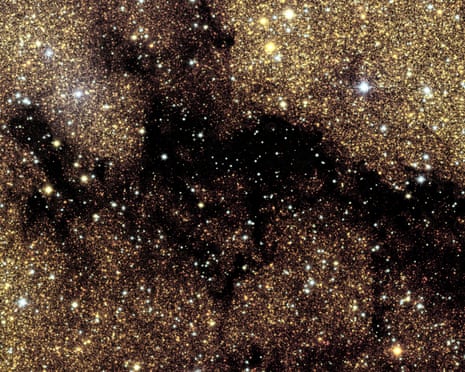
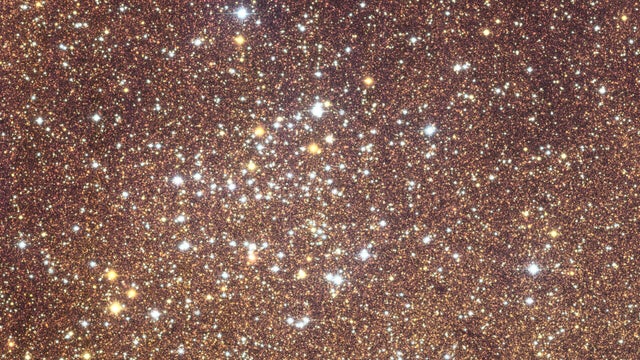
- Euclid has captured the largest and most detailed image yet of the Milky Way's center, featuring 60 million stars, along with nebulae and star clusters.
- The image was taken over 26 hours in March 2025, using a visible-light camera aimed at the galactic bulge, located about 26,000 light-years from Earth.
- This mosaic image includes 51 known planetary systems and will assist in studying many more that will be found.
- Euclid's snapshot heralds a new age of exoplanet discovery, potentially increasing known exoplanets from 6,000 to over 100,000 across the galaxy.
- The galactic bulge is a densely packed area filled mainly with old, cooler stars, and is crucial for understanding the structure of the Milky Way.
- The Euclid telescope was launched in 2023 with a budget of €1 billion to create the most accurate 3D map of the cosmos.
The European Space Agency's Euclid telescope has unveiled a stunning six-gigapixel image of the Milky Way's center, capturing 60 million stars in a mosaic of nine patches. This image, taken over 26 hours in March 2025, is a significant leap in astronomical imaging.123458

"Now we've decided to point Euclid at the brightest area of the sky -- and it works superbly, it's extraordinary," said French astronomer Jean-Charles Cuillandre. The image encompasses the entire region that the upcoming Nancy Grace Roman space telescope will monitor for exoplanet hunting, including 51 known planetary systems.
The data from Euclid is expected to enhance the search for exoplanets, potentially increasing the known count from 6,000 to over 100,000. The telescope, launched in 2023, aims to construct the most accurate 3D map of the cosmos and shed light on the dark forces shaping it. Cuillandre emphasized, "we didn't do this just to produce a beautiful image."6
The image also serves as a time reference for future microlensing events detected by the Roman telescope, allowing astronomers to study how stars appeared before their light overlapped. This groundbreaking work marks the beginning of a new era in planetary discovery, with astronomers anticipating the identification of 1,500 microlensing exoplanets.
“The European Space Agency's Euclid telescope has delivered the largest and most detailed view of the Milky Way's center, featuring 60 million stars. This groundbreaking image is expected to enhance future exoplanet discoveries significantly.”
 The Guardian
 CBS News