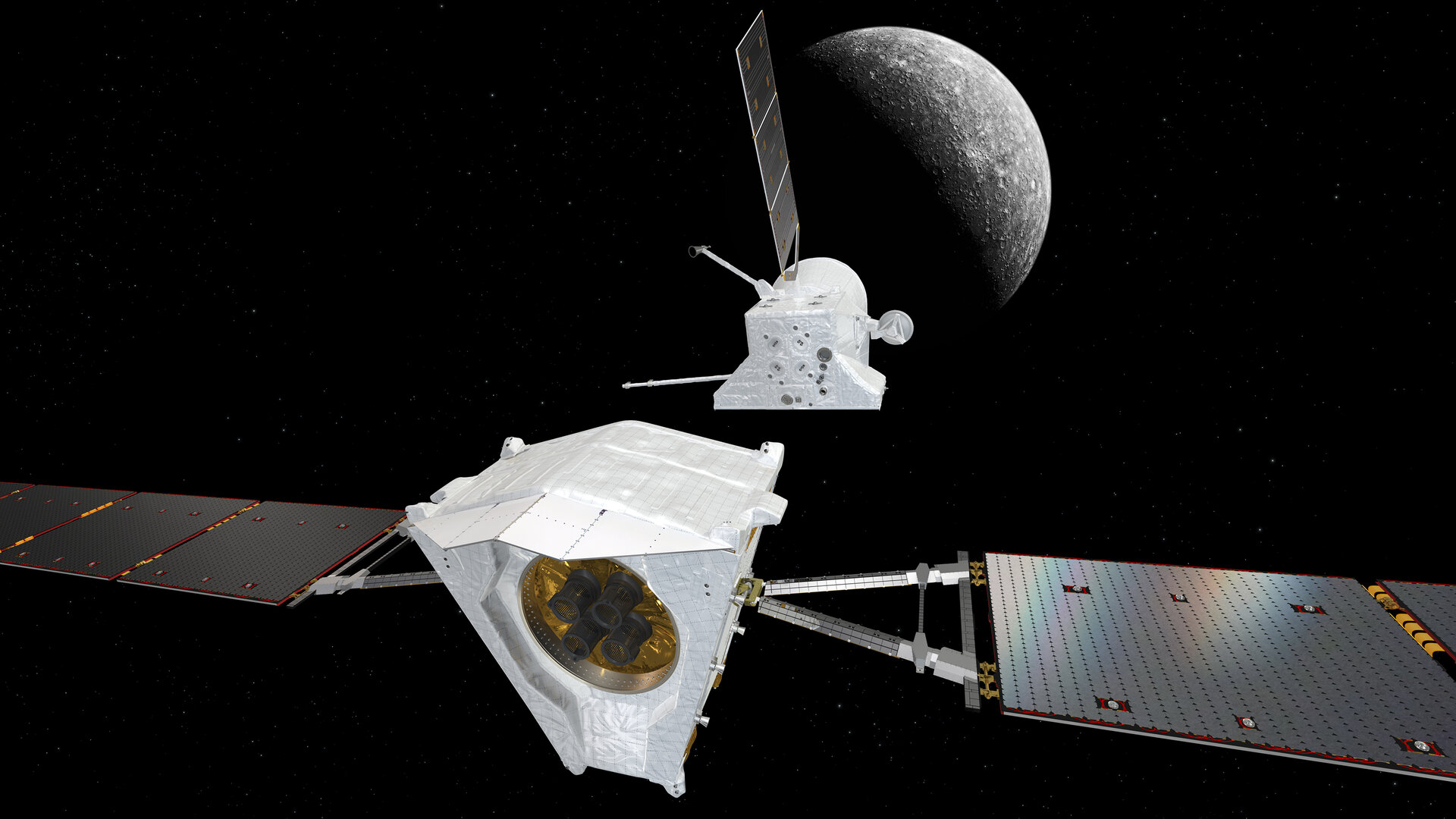
- BepiColombo's Mercury Transfer Module (MTM) successfully separated from the spacecraft stack on September 3, 2026, confirmed by deep space antennas in Cebreros (Spain) and Malargüe (Argentina).
- The composite spacecraft will enter orbit around Mercury on November 21, 2026, and MPO and Mio will separate from each other on December 9-10, 2026.
- The mission’s science phase is set to begin in April 2027.
- Current telemetry indicates all systems are nominal, and MPO's solar panels are charging the spacecraft's batteries.
- Executing a critical separation more than 200 million kilometres from Earth demands precise planning, navigation and commanding, with no opportunity for real-time intervention.
- After nearly eight years in space and billions of kilometres travelled, BepiColombo's two science orbiters, ESA's MPO and JAXA's Mio, are now on their way towards orbit insertion around Mercury.
BepiColombo's Mercury Transfer Module successfully separated from the spacecraft on September 3, 2026, a critical step in the mission's journey to orbit Mercury. This joint effort by the European Space Agency (ESA) and Japan Aerospace Exploration Agency (JAXA) aims to unlock the mysteries of the least understood planet in the inner solar system.
After nearly eight years and over 6 billion miles (10 billion kilometers) traveled, the spacecraft is on track to enter Mercury's orbit on November 21, 2026. The separation was confirmed via signals from deep space antennas in Cebreros, Spain, and Malargüe, Argentina, indicating that all systems are functioning normally.56712
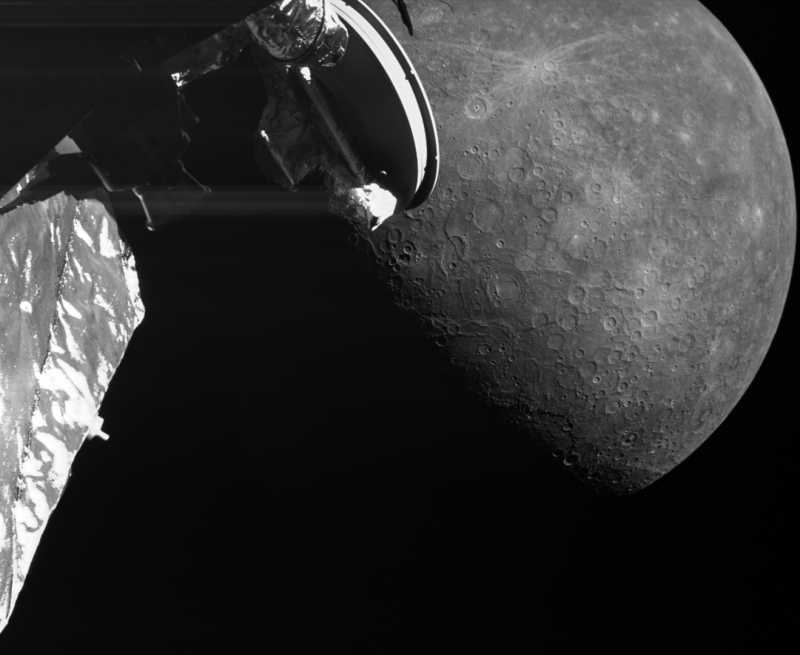
The mission, which began with a launch on October 20, 2018, involves two science orbiters: the Mercury Planetary Orbiter (MPO) and the Mercury Magnetospheric Orbiter (MIO). These orbiters will separate from each other on December 9-10, 2026, with science operations commencing in April 2027.89

The mission's objectives include investigating Mercury's formation, the presence of water, and its magnetic field. “You can go faster to Mercury if you take a direct way to it,” said Frank Budnik, flight dynamics manager for the BepiColombo mission at ESA, emphasizing the complexity of achieving the correct velocity for orbit insertion.
The successful separation of the Mercury Transfer Module is a testament to the meticulous planning and execution required for this ambitious mission, which aims to reveal the secrets of Mercury after decades of limited exploration.
“The separation was confirmed via deep space antennas in Spain and Argentina, with telemetry showing all systems nominal and MPO's solar panels charging. The composite spacecraft will enter Mercury orbit on November 21, with MPO and Mio separating in December and science operations beginning in April 2027.”
 EarthSky
 KCRA
KCRA