- USCIRF has expressed concern over Mohan Bhagwat’s visit to the U.S. and urged sanctions against members of the RSS, which it described as the ideological parent of the ruling Bharatiya Janata Party (BJP).
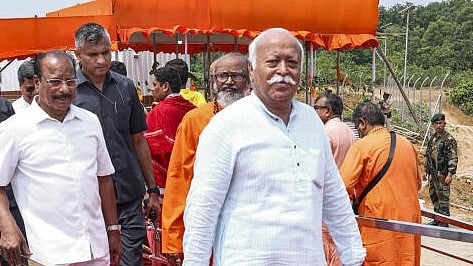
- Mohan Bhagwat, chief of the RSS, is scheduled to speak at an Aug 29 event in New York City.
- Asif Mahmood, chair of the USCIRF, issued a statement on Aug 26 urging targeted sanctions against RSS members and the revocation of Bhagwat's visa.
- India's foreign ministry has dismissed the panel's assertions, casting USCIRF as biased against India.
- The RSS organized foreign visits in May to counter perceptions of being a paramilitary outfit involved in attacks on minorities.
A U.S. panel on religious freedom has raised alarms over Mohan Bhagwat's visit, urging sanctions against the Rashtriya Swayamsevak Sangh (RSS) members and the revocation of his visa. The U.S. Commission on International Religious Freedom (USCIRF) expressed concerns about the group's role in promoting intolerance towards minorities in India.1234
In a statement, Asif Mahmood, chair of USCIRF, said, “We urge the U.S. government to consider targeted sanctions against RSS members and Indian officials complicit in religious freedom violations, including revoking the visa issued to Mohan Bhagwat.” The RSS, which is linked to India's ruling Bharatiya Janata Party (BJP), has been accused of fostering a majoritarian ideology that fuels intolerance.
The External Affairs Ministry of India dismissed these claims, labeling USCIRF as biased. Rights groups have pointed to a rise in hate speech and discriminatory laws against minorities, including a controversial citizenship law and anti-conversion legislation. UN and human rights groups have reported an increase in abuses against Indian minorities in recent years.
Despite these recommendations, Washington has not imposed sanctions following previous USCIRF reports. The RSS maintains it is a “Hindu-centric civilisational, cultural movement” aimed at uniting Hindus and elevating India’s status globally.
“USCIRF's recommendations are non-binding, and Washington has not imposed sanctions after recent recommendations. India's foreign ministry dismissed the panel as biased, while rights groups cite rising hate speech and a religion-based citizenship law as evidence of minority abuse.”