- PNGRB has authorised three LPG pipeline projects covering 1,800 km with an estimated investment of Rs 7,000 crore.
- The projects will traverse six states: Telangana, Maharashtra, Uttar Pradesh, Uttarakhand, Karnataka, and Goa.
- GAIL (India) Limited has been authorised to develop all three projects.
- The expansion will increase the common-carrier LPG pipeline network from 7,700 km to 9,500 km, marking a growth of about 23.5%.
- The authorised projects include three major corridors: a 556-km pipeline from Cherlapally in Telangana to Nagpur in Maharashtra, a 611-km line connecting Jhansi in Uttar Pradesh with Sitarganj in Uttarakhand, and a 633-km pipeline linking Shikrapur in Maharashtra with Goa and Hubli in Karnataka.
- Pipeline transportation is regarded as the safest and most economical mode for transporting LPG.
- The new pipelines are expected to reduce the movement of LPG tank lorries, thereby improving road safety, lowering logistics costs, and reducing traffic congestion.
India's Petroleum and Natural Gas Regulatory Board (PNGRB) has approved the development of 1,800 km of liquefied petroleum gas (LPG) pipelines with an estimated investment of ₹7,000 crore. The projects will span six states: Telangana, Maharashtra, Uttar Pradesh, Uttarakhand, Karnataka, and Goa.125
The approved projects include three major corridors: a 556-km pipeline from Cherlapally in Telangana to Nagpur in Maharashtra, a 611-km line connecting Jhansi in Uttar Pradesh with Sitarganj in Uttarakhand, and a 633-km pipeline linking Shikrapur in Maharashtra with Goa and Hubli in Karnataka.
GAIL (India) Limited has been tasked with developing these projects, which will expand the common-carrier LPG pipeline network from 7,700 km to 9,500 km, marking an increase of 23.5%. This expansion is a significant step towards strengthening India's energy infrastructure and enhancing the resilience of LPG supply chains.34
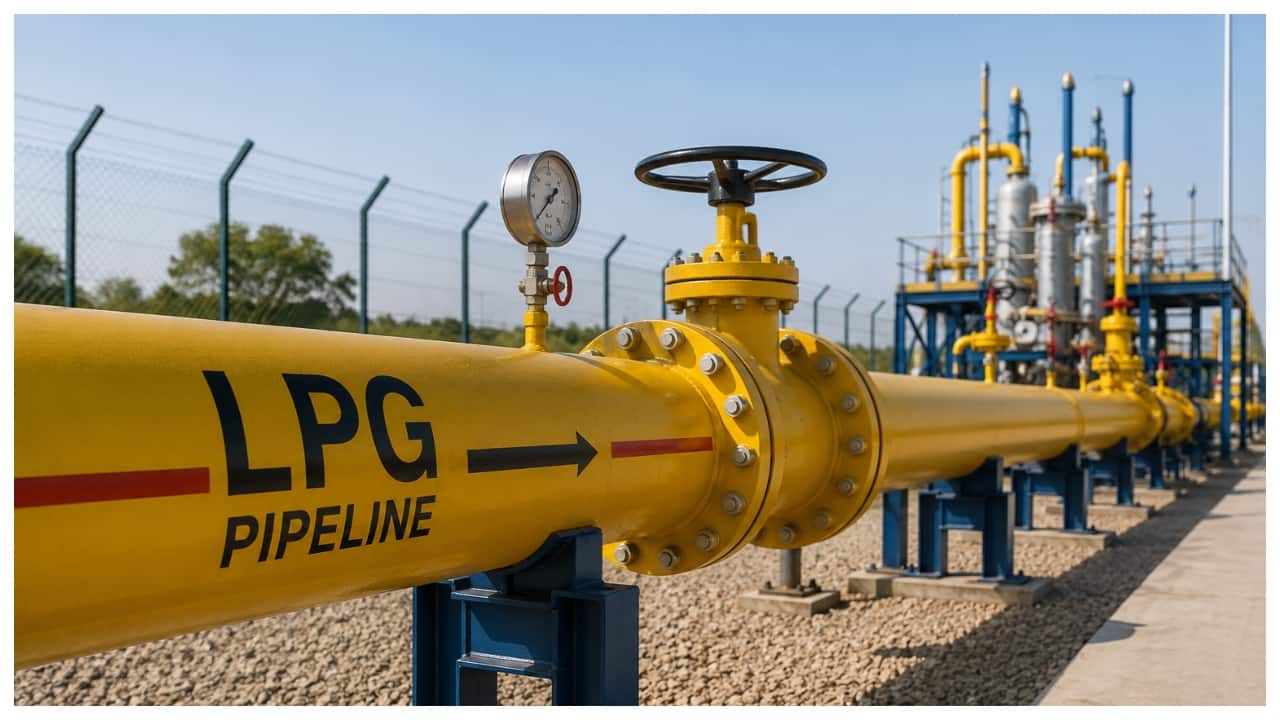
The PNGRB emphasized that the new pipelines will help accelerate a shift from road-based transportation of LPG, reducing the movement of LPG tankers, improving road safety, and cutting logistics costs and traffic congestion. The regulator has been advocating for this shift, particularly after serious road accidents involving LPG tankers.
Pipeline transportation is recognized as the safest and most economical method for transporting LPG, and the new infrastructure will also serve as a form of "line-pack storage", allowing LPG to remain within the pipeline system while product continues to flow through the network.6
“The three corridors include a 556-km line from Cherlapally to Nagpur, a 611-km Jhansi–Sitarganj link, and a 633-km Shikrapur–Goa–Hubli route. The expansion will cut LPG tanker movement, improving road safety and reducing logistics costs, while adding line-pack storage capability.”
 Swarajya