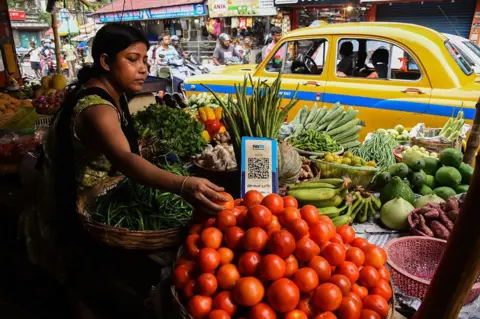
- India has allowed banks and payment companies to charge merchants a fee on UPI transactions, potentially ending a decade-long experiment in free digital payments.
- If merchant fees are introduced, they will apply only to some transactions above a set threshold at a nominal rate, meaning most UPI payments will remain free.
- Concerns about fees include potential impact on small merchants and user backlash: a 2024 survey found 75% of UPI users would stop using it if transaction fees were introduced, while only 22% would be willing to pay.
- UPI's scale is massive: in July alone there were 23.6 billion transactions worth 29.87 trillion rupees ($313.5bn), and in the financial year just ended about 241.6 billion transactions - almost 12,000 times the volume in UPI's first full year.
- One option under discussion would target transactions above 2,000 rupees at larger merchants, which account for only about 4% of merchant-payment volumes but roughly 67% of their value, potentially generating up to a billion dollars for banks and payment companies.
India's recent decision to allow banks and payment companies to charge merchants fees on UPI transactions marks a significant shift in its digital payment landscape, potentially ending a decade of free transactions.
The government is considering a merchant discount rate (MDR) of 0.3-0.5% for larger transactions, particularly those exceeding 2,000 rupees. This fee structure aims to generate revenue while keeping most UPI payments free for consumers.789
According to official data, July alone saw 23.6 billion UPI transactions worth 29.87 trillion rupees (approximately $313.5 billion). In the last financial year, UPI recorded about 241.6 billion transactions, a staggering increase from its initial year.56
The National Payments Corporation of India oversees the UPI system, which has expanded to 11 countries. Research indicates that merchant acceptance has been a key driver of UPI's success, not just a byproduct.
Notably, a 2024 survey by LocalCircles revealed that 75% of UPI users would cease using the service if transaction fees were implemented, highlighting potential backlash against the new fee structure.
The proposed fees would primarily target larger merchants, affecting only 4% of transaction volumes but accounting for 67% of their value, according to brokerage firm Jefferies. This could create a new revenue stream of up to $1 billion for banks and payment companies while leaving smaller transactions untouched.
“The fee would target transactions above 2,000 rupees at larger merchants, affecting only 4% of volumes but 67% of value, potentially generating up to $1 billion for banks. A 2024 LocalCircles survey found 75% of UPI users would stop using it if fees were introduced.”
 BBC
BBC