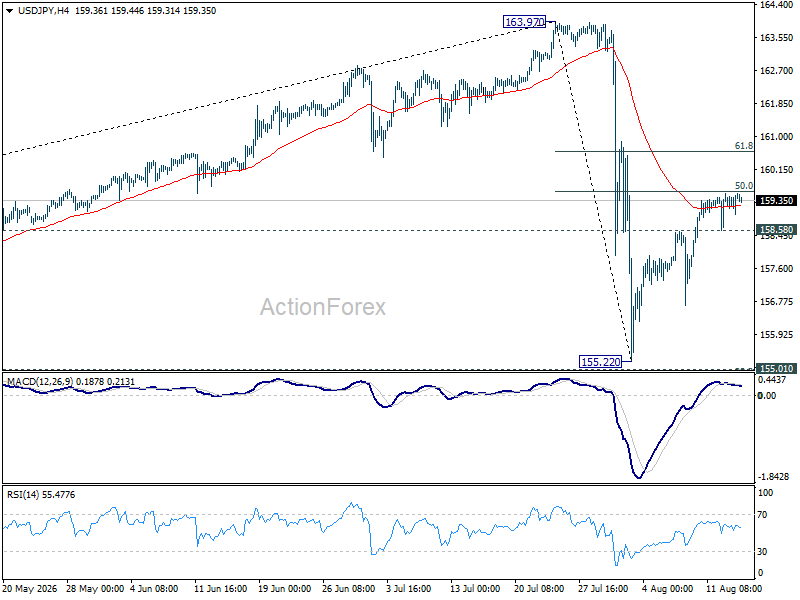
- The yen traded at 40-year lows near 164 per dollar before July's intervention.
- A joint intervention by Japan and the U.S. in late July and early August sparked a yen rally.
- The yen has surrendered roughly half of the gains from the intervention, falling about 0.9% this week to 159.29 per dollar.
- Currently, the yen is on track for its worst week in three months, hovering at 159.37 per dollar.
- According to Reuters, the BOJ is set to raise rates as soon as September, with more aggressive hikes possible.
- Despite a slight rise on Friday, traders see the 160 level as a trigger for fresh intervention.
- The yen's decline reflects a structural issue for Japan, as raising rates could harm the economy due to a high debt load.
- The yen's retreat mirrors a similar selloff in May, when it also fell back after a round of official buying.
- Analysts suggest that for the intervention to change the yen trend, a more hawkish BOJ stance is needed.
The Japanese yen is on track for its biggest weekly loss in about a month, trading at 159.29 per dollar, as traders speculate on the need for Bank of Japan (BOJ) rate hikes to stem its decline.
Despite recent interventions, the yen's value has dropped approximately 0.9% this week, surrendering half the gains made after interventions in late July and early August. The currency's retreat mirrors a similar selloff in May, raising concerns about its stability.
"It's not much of a surprise that the yen has retraced," said OCBC strategist Sim Moh Siong, emphasizing the need for a more hawkish BOJ stance to change the yen's trend.9
The yen's fate now appears tied to the Federal Reserve's policy and expectations of aggressive BOJ rate hikes, especially after a joint operation with the U.S. failed to stabilize the currency.
The BOJ is reportedly considering raising rates as soon as September, with potential for more aggressive hikes, according to sources familiar with policymakers' thinking.
The yen's current position is precarious, hovering near 40-year lows of 164 per dollar before July's intervention, and traders are eyeing the 160 level as a potential trigger for further official action.6
"The onus is on BOJ to step up," Siong added, highlighting the urgency for decisive action to support the yen.
“The yen has surrendered roughly half the gains from late July's joint U.S.-Japan intervention, falling about 0.9% this week to 159.29 per dollar. Reuters reported the BOJ is set to raise rates as soon as September, with traders seeing the 160 level as a trigger for fresh official action.”