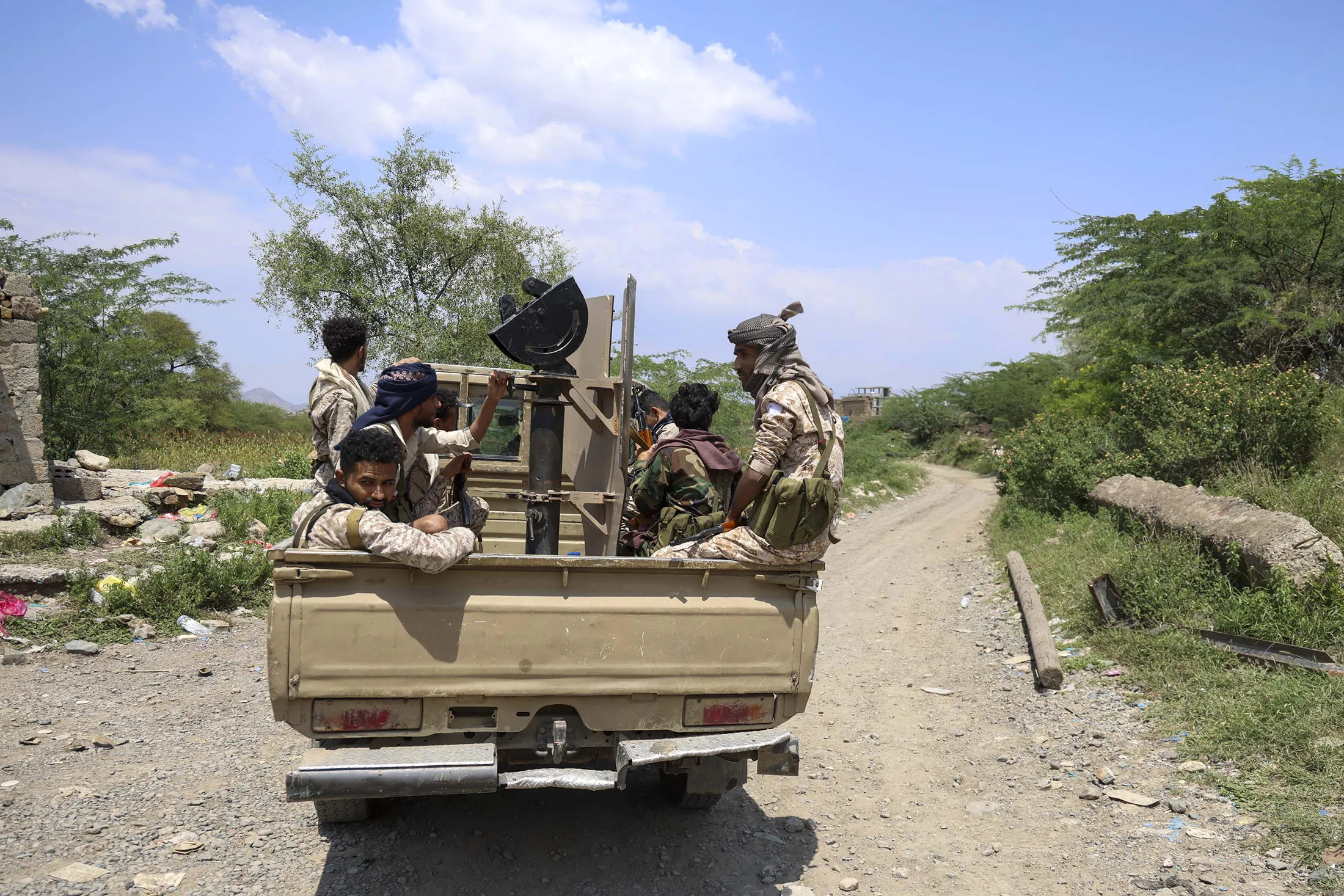
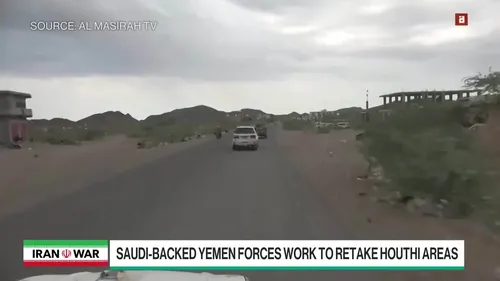
- Yemeni pro-government forces backed by Saudi Arabia say they have "secured" the Bab al-Mandab Strait at the start of a major offensive against the Iran-backed Houthi movement.
- Government forces advanced rapidly along the coast, seizing key positions in the Dhubab area and the airstrip, effectively cutting off Houthi forces.
- Information Minister Moammar al-Eryani announced that government forces had secured effective control of the strait, although fighting continued at a military base nearby.
- Rashad al-Alimi, head of Yemen's Presidential Leadership Council, announced the beginning of an offensive aimed at retaking all territory held by the Houthis, stating that all opportunities for de-escalation had been exhausted.
- Houthi-run media denied the government's advances, describing the claims as 'completely untrue'.
- Last month, the Houthis launched a surprise offensive along Yemen's south-western Red Sea coast, quickly ousting pro-government forces from areas overlooking the Bab al-Mandab Strait.
- At least 959 people have been killed and 5,000 injured in the fighting in Yemen since 6 August, according to the government's health ministry.
- The fighting has worsened a humanitarian crisis in Yemen, with the UN migration agency reporting that some 184,000 people have been displaced since the war resumed.
Yemeni government forces, supported by Saudi Arabia, have reportedly secured the Bab el-Mandeb Strait as part of a major offensive against the Houthi movement. The Yemeni Information Minister, Moammar al-Eryani, confirmed the military's control over the strategic waterway, crucial for global oil shipping.
The offensive has seen the Giants Brigades and National Shield forces besieging Houthi fighters in the coastal town of Dhubab, having taken control of its airport and cut off access to the port city of Mokha. However, fighting continues, with reports of clashes at a military base near the strait.
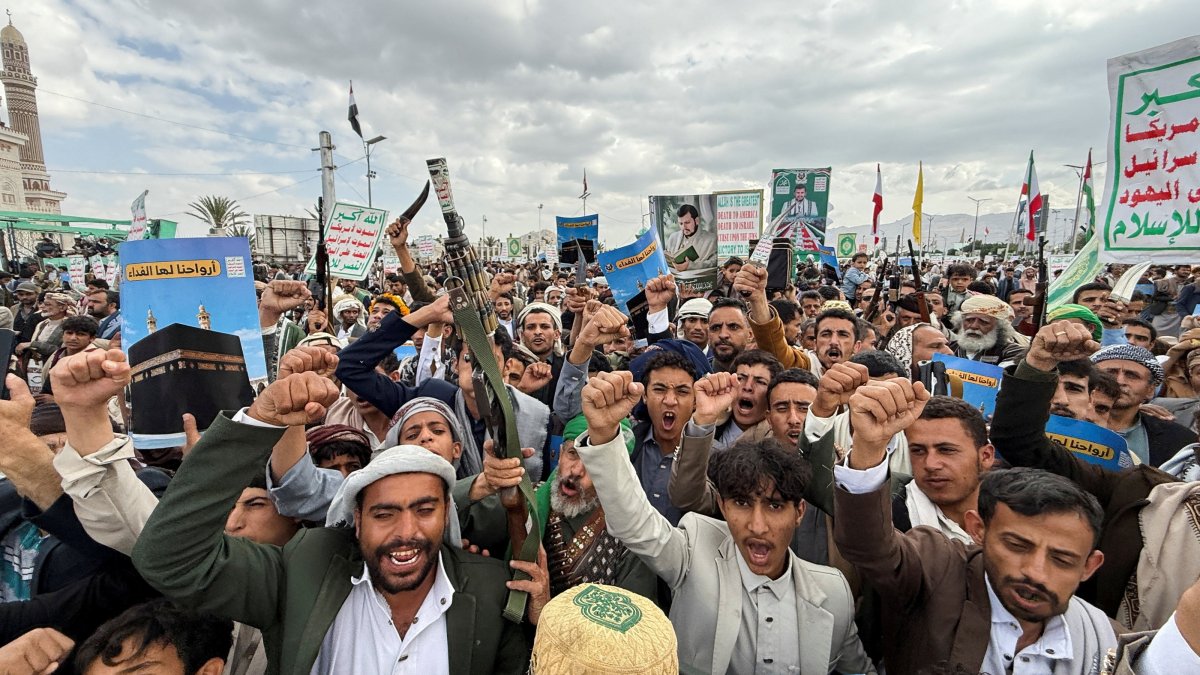
Despite government claims, Houthi-run media have denied any advances, labeling the assertions as "completely untrue". The Houthis have threatened to attack any aircraft in Saudi airspace, indicating their ongoing operational capabilities.5
The offensive is part of a broader strategy announced by Rashad al-Alimi, head of Yemen's Presidential Leadership Council, who stated that all opportunities for de-escalation had been exhausted. He urged all military formations to execute their missions to liberate the country from the Houthi militia.4
The renewed fighting has exacerbated Yemen's humanitarian crisis, with the UN migration agency reporting that approximately 184,000 people have been displaced since the conflict reignited. The situation remains dire as both sides continue to vie for control over this vital region.
“The offensive follows a Houthi surprise attack last month that ousted government forces from the strait's overlook, and the Houthis deny the gains as 'completely untrue'. Meanwhile, the Houthis have besieged Taiz, cutting a mountain road, and have launched missiles at Saudi Aramco sites in Riyadh and Khurais.”


 BBC
BBC