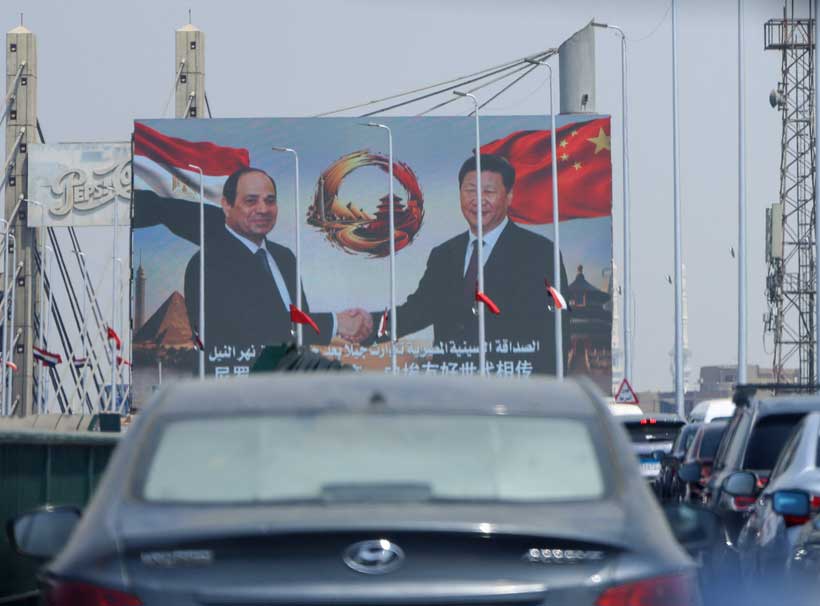
- Former Egyptian prime minister Essam Sharaf called President Xi Jinping's visit to Egypt a "landmark moment" and "an opportunity for the partnership to enter a new phase focused on shaping the future."
- Sharaf highlighted the unique strength of the relationship as bringing together two of the world's oldest civilizations.
- Sharaf emphasized that the future of Egypt-China relations should be measured by building a partnership that generates knowledge, localizes technology, and supports innovation.
- The timing is significant amid profound transformations in the international system, requiring balanced partnerships.
- He identified complementary strengths: Egypt's strategic location, market, and infrastructure combined with China's industrial and technological expertise can create a new model of cooperation.
- Potential cooperation areas include digital economy, AI, renewable energy, transportation, advanced manufacturing, and education, with Egypt as a regional platform in the Belt and Road Initiative.
Essam Sharaf, former Egyptian prime minister, described President Xi Jinping's visit to Egypt as a landmark moment, marking a new phase in the Egypt-China relationship. He emphasized that this visit reflects the deep civilizational and political ties between the two nations, which have evolved into a comprehensive strategic partnership.123
Sharaf noted that the visit coincides with the 70th anniversary of diplomatic relations, highlighting Egypt's role as the first African nation to establish ties with China. He stated, "What gives this relationship its particular strength is that it brings together two of the world's oldest civilizations..."4
He pointed out that the current international landscape necessitates balanced partnerships to tackle economic and technological challenges. Sharaf argued that the future of Egypt-China relations should focus on building a partnership that fosters knowledge, localizes technology, and supports innovation rather than merely measuring success by trade volume.
He identified key areas for cooperation, including the digital economy, artificial intelligence, renewable energy, and advanced manufacturing. Sharaf also highlighted Egypt's strategic location as a potential regional hub within the Belt and Road Initiative, which could enhance collaboration between Asia, Africa, Europe, and the Arab world.1011
“Sharaf said the partnership should be measured by its ability to generate knowledge, localize technology, and support innovation, not just trade volume. He also highlighted Egypt's strategic location and China's industrial expertise as complementary strengths for a new cooperation model.”