
- X1.1 solar flare erupted with an Earth-bound CME that could spark northern lights for the July 4 weekend.
- The flare was associated with Type II and IV radio sweeps confirming the CME launch.
- NOAA's Space Weather Prediction Center indicated that at least part of the CME could land on Earth with a significant blow.
- The official forecast calls for an impact on 3 July (Friday) with storm conditions up to the G2 geomagnetic storm level.
- A G2-level storm is capable of pushing the northern lights farther south than normal.
- Auroras could become visible across some northern and upper Midwestern U.S. states, from New York to Idaho, provided skies are dark and clear.
- If conditions are favorable, the natural light show could provide an extra helping of 'fireworks' just in time for the July 4 weekend.
- We believe the impact at Earth will be a glancing blow at best with perhaps not the most spectacular geomagnetic conditions as a result.
- Solar wind models call for much more of a head-on impact which we find surprising.
- This story was updated at 9:30 a.m. EDT on July 1 to reflect NOAA's latest forecast, including the issuance of a G2 (Moderate) geomagnetic storm watch for July 3.
An X1.1 solar flare erupted from sunspot region AR4479 on June 30, peaking at 4:50 p.m. EDT, and triggering strong radio blackouts across North America. The intense burst of X-rays reached Earth in just over 8 minutes, confirming the launch of a coronal mass ejection (CME).1
NOAA's Space Weather Prediction Center has issued a G2 geomagnetic storm watch for July 3, indicating that part of the CME could impact Earth significantly. Initial observations suggested a glancing blow, but further analysis revealed potential for stronger geomagnetic conditions.8
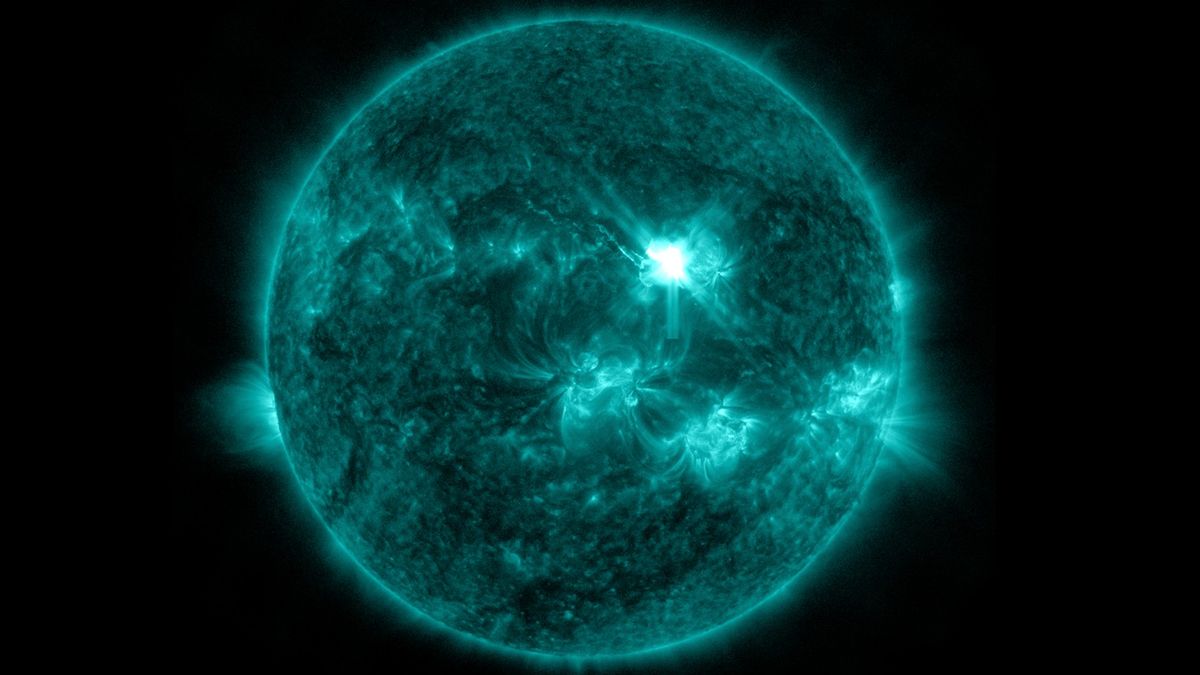
A G2 storm can push the northern lights farther south than usual, with auroras possibly visible across northern and upper Midwestern U.S. states, from New York to Idaho, provided skies are dark and clear. This natural light show could enhance celebrations during the July 4 weekend, offering an extra helping of 'fireworks'.67
This story was updated to reflect NOAA's latest forecast, including the issuance of a G2 (Moderate) geomagnetic storm watch for July 3 following further analysis of the accompanying coronal mass ejection.10
“An X1.1 solar flare has erupted, launching a coronal mass ejection (CME) towards Earth. NOAA has issued a G2 geomagnetic storm watch for July 3, with potential auroras visible across northern U.S. states during the July 4 weekend.”




