
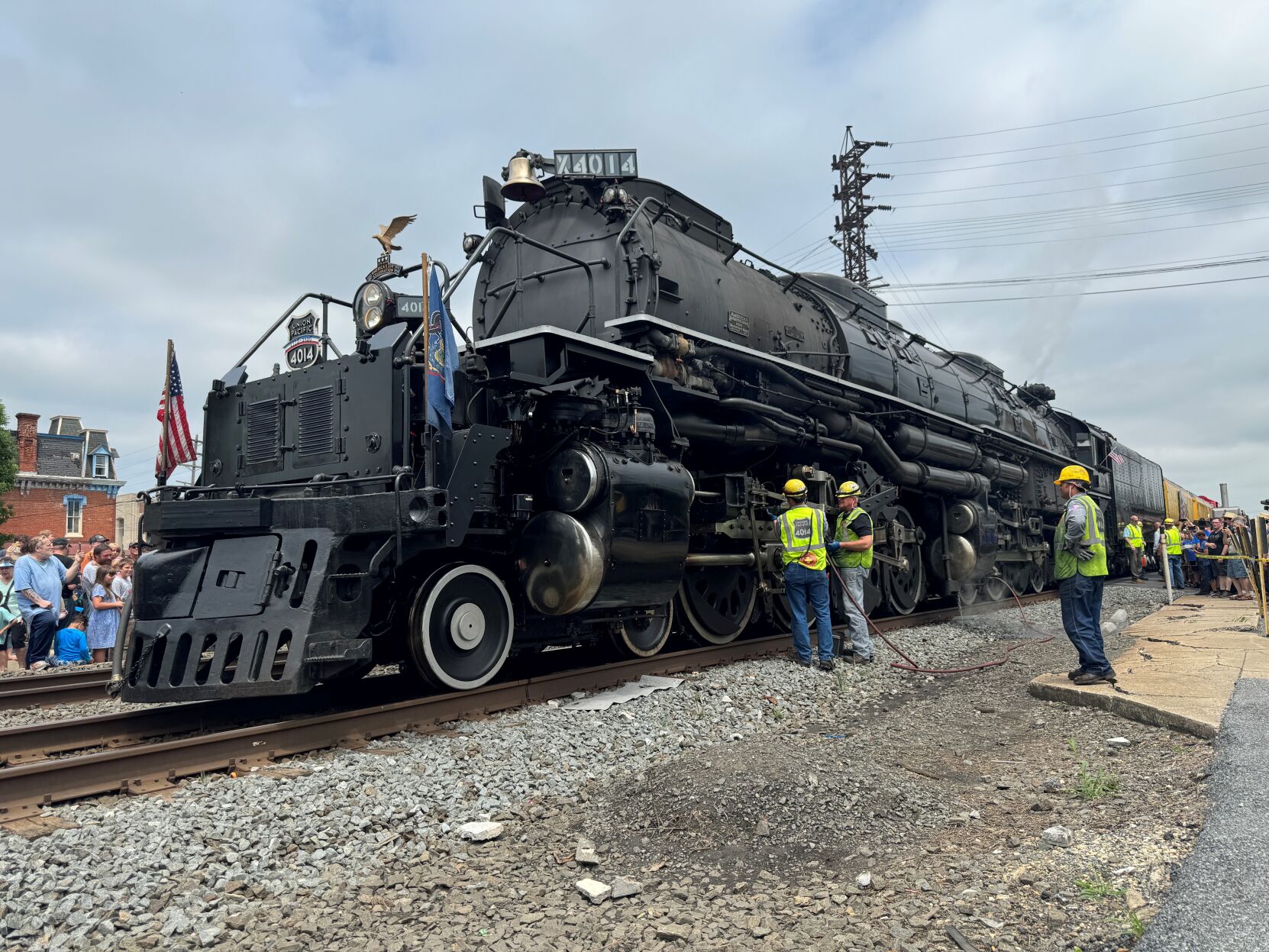
- Big Boy No. 4014, the world’s largest operating steam locomotive, made its first stop in central Pennsylvania at Lebanon Station on July 7, 2026, as part of a historic coast-to-coast tour celebrating America's 250th anniversary.
- The locomotive arrived at 1:30 p.m. and stayed for about 45 minutes, allowing crowds to enjoy the sight before it departed.
- Big Boy No. 4014 is the only one of the eight remaining Big Boys still in operation, having been restored to operating condition in 2019.
Big Boy No. 4014, the world’s largest operating steam locomotive, made a historic stop at Lebanon Station on July 7, 2026, as part of its first-ever journey to the East Coast.1256
The locomotive, measuring 133 feet and weighing about 1.2 million pounds, is a symbol of American railroad history.
"This could be a once in a lifetime event," said a local attendee, reflecting the excitement surrounding the visit.
The tour, which began in April from Sacramento, California, marks the first time the Big Boy has traveled east of the Mississippi River since its construction in the 1940s.
The event drew large crowds, with many eager to see the locomotive up close.
"I didn’t believe there were this many people in Lebanon," said another visitor, highlighting the community's enthusiasm.
The Big Boy No. 4014 is the only operational locomotive of the eight remaining Big Boys, which were originally commissioned by Union Pacific in 1941 to support World War II efforts.
The tour is part of a 23-state journey celebrating America’s 250th birthday, with the eastern leg concluding this historic trip.
As the train departed Lebanon, it continued to Paxtang, where a watch party was organized, complete with free refreshments for attendees.
The Big Boy's journey serves as a reminder of the engineering marvels of the past and their significance in American history.
“Big Boy No. 4014 is the only operating Big Boy of the eight remaining, having traveled over 1 million miles before retirement. The tour launched in April and marks the locomotive's first journey east of the Mississippi River since its construction in the 1940s.”
 WGAL
WGAL PennLive.com



