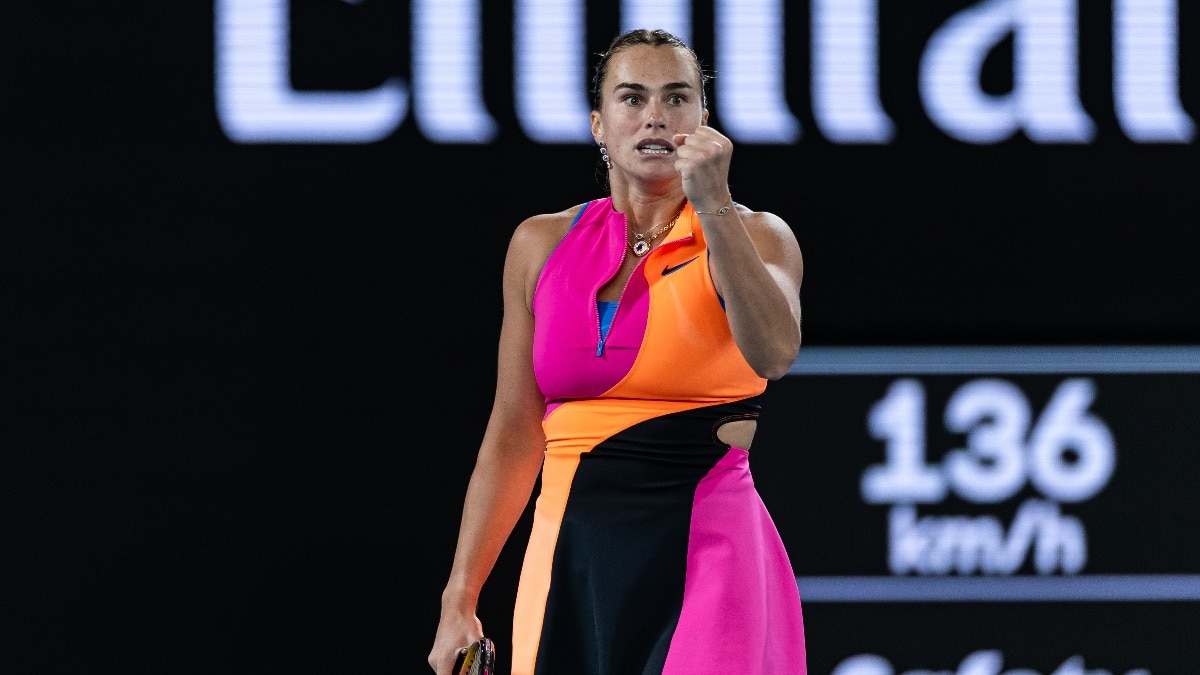
- WTA's revised eligibility policy requires all women's-category players to undergo one-time genetic screening, including SRY gene testing via cheek swab or blood test, conducted confidentially.
- Sabalenka arrived in Montreal as the top seed and one of the favourites for the WTA 1000 title.
- Sabalenka publicly backed the policy, stating she would gladly undergo the tests and calling it a completely fair measure.
- She emphasized the importance of preserving fairness in women's tennis, noting that biologically, men are much stronger than women.
- Sabalenka is set to begin her campaign against Japan's Moyuka Uchijima in the Round of 64 after receiving a favourable draw.
- The WTA's revised eligibility policy has generated widespread discussion across the tennis world since it was announced.
- Sabalenka is among the first leading players to publicly endorse the policy, making her stance clear before taking to the court in Montreal.
- While the eligibility regulations continue to spark debate across the sport, Sabalenka insisted her primary focus remains on competing for titles.
World No.1 Aryna Sabalenka has publicly supported the WTA's new eligibility policy, which mandates one-time genetic testing for athletes to ensure fairness in women's tennis. The policy, requiring testing for the SRY gene, aims to maintain competitive integrity while respecting athletes' privacy.
"It is very important to preserve fairness on our tour. It is obvious that, biologically, men are much stronger than women. Therefore, I would not find it fair for a woman to compete against a biological man," Sabalenka stated, emphasizing the necessity of the measure.
The WTA's decision has sparked significant discussion within the tennis community, with Sabalenka being one of the first top players to endorse the policy. She expressed her willingness to comply with the testing, stating, "I believe it is a completely fair measure, and it needs to remain that way."
As the top seed at the Canadian Open, Sabalenka is focused on her performance, beginning her campaign against Japan's Moyuka Uchijima. The revised eligibility regulations continue to generate debate, but Sabalenka remains committed to competing for titles amidst the ongoing discussions surrounding the policy.
The WTA's approach includes confidential testing through either a cheek swab or blood test, aiming to safeguard competitive fairness while respecting the privacy of athletes.
“Under the policy, all women's-category players must undergo one-time screening for the SRY gene via a cheek swab or blood test, conducted confidentially. Sabalenka, the top seed in Montreal, opens her campaign against Japan's Moyuka Uchijima in the Round of 64.”




