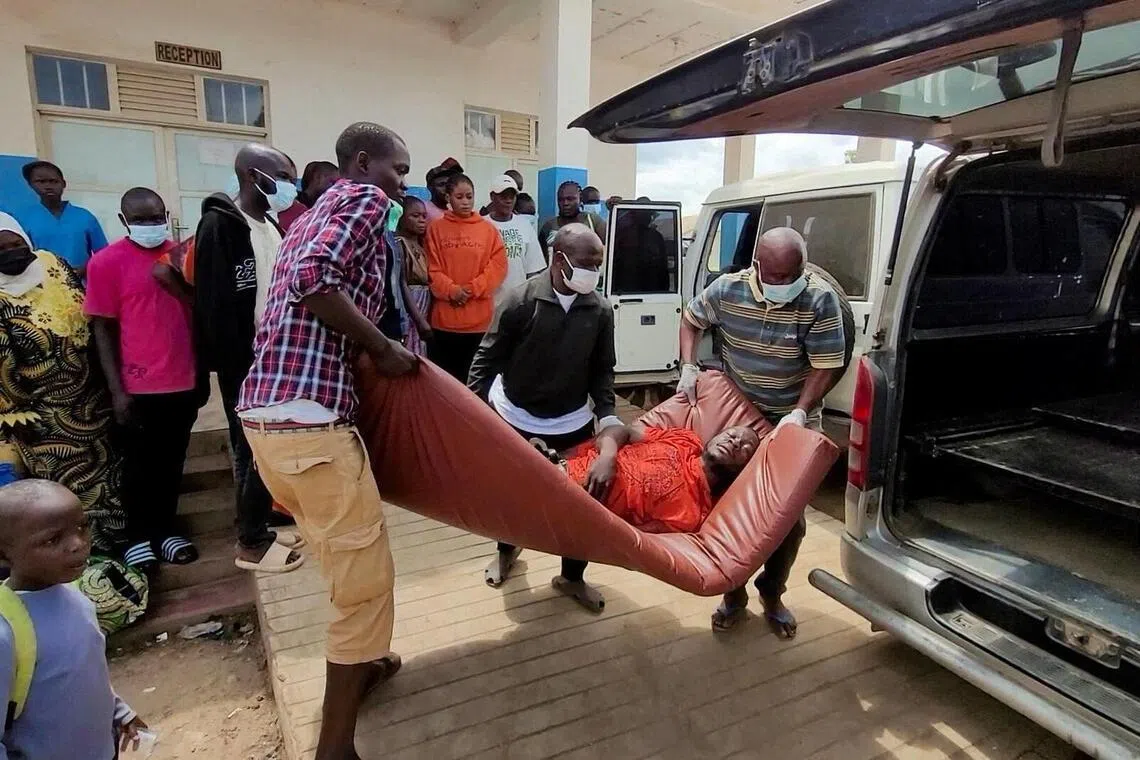
- WHO declared an international health emergency on May 17, 2026 due to an Ebola outbreak in the Democratic Republic of Congo (DRC) that has killed more than 80 people.
- The outbreak caused by the Bundibugyo strain of Ebola was classified as a “public health emergency of international concern”, the second-highest level of alert under international health regulations.
- The DRC’s Health Minister Samuel-Roger Kamba stated that the Bundibugyo strain has no vaccine and a lethality rate that can reach 50 percent.
- The latest outbreak was confirmed on May 15 in Ituri province of the DRC, which borders Uganda and South Sudan.
- Dr Trish Newport, the emergency programme manager for Doctors Without Borders (MSF), expressed concern over the rapid spread of the outbreak, stating the number of cases and deaths is extremely concerning.
- At least six Americans have been exposed to the Ebola virus during a deadly outbreak in the Democratic Republic of Congo, sources have told CBS News.
- The World Health Organization (WHO) has declared the outbreak as an international emergency, with the DR Congo's health ministry reporting around 350 suspected cases and 91 deaths.
- One American is believed to have symptoms, with three others facing a high-risk contact or exposure.
- The US Centers for Disease Control and Prevention (CDC) said it was supporting the "safe withdrawal of a small number of Americans who are directly affected".
- The current strain of Ebola is caused by the Bundibugyo virus, for which there are no approved drugs or vaccines.
- The US government is reportedly looking to arrange transport for the small group of Americans in DR Congo to a safe quarantine location.
- The US has also issued a Level Four travel advisory - its most severe level - warning against travel to the DR Congo.
- The WHO has said the outbreak in DR Congo's eastern Ituri province is a public health emergency of international concern, but did not meet the criteria of a pandemic.
- The Democratic Republic of the Congo must quickly strengthen active surveillance, trace transmission chains and prevent the Ebola virus from spreading after the latest outbreak in the country, a leading Congolese virologist has warned.
- The outbreak in the eastern province of Ituri is caused by the Bundibugyo strain, a rare variant of the Ebola disease that has no approved therapeutics or vaccines.
- According to data released Saturday by the Africa Centers for Disease Control and Prevention (Africa CDC), 336 cases and 87 deaths have been reported.
- Jean-Jacques Muyembe, director general of the National Institute of Biomedical Research, stated that the immediate response should include isolating patients, carrying out active surveillance, tracing contacts, protecting health workers and disinfecting health facilities.
- The current outbreak was not caused by the more familiar Ebola Zaire strain, but by the Bundibugyo strain, first identified in Uganda in 2007.
- A confirmed case has been reported in Goma, the capital of North Kivu province, which is a major urban and cross-border hub.
- After the case was confirmed in Goma, Rwanda temporarily closed border posts with the city.
The World Health Organization (WHO) declared a public health emergency of international concern on May 17. The outbreak in the Democratic Republic of Congo (DRC) is linked to the Bundibugyo strain of Ebola, a variant with no available vaccine or specific treatment, leading to significant health risks.
Authorities reported over 350 suspected cases and at least 91 deaths as of mid-May, raising alarms among health officials. Dr. Trish Newport, an emergency programme manager for MSF, warned, “The number of cases and deaths we are seeing in such a short timeframe… is extremely concerning.” The absence of a vaccine for this strain has led to stringent health advisories.
Notably, six Americans have been identified as having been exposed to the virus, with one showing symptoms. The US Centers for Disease Control and Prevention (CDC) is facilitating the safe withdrawal of these individuals, highlighting the urgency of the situation.4
In response, the DR Congo health ministry and experts like Jean-Jacques Muyembe are calling for enhanced surveillance, contact tracing, and patient isolation to combat the outbreak’s spread. The WHO’s declaration, made after a crucial assessment, emphasizes the need for immediate action even as the outbreak does not yet meet criteria for a pandemic.
So far, a confirmed case has also emerged in Goma, prompting border closures from Rwanda as authorities scramble to contain the crisis.
“The WHO has officially declared the ongoing Ebola outbreak in the Democratic Republic of Congo a global health emergency. Authorities are warning of potential risks after confirming that at least six Americans have been exposed to the virus.”
Context on the Ebola outbreak in DRC
The Bundibugyo strain has no vaccine or approved treatment, with a high lethality rate of about 50%, making it particularly concerning for health officials. Health officials confirmed that the outbreak in the Ituri province was identified on May 15, with approximately 350 suspected cases reported. Cross-border health coordination is essential, as the outbreak has raised alarms not only in Congo but also in neighboring countries like Rwanda.


 BBC
BBC