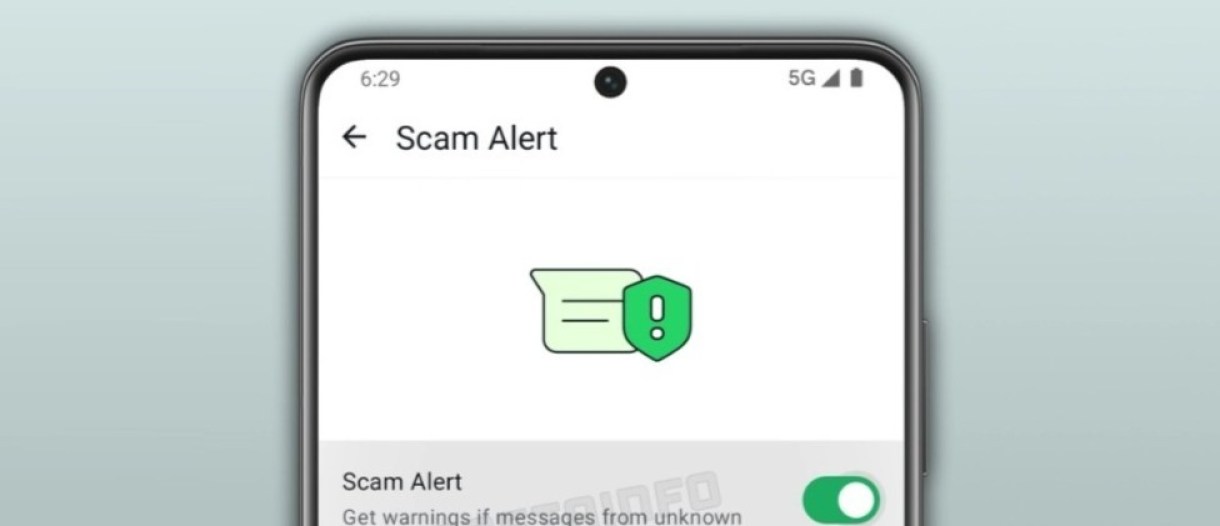
- WhatsApp's Scam Alert feature is now available to some Android beta testers on build 2.26.34.1, as reported by WABetaInfo.
- Meta officially detailed the Scam Alert feature over two weeks ago, which aims to enhance user security against scams.
- The Scam Alert feature will warn users if an incoming message from an unknown sender appears to be a scam, without the sender knowing.
- The Scam Alert feature runs an on-device machine learning model to alert users about potential scam messages while maintaining end-to-end encryption.
- When enabled, the feature analyzes incoming messages from unknown numbers and unsaved contacts for linguistic cues and structural patterns typical of scams.
- Users can mark senders as trusted or block and report them if they receive a Scam Alert warning.
WhatsApp's Scam Alert feature is currently being tested by select Android beta users, enabling on-device detection of potential scams without alerting the sender. This feature, which is optional and can be enabled in the app's settings, utilizes a lightweight machine learning model to analyze incoming messages from unknown contacts.1346

When a message is flagged as suspicious, a warning banner appears in the chat, allowing users to either trust the sender or report them. Meta emphasizes that no message content leaves the device, preserving user privacy and maintaining end-to-end encryption. "No message content leaves the device for classification or is auto-reported to WhatsApp, Meta, or anyone else," the company stated.2
The feature is designed to combat the increasing threat of messaging scams, which have become a significant cybersecurity concern. Users can also contribute to improving the feature's accuracy by sharing the last five messages from a flagged conversation with WhatsApp. Meta plans to gather performance data during this limited beta rollout before expanding the feature to a broader audience.

Currently, the Scam Alert feature is available to some users enrolled in WhatsApp's beta program, with no specific date for general availability announced yet. Users are encouraged to wait for a wider rollout unless they frequently receive messages from unknown contacts.
“The feature runs a lightweight machine learning model on-device, analyzing messages from unknown senders for scam patterns. Users can mark senders as trusted or block and report them, and can optionally share the last five messages to improve accuracy.”
 YugaTech