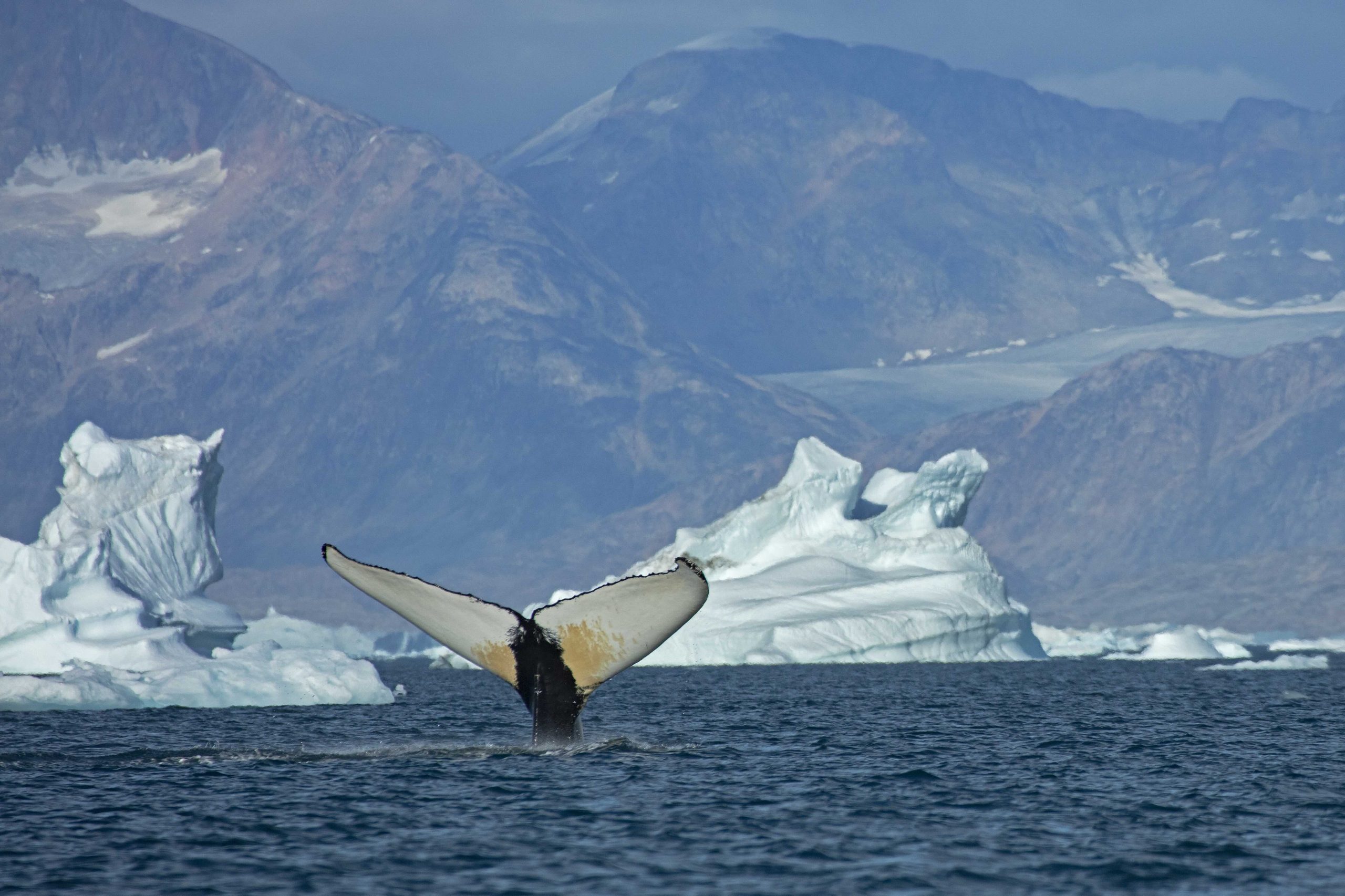
- Whales once rarely seen in East Greenland have dramatically increased in numbers, with a new study documenting minke, fin, and humpback whales now abundant in the region.
- The study, published in Frontiers in Marine Science, highlights that in 2024, there were at least 4,000 humpback whales, 6,000 fin whales, and 6,000 minke whales in the Greenland Sea.
- In August 2025, a ship crew reported seeing as many as 50 baleen whales together near 69°N, indicating a significant increase in whale aggregations.
- The whales are believed to be following the climate-driven movement of capelin, their primary prey, which has shifted from Icelandic waters to Greenland.
- Sea surface temperatures off Greenland have risen by around 2°C since the 1990s, contributing to a major ecological shift in the region.
- The study indicates that the increase in whale populations is linked to retreating summer ice and the availability of new feeding habitats.
- The researchers documented feeding frenzies of fin, humpback, and minke whales, which were historically rarely observed in coastal East Greenland.
- Ship surveys did not record a humpback whale in the area until 2006, with numbers gradually increasing to more than 150 by 2024.
- The study utilized data from Inuit hunters, aerial surveys, and satellite tracking to analyze whale populations from 1987 to 2025.
- The researchers estimate that during their stay, the whales may consume roughly 1.1 million tons of prey, potentially reshaping the region's food web.
A new study published in *Frontiers in Marine Science* reveals a significant ecological shift in East Greenland, where minke, fin, and humpback whales have surged in numbers due to climate change.128
Researchers documented a dramatic increase in whale populations, with estimates of approximately 4,000 humpbacks, 6,000 fin whales, and 4,500 minke whales visiting the Greenland Sea in 2024.
The study highlights that these whales are following the climate-driven movement of capelin, their primary prey, which has shifted from Icelandic waters into Greenland's feeding grounds.
“This has led to regular mixed ‘feeding frenzies’ of fin whales, humpback whales, and common minke whales – species which historically were only rarely observed in coastal East Greenland,” explains whale biologist Mads Peter Heide-Jørgensen.7
The research indicates that sea surface temperatures off Greenland have risen by around 2°C since the 1990s, making it one of the fastest warming marine areas globally. This warming has resulted in a retreat of summer ice, opening up new feeding habitats for these baleen whales.
The study also emphasizes the need for urgent climate adaptation in marine management, as shifting fish populations necessitate changes in conservation strategies. “While multispecies feeding frenzies and humpback whale aggregations may sound wonderful, they are another reminder of the impacts of climate change,” the researchers note.
During their four-month stay, these whales may consume approximately 1.1 million tons of prey, potentially reshaping the region’s food web.10
“The study, published in Frontiers in Marine Science, estimates that during their four-month stay, the whales may consume roughly 1.1 million tons of prey, potentially reshaping the region's food web. Sea-surface temperatures off Greenland have risen about 2°C since the 1990s, making it one of the fastest-warming sea areas, and researchers describe the shift as borealization, with ice-associated species like narwhals now sharing habitat with temperate whales.”
 BBC Wildlife Magazine