- Aleksandar Vucic conceded defeat in Serbia's parliamentary election, marking a significant political shift after 14 years of his party's dominance.
- Vucic stated that the Students' List is projected to win between 135 and 140 seats, while his party is expected to secure around 105 seats.
- Following the concession, supporters of the Students' List celebrated in the streets, chanting 'Aleksandar is gone.'
- The election saw a high turnout and significant tensions, with Vucic conceding about 1.5 hours after polls closed.
- The political landscape shifted dramatically after a canopy collapse at Novi Sad train station in November 2024, which killed 16 people and ignited youth protests against government corruption.
- In January 2025, Serbia's prime minister resigned in an effort to defuse rising tensions following the protests.
- March 2025 saw Belgrade's largest anti-government protest, reflecting the growing strength of the student-led movement.


Serbia's parliamentary election on Sunday marked a historic defeat for long-time leader Aleksandar Vucic, as he conceded to the student-led opposition, the Students' List, which is projected to win between 135 and 140 seats. Vucic's Serbian Progressive Party (SNS) is expected to secure around 105 seats.1234
The election was characterized by high voter turnout and significant tensions, with students rallying against government corruption and the erosion of democracy. Vucic, who had maintained power for 14 years, attributed his loss to alleged foreign interference and media bias, stating, "The Students' List has won".
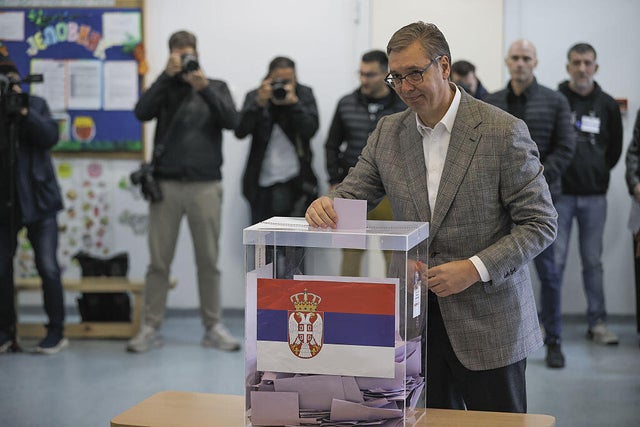
The Students' List garnered approximately 2.2 million votes, compared to SNS's 1.7 million. Supporters celebrated in the streets, chanting, "Aleksandar is gone". This election is seen as a referendum on Vucic's rule, which has faced increasing scrutiny since a tragic incident in 2024 when a train station canopy collapse killed 16 people, igniting widespread protests.67

Independent monitors reported irregularities, including voter intimidation and attempted vote buying, raising concerns about the election's fairness. The student movement, which gained momentum after the canopy collapse, successfully organized protests and mobilized voters, leading to this significant political shift in Serbia.
“The message was clear: the rule of law and not ruled by the law,” said Gordana Delić, emphasizing the importance of this election in shaping Serbia's future.
“The Students' List, led by university students but featuring candidates like cardiologist Ilija Srdanović and ex-basketball star Dejan Bodiroga, is projected to secure up to 140 seats. Vucic alleged interference by unnamed European countries and an 'American deep state' in the loss.”


 CBS NewsBBC