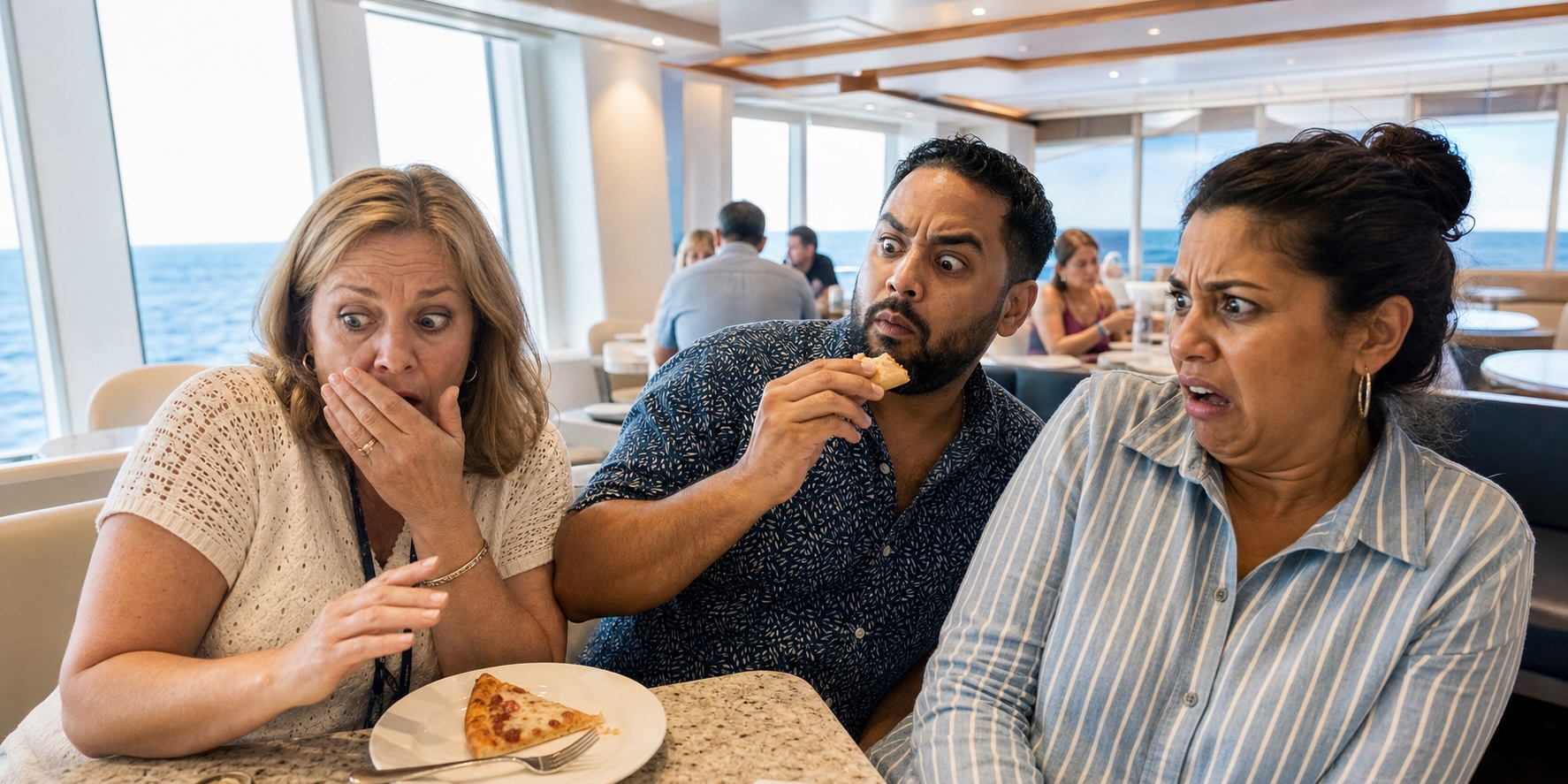
- A passenger on a Carnival cruise was filmed scraping dry skin off her bare foot at a dining table and then eating with the same hand, potentially spreading a contagious fungal infection.
- Cruise lines have broad discretionary authority to ban passengers under clauses like ’comfort, enjoyment, safety or well-being’, but there is little oversight or appeal process once a ban is issued.
- Past bans have been imposed for minor or unclear reasons, including CBD mints, a broken picture frame, and vague ’security concerns’, often without transparent evidence or explanation.
- The author suggests a common-sense approach: ban for gross behavior only if there is a genuine health risk, provide a written explanation, and offer a meaningful appeal.
A viral video of a passenger on a Carnival cruise scratching her foot with a fork has ignited discussions about the need for stricter policies regarding passenger behavior. The video, which shows the woman in the dining area barefoot and using the same hand to eat, raises significant health concerns, particularly as her foot appears to be infected with tinea pedis, a contagious fungal infection.1
Cruise lines like Carnival have policies in place that allow them to disembark guests whose actions compromise the comfort and safety of others. According to Carnival's code, any guest whose conduct affects the well-being of others can be barred from future sailings. However, the criteria for what constitutes unsanitary behavior remains ambiguous, leading to questions about who decides these standards.
Experts argue that while banning unsanitary behavior seems reasonable, it is crucial to assess whether there is a genuine health risk involved. “If you ban someone for doing something gross, first determine if there’s a genuine health risk,” one expert noted, emphasizing the need for a clear appeal process to ensure fairness.4
The incident has sparked a broader conversation about how cruise lines handle disruptive passengers and whether current policies adequately address public health concerns. As the debate continues, the implications for future cruise policies remain uncertain.
“The passenger, filmed barefoot in the dining area, was scratching a foot infected with tinea pedis before eating with the same hand. Past bans include passengers removed for using CBD mints or breaking a picture frame, illustrating cruise lines' broad discretionary authority.”