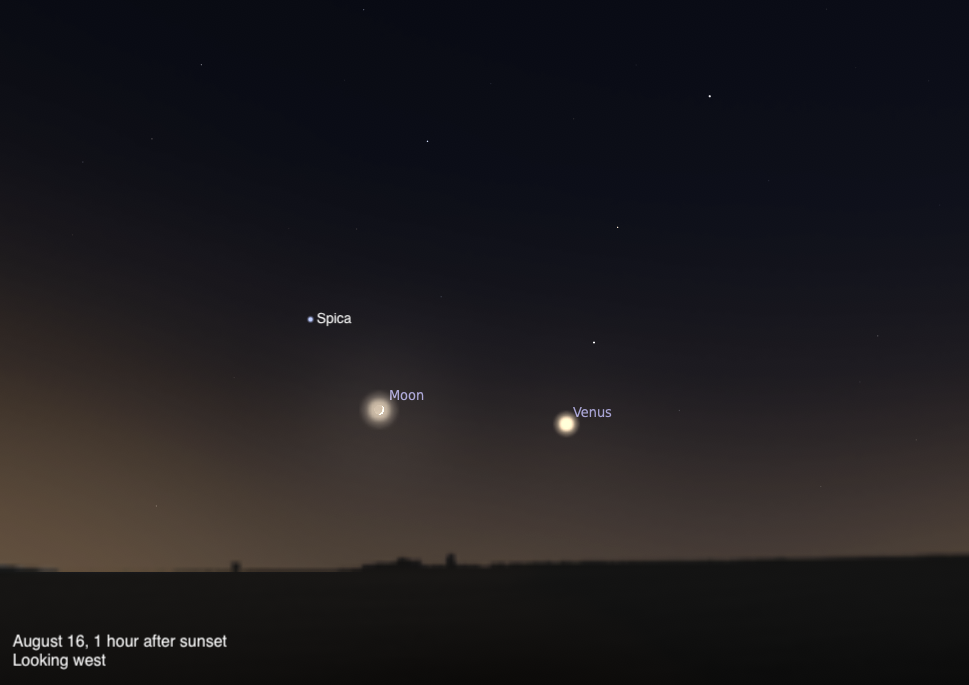
- Venus is at its greatest eastern elongation on August 16, appearing farthest from the Sun and at peak evening brilliance, visible next to a crescent Moon after sunset.
- Venus reached dichotomy (50% lit) last week, and on August 15, the Moon passed 2° south of Venus at 5 A.M. EDT, although both were visible together in the evening sky.
- Venus will be in conjunction with Spica on September 2-3, before Spica disappears into the sunset.
- Venus will reach another peak illumination in the evening sky around September 18 and won’t appear this bright until April 2028.
- Around November 29, Venus will appear the brightest in the morning sky.
- Venus will reach greatest western elongation on January 3, 2027, disguising as a bright morning star.
Venus will reach its peak evening brilliance this weekend, appearing alongside a crescent Moon after sunset. This event coincides with Venus's greatest eastern elongation, where it is positioned approximately 47 degrees from the Sun, making it an ideal time for observation.1234
As twilight fades, the crescent Moon will be visible with Venus about 9.5 degrees to its right. The Moon will be in a waxing phase, illuminated at 22%, ensuring it does not overshadow Venus's brightness. Observers can also spot Spica, the brightest star in Virgo, located to the upper left of the Moon, shining nearly 2,000 times brighter than the Sun from a distance of 250 light-years.568
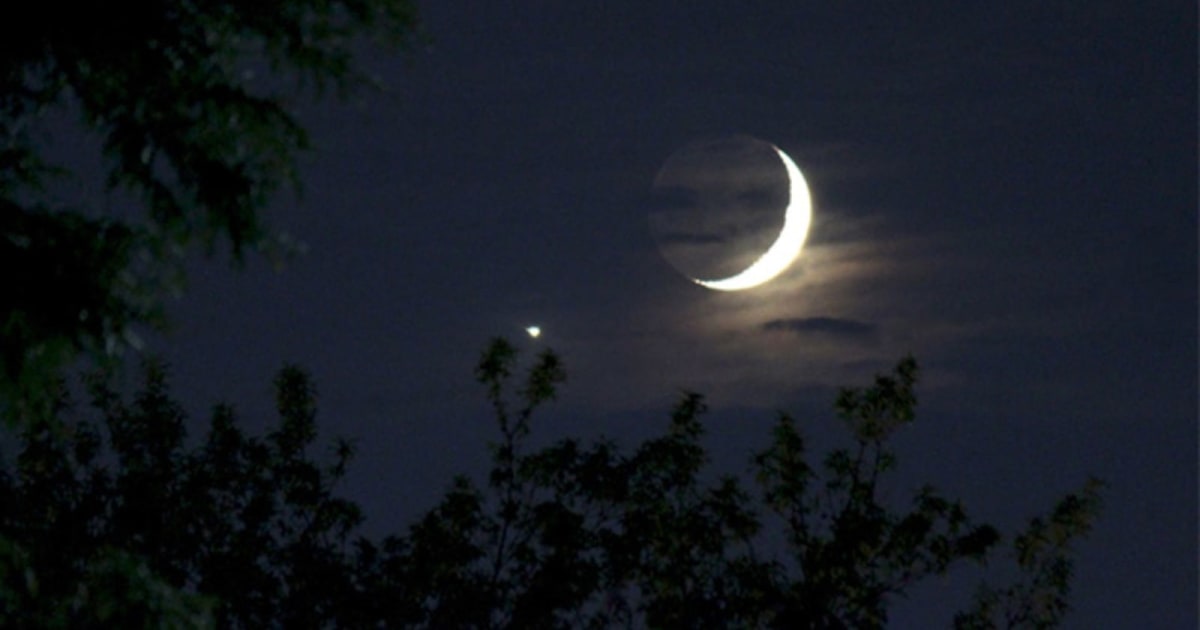
Venus, currently appearing as a crescent itself at 48% lit, reached its dichotomy last week. It will continue to wane, but its apparent angular diameter is now 25”. This weekend's viewing opportunity is particularly special as Venus will not appear this bright again until April 2028. The planet is also heading towards a conjunction with Spica on September 2-3, before Spica disappears into the sunset.
For those without telescopes, Venus will be bright enough to be seen with the naked eye, making this celestial event accessible to all skywatchers.
“Venus is 48% lit and appears as a tiny crescent through a telescope, with an angular diameter of 25 arcseconds. It will reach another peak illumination around September 18 and won't appear this bright again until April 2028.”
 starlust.org