- Trump announced the deal on Friday, calling it a “historic transaction” that more than doubles American oil reserves, and later said he would use Venezuelan oil to fill the Strategic National Reserves.
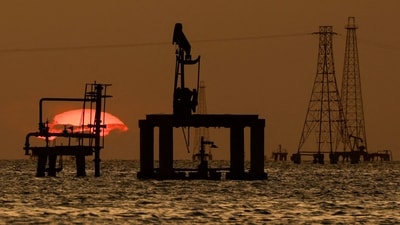
- The deal reportedly gives Washington control of 65bn barrels of Venezuelan oil reserves, and involves 17 “strategic oilfields” with a hoped production of more than 1.5m barrels per day.
- Rodríguez claimed the deal would bring “endless” benefits, help develop the economy, earn revenues of more than $209bn (£154bn), and make Venezuela “an energy powerhouse”.
- Critics, including opposition figures and former PDVSA head Rafael Ramírez, condemned the deal as a “massive land grab” and a “neo-colonial” transaction.
- The deal marks a U-turn for Rodríguez, who previously accused the opposition of surrendering resources to Washington and warned that the Pentagon sought Venezuelan reserves.
- Opposition leaders fear the deal will undermine democracy, with Juan Pablo Guanipa insisting that only a free election can ensure the agreement benefits the nation.
Venezuela's Delcy Rodríguez has defended a controversial oil deal with Donald Trump, asserting it will yield over $209 billion in revenues and transform the nation into an 'energy powerhouse.' The agreement reportedly grants the U.S. control over 65 billion barrels of oil reserves, raising concerns of a 'massive land grab.'
Rodríguez emphasized, “There is something that must be made absolutely clear: Venezuela retains the ownership and sovereignty over its resources.” She stated that the deal, involving 17 strategic oilfields, aims to produce more than 1.5 million barrels daily, which she believes is essential for converting Venezuela's vast underground wealth into tangible benefits for its people.
Despite the optimistic outlook, critics have voiced strong opposition. A prominent opposition figure described the agreement as “a massive land grab” by the U.S., while former PDVSA head Rafael Ramírez accused Rodríguez's administration of “driving a dagger straight into the heart of the homeland” with this “neo-colonial” transaction. Opposition leader Juan Pablo Guanipa warned that without a free election and transparent governance, the deal is akin to “a skyscraper built on pillars of clay.”781213
This deal marks a significant shift for Rodríguez and the socialist movement in Venezuela, which has historically opposed U.S. influence. In a past speech, she criticized the U.S. for its strategic interest in Venezuelan resources, stating, “The Pentagon always had a strategic objective of obtaining Venezuelan reserves.”91011
“The deal reportedly involves 17 'strategic oilfields' with hoped production of more than 1.5m barrels per day, and Trump said he would use Venezuelan oil to fill the Strategic National Reserves. Critics, including former PDVSA head Rafael Ramírez, called it a 'neo-colonial' transaction.”


 The Guardian