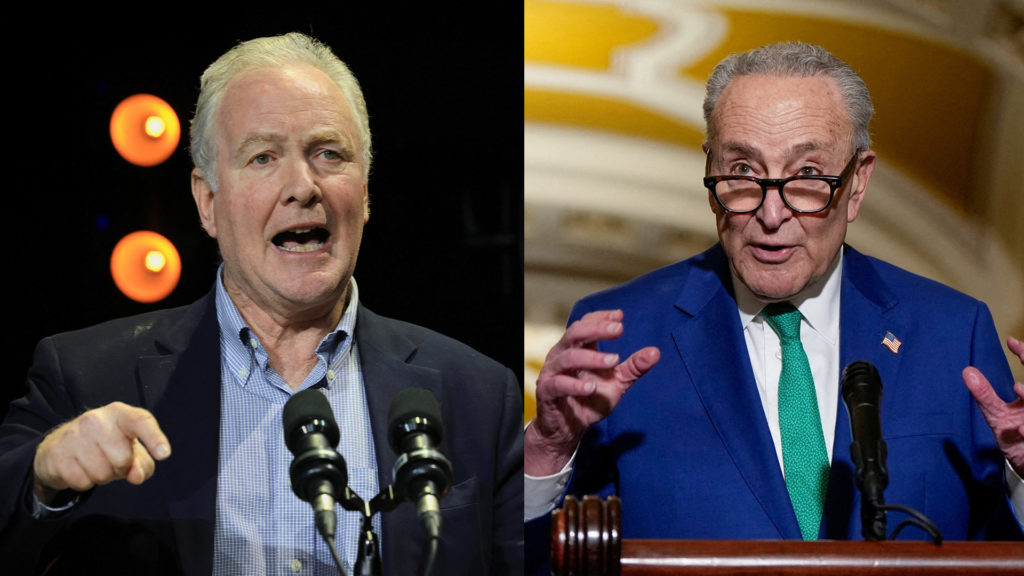
- Van Hollen, a progressive Democrat elected to the Senate in 2016 after seven terms in the House, is challenging Schumer, whom some Democrats regard as too tied to the party establishment.
- Van Hollen said his challenge was not about any one individual but to ensure Democrats answered the call of the American people to bring down costs and end the war against Iran.
- Van Hollen claimed he had more than 10 of the 55 Democratic senators and senators-elect behind him, and did not believe Schumer had a lock on the race.
- Van Hollen acknowledged, “Am I the underdog? Yes.”
- Van Hollen, also weighing a run for president in 2028, had emerged as the favorite to challenge Schumer and had expressed increasing willingness in recent days.
- Senator Bernie Sanders, an independent from Vermont who aligns with Democrats, had encouraged Van Hollen to become a candidate.
Senator Chris Van Hollen's challenge to Chuck Schumer for Senate Majority Leader marks a significant shift within the Democratic Party.
Van Hollen, a progressive Democrat, stated, "this is not about any one individual", emphasizing the need for leadership that resonates with the electorate's demands.12
He highlighted that his campaign is driven by the desire to "bring down costs" and address pressing issues like the conflict in Iran.
Van Hollen, who has served in the Senate since 2016, claims to have garnered support from "more than 10" Democratic senators, indicating a potential fracture in party unity as they prepare for a new Congress.3
His announcement comes amid calls from some senators and activists for a leadership change, as they view Schumer as too moderate and entrenched in the party establishment.
Notably, Senator Bernie Sanders has encouraged Van Hollen's candidacy, reflecting the growing progressive sentiment within the party.6
As Van Hollen considers a presidential run in 2028, his challenge to Schumer could reshape the Democratic landscape moving forward.
“Van Hollen, who is also weighing a 2028 presidential run, was encouraged by Bernie Sanders to enter the race. He acknowledged being the underdog, saying 'Am I the underdog? Yes,' while framing his bid as answering the call to 'bring down costs' and end the war against Iran.”