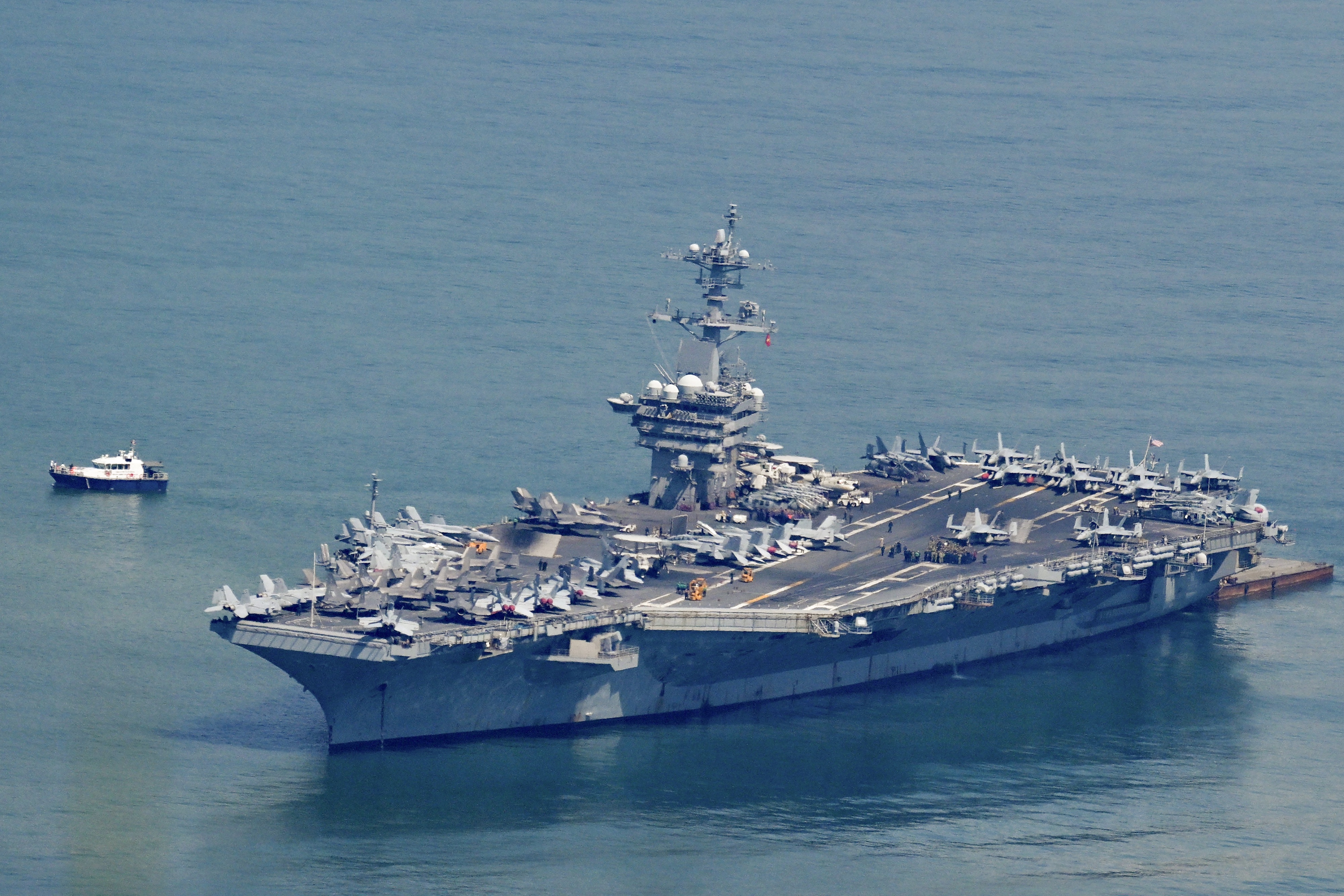
- The USS Lincoln hit a modern-day record for most continuous days at sea, 208, without a port call and is on track to potentially surpass the longest deployment of a modern aircraft carrier set earlier this year by the USS Gerald R. Ford at 326 days.
- Family members of sailors on the USS Lincoln have reported concerns about damage to arresting cables, flight deck wear, broken toilets, lack of hot water, air-conditioning outages, and potential water contamination from jet fuel.
- Retired senior Navy leaders are concerned about the wear and tear on the $22 billion carriers and the extended maintenance time needed to repair them.
- Navy spokesperson Cmdr. Joseph Hontz stated that the Lincoln remains fully capable of meeting all mission tasking, despite the challenging deployment, and noted there are no holes in the flight deck and the crew has repaired expected wear and tear.
- Retired Navy captain Brent Sadler said, “We are excessively wearing out our ships,” and noted that longer hard work at sea requires more maintenance time when ships are not available for deployments.
- Previous back-to-back extended deployments led to unplanned maintenance work, with repair times doubling from the normal seven or eight months to a year or year and a half, creating a maintenance debt that takes years to pay back.
- The Navy has used four different aircraft carriers to support the war with Iran, and leaders maintain the need for at least two carriers in the Middle East, while former leaders warn of vulnerabilities to China, Russia, and North Korea.
Sailors aboard the USS Lincoln are increasingly worried as the Navy's aircraft carriers face unprecedented wear and tear during the ongoing conflict with Iran. The Lincoln has set a record of 208 days at sea without a port call, raising significant concerns about the ship's operational integrity and the well-being of its crew.15
Retired Navy leaders, including Brent Sadler, a former captain, have voiced alarm over the excessive wear on the carriers, emphasizing that prolonged deployments lead to a backlog of maintenance needs. “The longer that you’re working them hard at sea,” Sadler noted, “the longer the Navy needs to put a lot of time into maintenance.”8
Family members of sailors have reported troubling conditions aboard the Lincoln, including broken toilets, air-conditioning outages, and concerns about potential water contamination from jet fuel. During a tense virtual town hall meeting, they expressed their worries about the damage to arresting cables and the overall state of the flight deck.234
Despite these issues, Cmdr. Joseph Hontz, spokesperson for the Navy’s 5th Fleet, assured that the Lincoln remains capable of fulfilling its mission tasks, stating that the crew has managed to repair expected wear and tear. However, Bryan Clark, a retired Navy commander, warned that previous extended deployments have resulted in a type of “maintenance debt” that can take years to resolve.910
As the U.S. maintains a military presence in the region, the reliance on multiple carriers raises concerns about vulnerabilities to threats from adversaries like China and Russia, as noted by former Navy leaders.111213
“The USS Lincoln has seen more than 10,000 aircraft sorties in eight months, and the Navy has used four different carriers to support the war. Retired leaders warn the extended deployments leave the U.S. vulnerable to China, Russia, and North Korea.”
 MS NOW