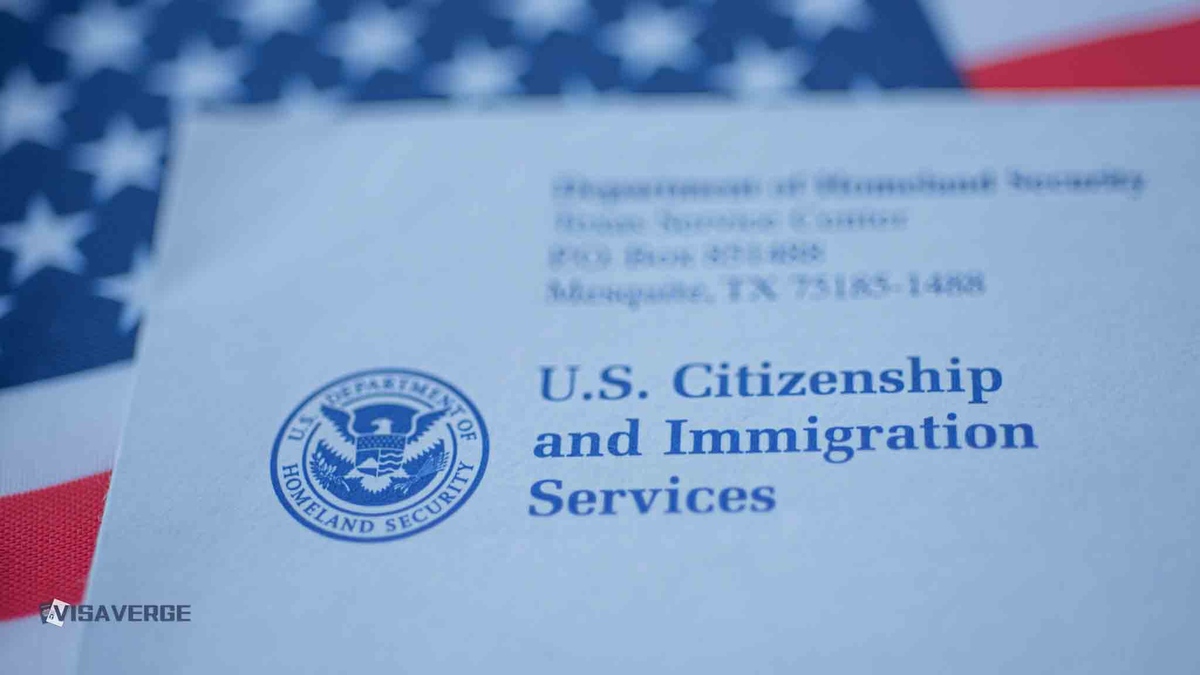
- US Citizenship and Immigration Services has reinforced its policy of conducting neighbourhood and workplace investigations for naturalisation applicants, effectively ending a historic pause that lasted over three decades.
- Under the updated guidelines, immigration officers can exercise discretionary authority under federal law to independently verify an applicant's community ties, residence history, and moral character, leveraging statutory provisions under Section 335(a) of the Immigration and Nationality Act.
- When an officer decides to trigger an inquiry, investigators may visit local residential areas, contact landlords, speak with employers or co-workers, and interview business associates to corroborate the applicant’s history over the preceding five-year period.
- For over thirty years, the agency routinely waived personal inquiries, relying instead on electronic databases and fingerprint records maintained by the Federal Bureau of Investigation; however, administrative leaders concluded that digital records alone may occasionally miss nuanced indicators regarding an applicant’s local reputation, community engagement, or actual residency stability.
- According to agency officials, the policy is designed to ensure that every individual granted naturalisation fully satisfies statutory criteria, including demonstrated good moral character and an unwavering attachment to the foundational principles of the nation.
- Agency spokespersons explained that the renewed focus aligns with broader executive initiatives championed by US President Donald Trump to reinforce the integrity of the legal immigration system and ensure comprehensive vetting across all administrative levels.
- Despite understandable anxiety across immigrant communities, immigration lawyers and policy analysts clarify that the revived checks will not automatically apply to every single naturalization candidate; instead, USCIS officers are granted individual discretion to determine whether a neighbourhood or workplace investigation is warranted based on the specific facts and documentation presented in an application file.
US Citizenship and Immigration Services (USCIS) has revived neighborhood and workplace investigations for naturalization applicants, concluding a 35-year pause that began in 1991. This policy shift allows immigration officers to exercise discretion under Section 335(a) of the Immigration and Nationality Act to verify community ties and moral character.123
The agency's decision comes after a long-standing reliance on electronic databases and fingerprint records, which officials believe may overlook important indicators of an applicant's local reputation and community engagement. According to agency officials, the policy aims to ensure that every individual granted naturalization meets statutory criteria, including demonstrated good moral character and a strong attachment to the nation's principles.8
Despite concerns among immigrant communities, immigration lawyers clarify that the checks will not apply to all applicants. Instead, USCIS officers will use their discretion to determine if an investigation is warranted based on the specifics of each application. When initiated, investigators may visit residential areas, contact landlords, and interview employers or co-workers to corroborate an applicant's history over the past five years.1011
This renewed focus aligns with broader executive initiatives aimed at reinforcing the integrity of the legal immigration system, ensuring comprehensive vetting at all administrative levels. The investigative scope is designed to assess an applicant's day-to-day conduct, social habits, financial obligations, and community standing.
“The revived checks will not apply to every applicant; officers decide case-by-case based on documentation. Investigators may visit homes, contact landlords, and interview employers to assess conduct over the preceding five years, aligning with Trump's broader immigration vetting initiatives.”