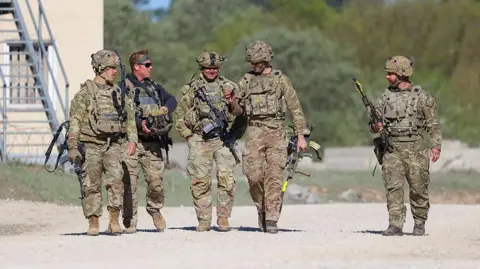
The Pentagon's decision to withdraw 5,000 troops from Germany underscores growing rifts with Europe regarding the U.S. military's role in global conflicts, namely the Iran war. The move signals President Trump's dissatisfaction with European support amid escalating tensions.
The officials said that the withdrawal is anticipated to be completed within the
next six to twelve months. Chief Pentagon spokesperson Sean Parnell characterized this as part of a broader reassessment of U.S. defense operations in Europe, emphasizing the importance of adapting plans based on current requirements.
Mr. Trump has not held back in criticizing Germany and other NATO allies for their lack of involvement, stating that, "Italy has not been of any help to us and Spain has been horrible," in the context of military support against Iran. Parnell, in detailing the motivations behind the troop reduction, highlighted, "This decision follows a thorough review of the Department's force posture in Europe and is in recognition of theater requirements and conditions on the ground."
Currently, there are more than
36,000 active duty troops stationed at bases in Germany, together with nearly 1,500 reservists and 11,500 civilian personnel. The administration's decision to withdraw troops is part of a shift in focus towards both the homeland and the
Indo-Pacific region. This initiative indicates an evolving military strategy that could redefine America's engagement with its allies moving forward.
President Trump’s actions and comments reflect a broader concern about NATO's operational effectiveness and the necessity for allies to contribute more significantly to collective defense efforts.
Sources: 

The Pentagon announced plans to withdraw 5,000 troops from Germany, reflecting tensions between the U.S. and its NATO ally over the Iran war. Secretary of Defence Pete Hegseth highlighted a thorough review of the military presence in Europe, with the withdrawal expected to complete in six to twelve months.