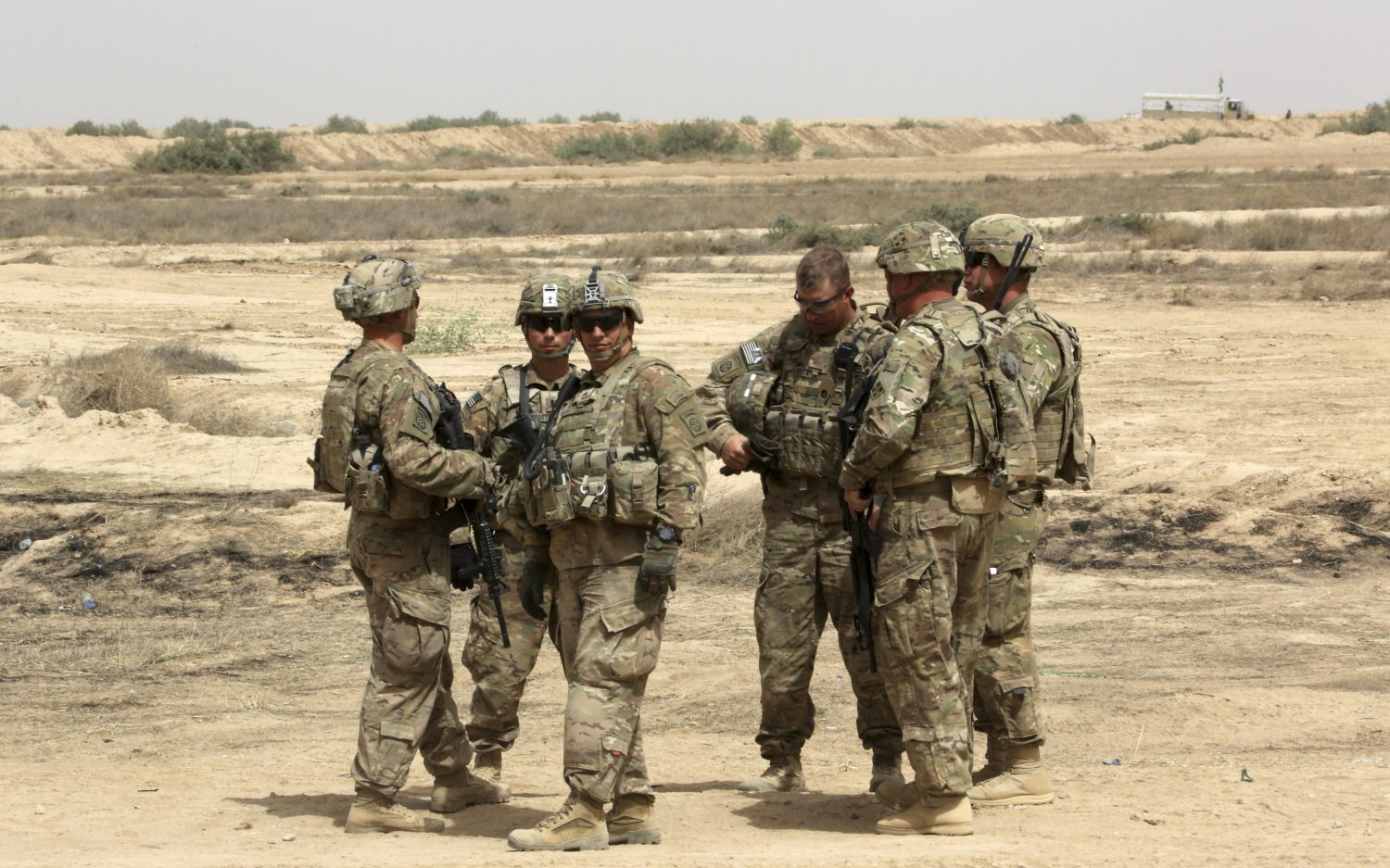
- The U.S. military planned to completely withdraw from Iraq by the end of the month, according to the Associated Press.
- The Trump administration has warned Iraq that monthly dollar transfers could be suspended unless Iran-aligned armed factions surrender their weapons by Sept. 30.
- This warning was delivered directly to Prime Minister Ali al-Zaidi during his visit to Washington, where U.S. officials made clear that failure to curb armed groups would carry consequences for bilateral relations.
- Several factions, including Kataib Hezbollah, have resisted the weapons handover process, complicating disarmament efforts.
- Sept. 30 also coincides with the scheduled conclusion of the international anti-ISIS coalition's military mission in Iraq.
- U.S. forces entered Iraq in 2003 with the aim of taking down Saddam Hussein and left in 2011.
- A smaller group of U.S. forces re-entered Iraq in 2014 upon the Iraqi government’s request to fight the Islamic State group.
- American troops withdrew from a majority of Iraq last year, but hundreds remained in the country's northern region.
- Officials in 2024 decided to end the mission, with all U.S. troops expected to leave by Sept. 30.
The U.S. military is set to withdraw all remaining troops from Iraq by September 30, 2024, following a warning to the Iraqi government regarding the disarmament of Iran-aligned militias.1
Failure to comply could lead to the suspension of crucial dollar transfers, a significant financial lever for Baghdad.
During a visit to Washington, Prime Minister Ali al-Zaidi was informed that the U.S. would halt monthly dollar transfers unless armed factions surrendered their weapons.3
Sources indicated that this ultimatum was tied to Iraq's access to dollar liquidity, which has already been impacted by delays in transfers.
The Iraqi dinar's value has been directly affected by these financial pressures, as noted by a source who stated, “From the beginning of Ali al-Zaidi's time in office, America delayed the timing of dollar transfers.”
The disarmament deadline has become increasingly contentious, with several factions, including Kataib Hezbollah and Harakat al-Nujaba, resisting the process.4
Some groups have framed their actions as a reorganization rather than disarmament, demanding a complete withdrawal of U.S. forces as a condition.6
As of August, Iraq's foreign-currency reserves stood at $79.2 billion, down from $97.8 billion in April, highlighting the economic stakes involved in this geopolitical standoff.
The U.S. military's presence in Iraq has evolved since its initial invasion in 2003, with a re-entry in 2014 to combat the Islamic State group.
Now, as the mission concludes, the focus shifts to the implications of militia disarmament and the future of U.S.-Iraq relations.
“The warning was delivered directly to Prime Minister Ali al-Zaidi during his Washington visit, with U.S. officials linking dollar liquidity to curbing armed groups. Several factions, including Kataib Hezbollah, have resisted the handover, and Iraq's foreign-currency reserves fell to $79.2 billion in August from $97.8 billion in April.”
 Kurdistan24