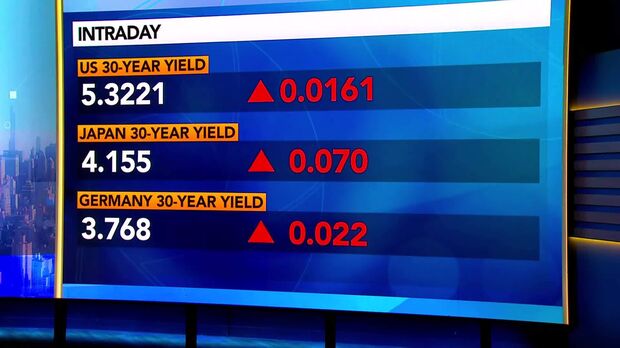
- Long-term Treasury yields have climbed, steepening the yield curve even though the Fed has kept its policy rate unchanged.
- Higher yields feed into mortgages, auto loans, credit cards and other consumer borrowing costs.
- A 30-year mortgage will now cost a typical purchaser 6.75%.
- Warsh in July seemed to welcome the rise in bond yields, noting that they have risen in real and nominal terms while the Fed kept its rates steady.
- Warsh's views in Jackson Hole may help to stem the bond-market selloff and ease the pain on Main Street.
- The U.S. budget deficit is set to come in at around 6.4% of gross domestic product, based on the Congressional Budget Office's recent estimate for the fiscal year through September.
- A gallon of diesel cost $5.46 on Tuesday, up 48% from a year ago, according to AAA data.
Global bond yields have reached their highest levels in decades, with long-term Treasury yields climbing significantly. This increase has steepened the yield curve, even as the Federal Reserve maintains its policy rate.14
The rise in yields is directly affecting consumer borrowing costs, with mortgages now averaging 6.75%. This increase in mortgage rates is expected to impact homebuyers significantly, making home ownership less affordable for many.3

According to analysts, higher yields also influence other forms of consumer debt, including auto loans and credit cards, leading to increased financial strain on households.2
The U.S. budget deficit is projected to be around 6.4% of gross domestic product, as per the Congressional Budget Office, which may further complicate the economic landscape.6

Despite the challenges posed by rising yields, some experts, like Warsh, have expressed a cautious optimism, suggesting that the rise in bond yields could help stabilize the market and ease pressures on consumers.
As the economic environment evolves, the implications of these rising yields will be closely monitored by both consumers and policymakers alike.
“Long-term Treasury yields have climbed, steepening the yield curve, while a 30-year mortgage now costs a typical purchaser 6.75%. Additionally, the U.S. budget deficit is projected to reach around 6.4% of GDP, according to the Congressional Budget Office's recent estimates.”
 CNBC
CNBC