
- The US military launched its seventh consecutive night of strikes on Iran, targeting ports and infrastructure near the Strait of Hormuz.
- Strikes late Friday into early Saturday targeted Bandar Abbas, islands of Qeshm and Larak, and transport infrastructure further inland.
- Explosions were reported in Yazd, Qeshm island, and Bandar Abbas near the strait.
- The IRGC struck a depot housing US unmanned aerial vehicles in Bahrain.
- US attacks killed people in Iran, and the IRGC launched attacks against US military assets in Bahrain, Kuwait, Oman, Qatar, Jordan and Syria.
- Iran threatened key ports in Gulf states after the US destroyed a surveillance tower near the Strait of Hormuz.
- US President Donald Trump has reiterated threats to strike Iran’s bridges and power plants if Tehran does not return to negotiations.
- Several Arab nations criticized Tehran’s attacks on US allies after seven consecutive days of US strikes on Iran.
- IRGC adviser Mohsen Rezaei warned of a “full-scale offensive” and demanded financial reparations for alleged attacks on civilian infrastructure.
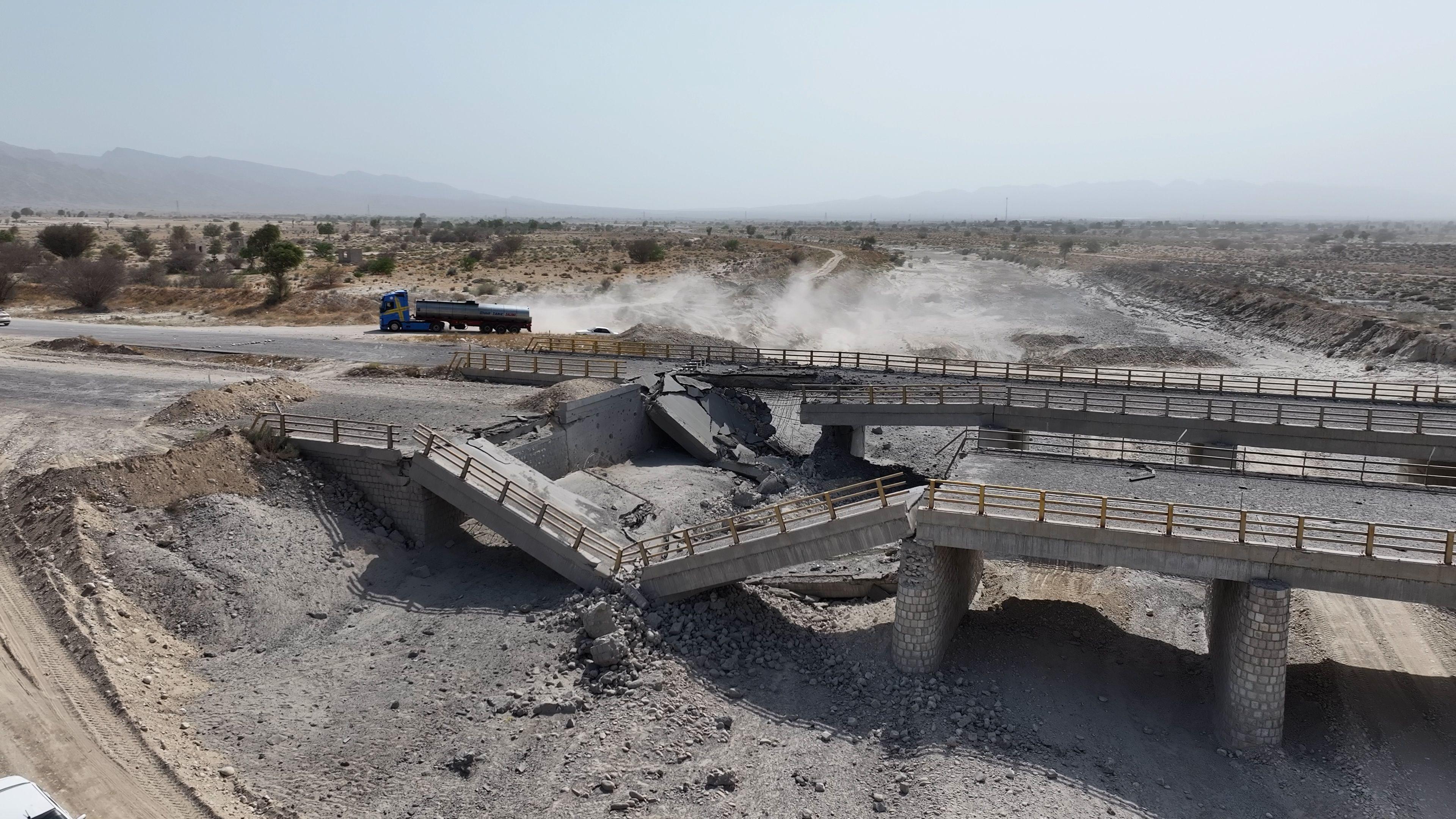
- Tehran accuses Washington of targeting civilian infrastructure and committing war crimes, with state media showing damaged bridges and railways.
- Iran warns it will respond in kind by striking across the Gulf region, risking severe humanitarian consequences.
- Iran struck a power and water plant in Kuwait, damaging generation units and sparking a fire, leading to electricity rationing warnings with catastrophic potential consequences.
The US military's ongoing strikes against Iran have entered their seventh consecutive night, targeting critical military infrastructure and logistics.1
Tehran has retaliated by threatening key Gulf ports and warning of a potential 'full-scale offensive' if the US attacks persist.
The US Central Command (CENTCOM) reported that its strikes aimed at degrading Iranian military capabilities included targeting surveillance sites, military logistics infrastructure, underground weapons storage, and maritime capabilities.
In response, Iranian military adviser Mohsen Rezaei warned that the US could face a “full-scale offensive” if the strikes continue, stating, “No political border will be secure against Iran’s offensive forces.”10
Tehran has threatened to strike key ports in Gulf states, particularly after the US destroyed a surveillance tower near the Strait of Hormuz.7
The IRGC has already targeted US military assets in Bahrain, Kuwait, and other regional allies, with reports of missile and drone attacks.456

The situation escalated after the collapse of peace talks, with the US conducting nightly strikes since then.
The ongoing conflict has raised concerns over humanitarian and economic consequences, particularly as the Strait of Hormuz is vital for global oil and gas supplies, accounting for about one-fifth of the world's energy traffic.
As tensions rise, the potential for a broader conflict looms, with both sides preparing for further military actions.
“Iranian state media showed heavily damaged bridges and railway lines in the country's south, with Tehran accusing Washington of targeting civilian infrastructure and committing war crimes. Several Arab nations fiercely criticized Tehran's sweeping strikes on US allies in the Middle East after seven consecutive days of US attacks.”






