 CNBC TV18
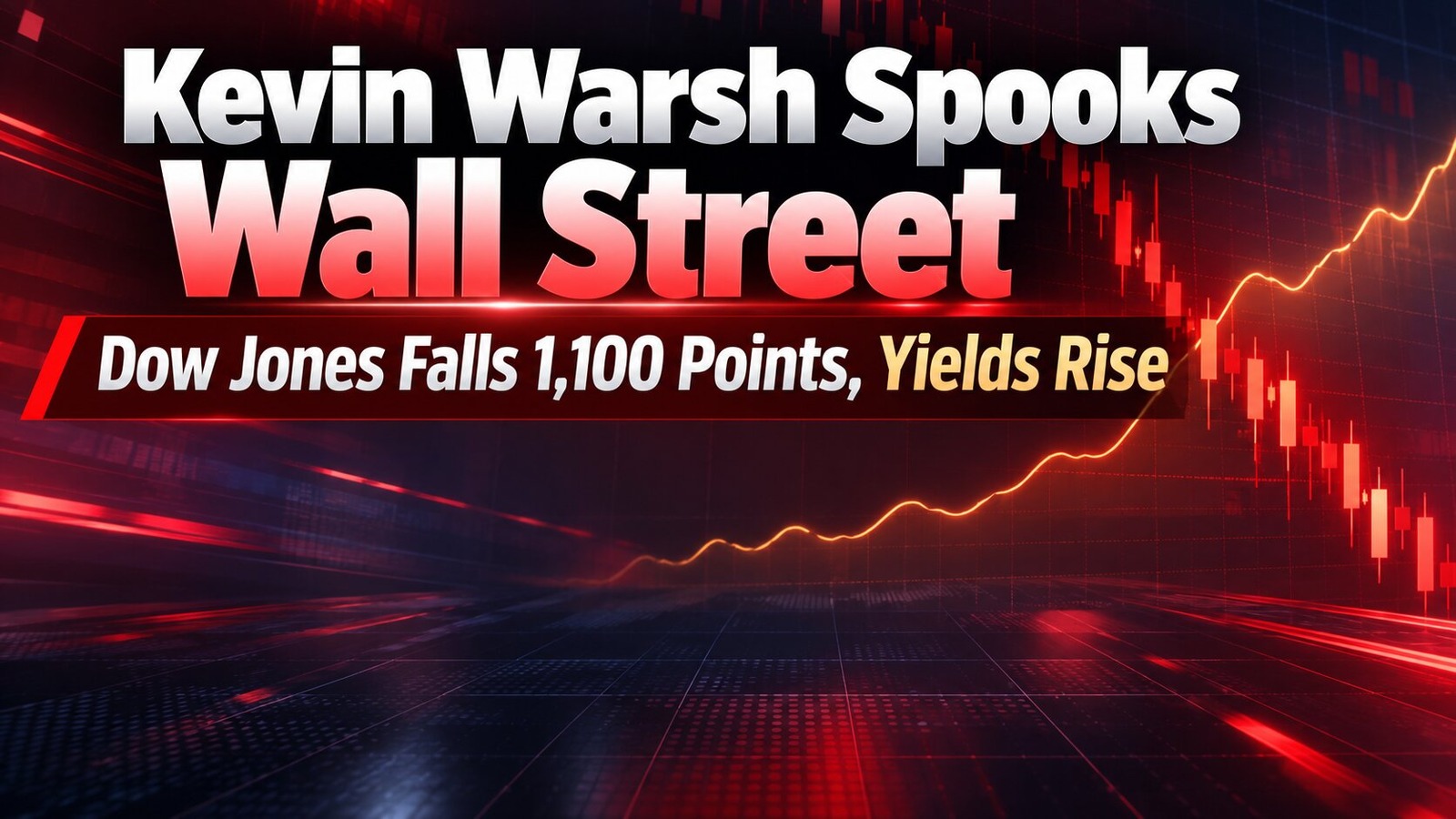
- On July 29, 2026, the Dow Jones fell over 1,100 points to mark its worst day since April 2025.
- In a 9-3 decision, the Federal Open Markets Committee (FOMC) left interest rates unchanged at 3.5% - 3.75%.
- Fed Chair Kevin Warsh stated that the Fed 'does not have a magic wand' to bring inflation down in days or weeks.
- Yields on the 30-year note surged to 5.2%, the highest level since 2007.
- The S&P 500 fell 1.5%, while the Nasdaq Composite fell 1.7% as well.
The Dow Jones Industrial Average experienced a significant drop of over 1,100 points, marking its worst performance since April 2025. This decline reflects growing concerns over inflation as the Federal Open Markets Committee (FOMC) decided to maintain interest rates at 3.5% - 3.75%.2
The S&P 500 and Nasdaq Composite also faced losses, falling 1.5% and 1.7% respectively. The Fed's decision comes amid rising yields, which surged to 5.2%, the highest level since 2007. Warsh commented that the Fed 'does not have a magic wand' to quickly reduce inflation, indicating the challenges ahead for policymakers.4
Investors are increasingly anxious as economic indicators suggest persistent inflationary pressures, prompting a reevaluation of market strategies. The Fed's stance to keep rates unchanged signals a cautious approach, balancing the need to support economic growth while addressing inflation concerns. As the market reacts to these developments, analysts will be closely monitoring future Fed meetings for potential shifts in monetary policy.
“The Federal Open Markets Committee (FOMC) voted 9-3 to keep interest rates steady at 3.5% - 3.75%, with Fed Chair Kevin Warsh emphasizing that the Fed 'does not have a magic wand' to quickly reduce inflation. Additionally, yields on the 30-year note surged to 5.2%, marking the highest level since 2007.”