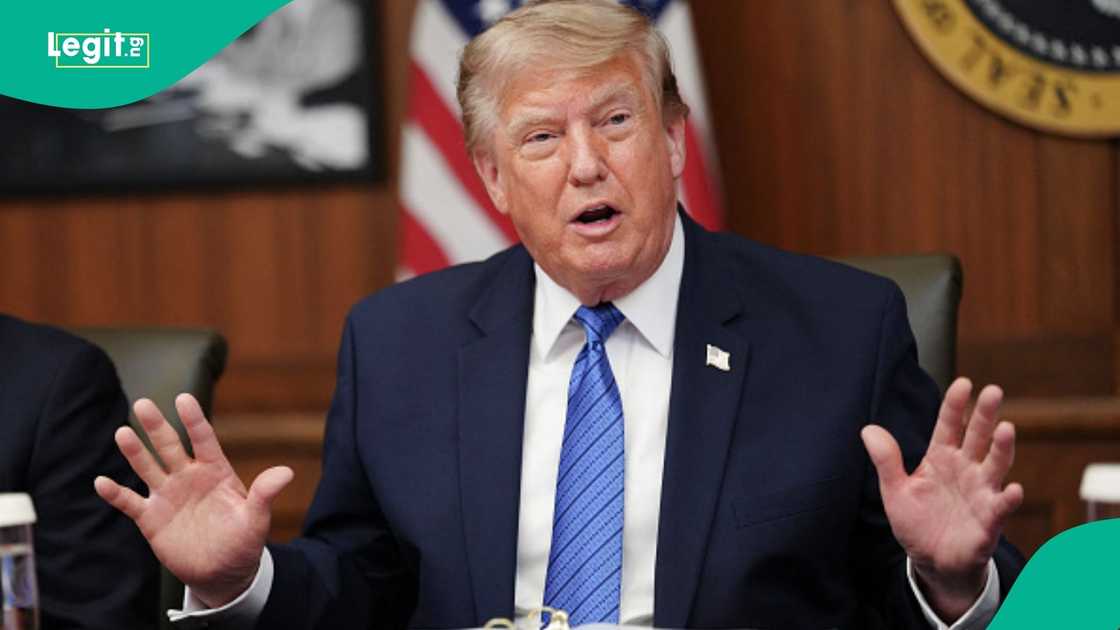
- US federal appeals court has denied the government's request to keep the $100,000 H-1B petition fee in place while the case worked its way through the courts.
- The $100,000 fee was introduced by President Trump in September 2025 as part of a broader effort to reform the H-1B visa programme.
- The Department of Homeland Security (DHS) has been forced to pause the collection of the controversial $100,000 fee on H-1B visa petitions, after a federal appeals court rejected the government's bid to keep the charge in place during ongoing litigation.
- On July 24, 2026, the US Court of Appeals for the First Circuit denied DHS's motion to stay the lower court's order pending appeal.
- The ruling followed a June 8, 2026 decision by the US District Court for the District of Massachusetts, which vacated the agency guidance that implemented the $100,000 payment requirement.
- DHS said it strongly disagrees with the First Circuit's decision but would comply with the order while it considers its next steps.
- The department also warned that if the court order is later lifted, it still plans to collect the payment from affected petitioners.
- Following the First Circuit Court of Appeals' July 24 decision denying the federal government’s emergency stay, U.S. Citizenship and Immigration Services (USCIS) has formally updated its official H-1B guidance to reflect the ruling.
- Employers can now submit affected H-1B petitions and RFE responses without attaching proof of a $100,000 pay.gov payment or requesting an exception.
- The proclamation required a $100,000 (N136 million) payment to accompany any new H-1B petition submitted after 12:01 a.m. Eastern Daylight Time on September 21, 2025, including petitions filed for the 2026 lottery.
- Trump's administration framed the fee as an "initial and incremental step" to address what it described as abuses within the H-1B programme and to protect American workers.
- The H-1B programme is a lifeline for American employers in specialised fields like software engineering, healthcare, and research.
- The Department of Justice is widely anticipated to seek emergency intervention from the U.S. Supreme Court.
- If the Supreme Court grants a stay on its shadow docket, USCIS could reinstate the payment requirement with virtually no advance notice.
A federal appeals court has denied the government's request to maintain a $100,000 fee on H-1B visa petitions, forcing the Department of Homeland Security (DHS) to pause its collection. This ruling follows a June 8 decision by the US District Court for the District of Massachusetts, which vacated the fee requirement.239
The First Circuit Court of Appeals ruled on July 24, 2026, that DHS could not enforce the fee while the case, identified as *State of California v. Mullin*, is under litigation. The fee was introduced by President Trump in September 2025 as part of a broader reform of the H-1B visa program, aimed at addressing perceived abuses and protecting American workers.48
DHS expressed its disagreement with the ruling but stated it would comply, warning that the fee could still be collected if the court order is lifted. The agency confirmed that affected H-1B petitions can now be submitted without the fee, providing clarity for employers facing upcoming filing deadlines.

Despite the pause, DHS's intention to collect the fee retroactively if the order is reversed raises concerns among employers. The Department of Justice is expected to seek emergency intervention from the U.S. Supreme Court, which could reinstate the fee with little notice if granted a stay.13
This situation highlights the ongoing tensions surrounding the H-1B program, which is crucial for American employers in specialized fields like software engineering and healthcare.
“DHS said it "strongly disagrees" with the ruling and warned it will still collect the fee if the lower court's vacatur is later lifted. The Department of Justice is widely expected to seek emergency Supreme Court intervention, which could reinstate the payment requirement with virtually no notice.”
 JD Supra



