- The US has conducted weeks of airstrikes aimed at weakening Iran's ability to threaten shipping in the Strait of Hormuz and to push Tehran into negotiations, but there has been no clear indication that this campaign has produced an agreement.
- A senior US military officer at CENTCOM sent an email soliciting 'creative and unconventional' ideas to pressure and punish Iran, reflecting the limited options available to the Trump administration.
- Recent assessments by the CIA and DIA concluded that the bombing campaign is unlikely to change Iran's negotiating position, with Gen. Dan Caine stating that 'air power has its limits.'
- Trump threatened 'massive attacks' on Iran, which he later canceled after regional leaders, including Saudi Crown Prince Mohammed bin Salman, urged him to de-escalate.
- Iran has publicly rejected negotiations with Washington following the collapse of a June memorandum of understanding in early July.
- The crowdsourcing-style query from CENTCOM is indicative of the politically difficult options available to President Trump as he seeks to compel Iran to accept a deal on U.S. terms.
- Military officials have indicated that missiles and bombs alone are unlikely to achieve significant results against Iran's deeply buried nuclear facilities.
- Trump has considered expanding military operations, including strikes on Iranian nuclear facilities, but has not approved such plans due to concerns about civilian casualties and dwindling air defense resources.
The U.S. military's Central Command (CENTCOM) has initiated an unusual crowdsourcing effort to solicit 'creative and unconventional' ideas for dealing with Iran, as traditional airstrikes have not succeeded in forcing Tehran into negotiations.
“We are looking for new creative and unconventional ways to pressure and punish Iran,” an officer in CENTCOM's intelligence branch stated in an email to military analysts. This initiative comes amid a backdrop of escalating tensions and limited options for President Trump, who has faced criticism for the effectiveness of current military strategies.2
Despite weeks of airstrikes aimed at degrading Iran's capabilities in the Strait of Hormuz, there has been no clear indication of progress towards a deal.1
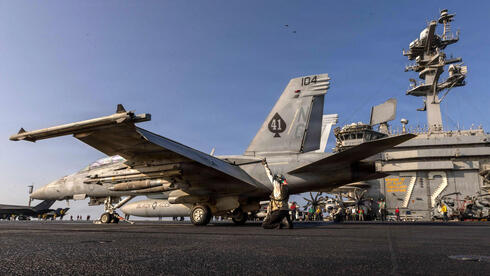
“Air power has its limits,” acknowledged Gen. Dan Caine, Chairman of the Joint Chiefs of Staff, highlighting the challenges of achieving U.S. objectives through bombing alone.
The military is considering various alternatives, including a potential intensive bombing campaign targeting Iran's missile capabilities, but concerns about civilian casualties and the risks of high-profile strikes have complicated decision-making.
“At the end of the day, POTUS will want a deal,” one source noted, emphasizing the need for innovative solutions as conventional options dwindle.
The email solicitation reflects a strategic impasse, with Iran publicly rejecting negotiations and maintaining its stance against U.S. pressure.
“We are looking for new creative and unconventional ways to pressure and punish Iran,” the officer reiterated, underscoring the urgency of finding effective strategies in a complex geopolitical landscape.
“CIA and Defense Intelligence Agency assessments concluded the bombing campaign is unlikely to alter Iran's negotiating position, with Joint Chiefs Chairman Gen. Dan Caine conceding 'air power has its limits.' Trump has considered strikes resembling a 'fireworks' display, and a proposal for a one- to two-week bombardment to destroy Iran's missile capabilities remains unapproved.”


 Ynetnews



