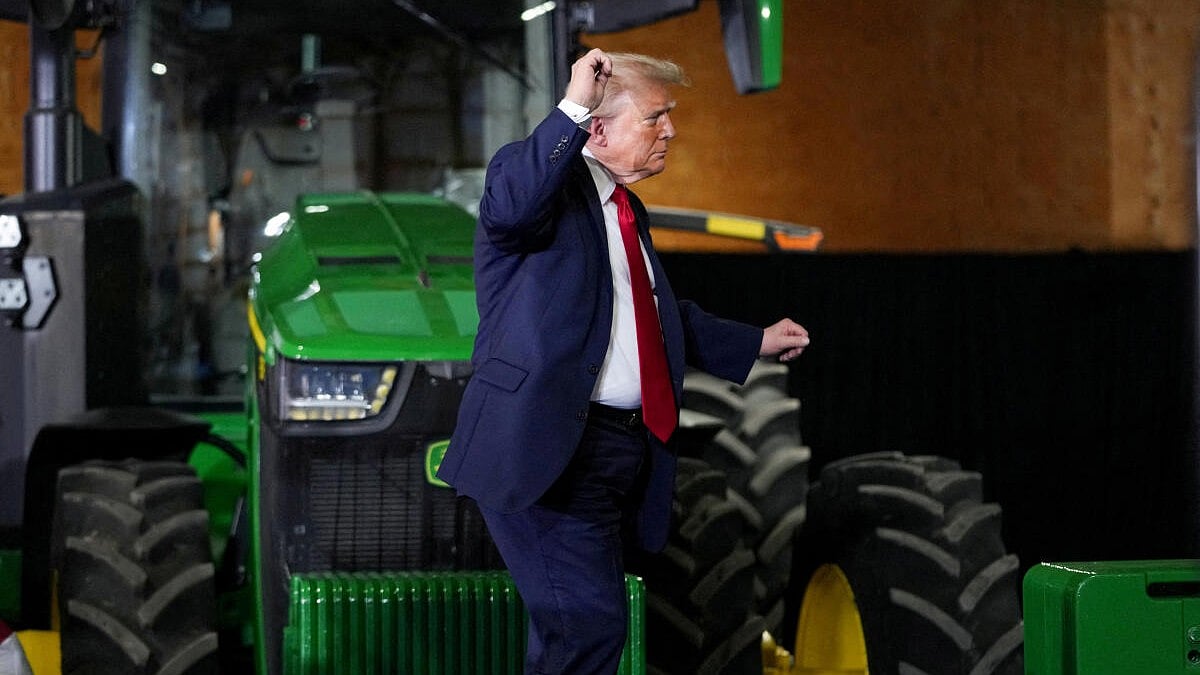
- Trump's endorsement of Netanyahu before Israel's parliamentary elections added to perceptions of a close US-Israel relationship, in the same year as Washington and Tel Aviv jointly went to war against Iran.
- Israel's general election on October 27 left Netanyahu's bloc with 53 seats, eight short of 61 needed to form a government.
- US midterm elections saw Republicans lose badly; early analysis focused on the war with Iran and the US relationship with Israel.
- Trump announced on election day that US military aid to Israel would end, seen by some as traded for his endorsement of Netanyahu.
- Netanyahu's bloc weakened as United Torah Judaism declined to recommend him for the first time since 2009.
- Opposition leader Yair Lapid stressed his ties to US Congress members and argued that US voters are against Netanyahu and his government, not Israel itself.
- Security analyst Ahron Bregman warned that without US aid, Israel's defense budget would have to rise.
- Pollster Shibley Telhami noted that US public attitudes toward Israel are as negative as toward Netanyahu.
- Netanyahu's policies—including the genocidal war in Gaza, the Iran war, and regional attacks—have made Israel politically toxic in the US.
- Opposition leader Avigdor Lieberman echoed claims that Trump's election-day announcement ending US military aid to Israel was traded for his endorsement of Netanyahu.
Israel's recent elections have left Prime Minister Netanyahu's right-wing bloc with only 53 seats, falling short of the 61 needed to form a government. This political setback is compounded by the fallout from the US midterm elections, where Trump's announcement to cut military aid has stirred controversy.23
Opposition leaders like Yair Lapid and Avigdor Lieberman have criticized Netanyahu's alignment with Trump, suggesting that the aid cut was a direct consequence of his policies. Lieberman stated, “The price of Trump’s support for Netanyahu – $3.8bn dollars a year.” This loss of funding could force Israel to increase its defense budget, which already constitutes 7 percent of GDP, impacting citizens financially.
Public sentiment in the US is also shifting. A Pew Research Center poll indicated that American attitudes towards Israel are increasingly negative, mirroring sentiments towards Netanyahu himself. Pollster Shibley Telhami noted, “Any government of Israel would be swimming against the rising public tide.” This suggests that even if Netanyahu is replaced, the challenges in US-Israel relations may persist.
As Netanyahu attempts to consolidate power, he faces accusations of delegitimizing opposition voices, particularly among Arab voters, further complicating his political landscape.
“Netanyahu's bloc won only 53 of 61 needed seats in the October 27 election, and United Torah Judaism declined to recommend him for the first time since 2009. Trump's election-day aid cutoff, worth $3.8bn annually, has opposition leaders like Lieberman calling it the price of support.”