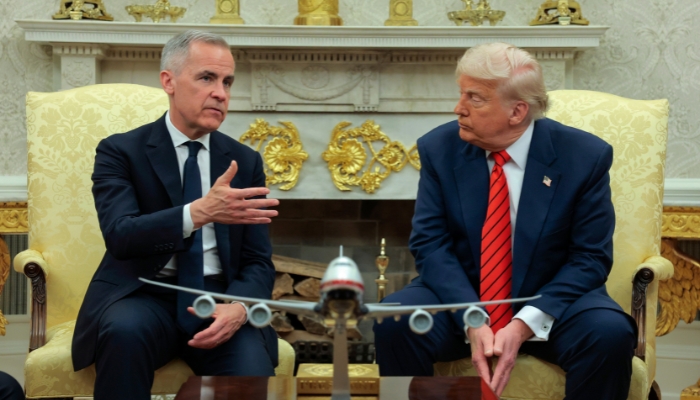
- Trump's rhetoric and tariffs have affected Canada for nearly two years, including comments suggesting Canada should become the 51st state and his move to rename Lake Ontario for U.S. federal use.
- As Americans head to the polls, the midterm elections could change the balance of power in Congress and shape the final two years of Trump's presidency.
- Experts are debating whether a Democratic win would check Trump's power, with some hopeful about tariff oversight and others cautious about immediate change.
- Trump and Carney have reported progress in trade discussions, although details remain unsettled as the midterms approach.
- The state of Canada-U.S. relations is mixed, with unfounded allegations of election interference alongside forward movement on trade.
- If Democrats gain control of Congress, they could create more of a barrier for Trump to push through his agenda.
- Experts suggest that a Democratic victory could allow Congress to scrutinize Trump's trade policies and push back against tariffs.
- The impact of Trump's tariffs is already visible in industries such as steel, aluminum, and lumber, with layoffs in Canada and higher costs in the U.S.
- Regardless of the election outcome, Canadians should not expect an overnight change in the trade relationship, as rolling back tariffs will take time.
The U.S. midterm elections could reshape President Trump's Canada policy, particularly regarding tariffs and trade tensions. Experts suggest that if Democrats gain control of Congress, they may challenge Trump's aggressive tariff measures that have negatively impacted Canadian industries.26
"If the Democrats win, there could be some efforts by Congress to reassert its control over things like tariffs," said a research chair at St. Francis Xavier University. This could potentially lessen the burden on Canada, which has felt the effects of Trump's policies for nearly two years, including aggressive tariffs on steel and aluminum.
However, some experts caution against expecting immediate changes. "It is hard to believe that simply a change in Congress can do a lot," noted trade expert Schmitt. He emphasized that while Congress may have a voice, implementing changes could be challenging.

McKercher added that a Democratic victory could open the door for lawmakers to revisit legislation that has allowed Trump to impose tariffs. He stated, "If Democrats win, I think it would be a pretty big repudiation of Mr. Trump's agenda... and so I think that only strengthens Canada's negotiating hand."
Despite the potential for change, experts agree that Canadians should not expect an overnight resolution to trade tensions. McKercher remarked, "The Canadian government is trying to change things and to move to diversification... but of course, the next few months, the next year, if we continue with the same kind of tariff that we've been facing so far, it will be tough for some sectors."
Overall, the outcome of the midterms could significantly influence the future of Canada-U.S. relations, with many hoping for a positive resolution to ongoing trade conflicts.5
“A Democratic win could give Congress more leverage to scrutinize tariffs, potentially easing pressure on Canadian steel, aluminum, and lumber sectors, which have seen layoffs and rising costs. However, experts caution that any change would take time, and a frustrated Trump might lash out on trade or NATO, negatively impacting Canada.”