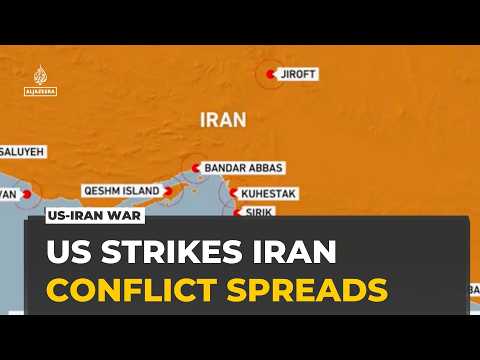
- The U.S. military completed a new wave of strikes Tuesday on targets in Iran as the conflict in the region stretches into its seventh month.
- U.S. Central Command (Centcom) said the strikes hit Islamic Revolutionary Guard Corps (IRGC) targets including air defense sites, radar systems, maritime assets and facilities, mine laying capabilities, and communications sites.
- One U.S. strike hit a home hosting a wedding, killing five people – including a child – and wounding dozens.
- The continued strikes occur despite little progress in talks to get Tehran to give up its nuclear program and release its hold on the Strait of Hormuz, with President Trump saying he is “not trying to force Iran to the negotiating table.”
- Trump stated he “couldn’t care less if they sign a worthless, to them, agreement” and prefers the current position with “almost total control of the Hormuz Strait” and Iran's economy collapsing.
- A June memorandum of understanding sought to end the war but fell apart when Iran and the U.S. disputed control over the Strait of Hormuz.
- The U.S. has enacted a naval blockade against Iranian oil exports in the Strait of Hormuz and has tried to secretly ferry stranded tankers through the waterway, but transit remains difficult as strikes continue.
The U.S. military has intensified its operations against Iran, targeting the Islamic Revolutionary Guard Corps (IRGC) as the conflict stretches into its seventh month.2
The latest strikes included air defense sites, radar systems, and maritime assets, according to U.S. Central Command (Centcom).
One strike tragically hit a home hosting a wedding, resulting in five fatalities, including a child, and wounding dozens.3
Centcom reported that over 50,000 U.S. service members are currently deployed across the Middle East, remaining vigilant and prepared for further operations.
Despite these military actions, diplomatic efforts have stalled, with President Trump asserting he is 'not trying to force Iran to the negotiating table.' He emphasized a preference for the current U.S. position, stating, 'I like our position now much better, with almost total control of the Hormuz Strait, and their economy totally collapsing.'
The U.S. has implemented a naval blockade against Iranian oil exports in the Strait of Hormuz, complicating transit for tankers amid ongoing strikes.7
A previous memorandum of understanding aimed at ending the conflict fell apart due to disputes over control of the Strait of Hormuz, highlighting the complexities of U.S.-Iran relations.
“Centcom said the strikes hit IRGC air defense, radar, maritime, and communications sites, while one strike killed five people at a wedding. More than 50,000 U.S. troops remain in the region, and a naval blockade continues to disrupt oil exports through the Strait of Hormuz.”