- Trump has announced that a new round of Iran talks will begin on Monday after he called off strikes against the country.
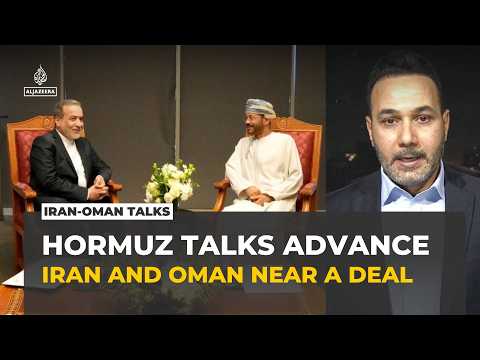
- Iran’s Foreign Ministry spokesperson Esmaeil Baghaei stated that Iran is in talks with Oman to establish a safe, temporary route for vessels through the Strait of Hormuz, emphasizing that Iran is not negotiating with the United States.
- Up to 5 million barrels of crude are still leaving the strait via a southern route close to the Omani coast, with estimated flows of approximately 3–5 million barrels per day, compared to an average of 20 million barrels a day before the conflict.
- A senior officer at US Central Command (CENTCOM) requested new creative and unconventional ways to pressure Iran, indicating limited options for Trump; CENTCOM then initiated a brainstorming session to reevaluate strategy.
- OPEC+ agreed to increase oil production in September, raising daily output by another 188,000 barrels a day, while expressing concerns about attacks on energy infrastructure and maritime trade disruptions.
US President Donald Trump announced that talks with Iran will resume on Monday, a day after he called off a planned military strike. Trump stated, “We’re all set to go, but when the allies asked to call it off, they got us sort of saying, ‘Well, let’s see.’”1
This decision comes amid heightened tensions in the region and fluctuating global oil prices. Following Trump's announcement, Brent crude futures fell 4.2% to trade at $84 a barrel, while WTI dropped 5% to $80 a barrel.
Iran is negotiating with Oman to create a temporary shipping route through the Strait of Hormuz, which is crucial for global oil supply. Iranian Foreign Ministry spokesperson Esmaeil Baghaei emphasized that these discussions do not involve the United States, stating, “The effort is to determine, at the earliest opportunity... a route that is naturally temporary.”23
Before the conflict, approximately 20 million barrels of oil per day passed through the Strait, accounting for 20% of global supply. Currently, 3-5 million barrels are still being transported via a southern route close to Oman, indicating that the waterway has not yet transitioned into a fully enforced exclusion regime.
As tensions rise, OPEC+ has agreed to increase oil production by 188,000 barrels a day to stabilize the market, reflecting concerns over potential disruptions to maritime trade.89
“Iran's Foreign Ministry spokesperson Esmaeil Baghaei said Tehran is in talks with Oman to establish a temporary safe route through the Strait of Hormuz and stressed Iran is not negotiating with the United States. A senior CENTCOM officer emailed staff seeking “new creative and unconventional ways to pressure and punish Iran” as CENTCOM reevaluates strategy.”