
- Friday’s planned talks between Iran and the US in Switzerland have been canceled, according to the Swiss foreign ministry.
- The cancellation of the talks occurred as Israel and Hezbollah engaged in their most violent exchanges since the ceasefire was established.
- Hezbollah launched several salvoes of rocket fire at Israeli forces near Nabatieh, prompting a wave of Israeli airstrikes that resulted in casualties.
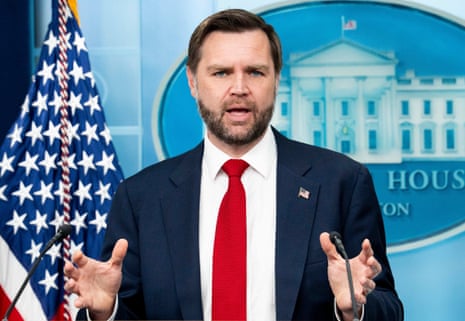
- The cancellation of the talks was sudden, with Vance’s staff and journalists already gathered at Joint Base Andrews in anticipation of the trip.
- The talks, set for the mountaintop resort of Burgenstock, were confirmed not to take place, but no details were provided.
- The White House stated that US Vice President JD Vance is for negotiations scheduled for today because plans for the talks had not been finalized.
- Reports indicated that Tehran was delaying sending its delegation to Switzerland due to Israel’s ongoing military actions in Lebanon.
- The diplomatic situation surrounding the talks adds to the uncertainty of a lasting truce in a regional war that has resulted in at least 7,000 deaths.
Planned US-Iran peace talks in Switzerland were canceled as violence escalated between Israel and Hezbollah, with JD Vance dropping travel plans. The talks were set to address Iran's nuclear program, but the situation remains uncertain following recent military exchanges.1234
The Swiss foreign ministry confirmed the cancellation, stating, “The logistics of these negotiations have never been simple or predictable,” according to a White House spokesperson. The talks were scheduled to begin in Obbürgen, following a memorandum of understanding that opened a 60-day window for negotiations.7

The cancellation coincided with a surge in violence, as Hezbollah targeted Israeli forces near Nabatieh, prompting Israeli airstrikes that resulted in casualties, including children. The ongoing conflict has claimed at least 7,000 lives since it began on February 28, raising concerns about the feasibility of a lasting truce.
Iran's Supreme Leader Ayatollah Mojtaba Khamenei expressed reservations about the negotiations, stating, “If the American side wants to be too demanding, we will not accept it.” Meanwhile, Iran's chief negotiator warned of a decisive response to any breach of the agreement, emphasizing the fragile nature of the peace process.
The diplomatic back-and-forth adds to the uncertainty surrounding the future of the negotiations, with both sides needing to demonstrate commitment to the interim deal for talks to resume.
The deal gives negotiators 60 days to reach an agreement on Iran’s nuclear program unless both sides agree to an extension.
“The US-Iran peace talks scheduled in Switzerland have been abruptly canceled, raising concerns over the potential for a lasting truce. This decision comes amid escalating violence between Israel and Hezbollah, complicating the diplomatic landscape.”



 The Guardian