
- The United States has imposed new tariffs on dozens of countries, including Canada, citing their "failure" to stop imports of products made with forced labour.
- A total of 60 countries were targeted, with Canada among 17 nations subject to a baseline 10 per cent tariff.
- Canadian Prime Minister Mark Carney said on Thursday that retaliatory measures are being considered if his government fails to reach a deal with US President Donald Trump before new US tariffs take effect, and that "there's a full range of things that we can do" regarding retaliation.
- Carney stated "Everything is on the table" depending on negotiations, but added "I think it would be counterproductive at this stage to respond in advance."
- Carney said his government would do "whatever it takes" to defend Canada's national interests, and would protect and support workers, farmers, businesses and families amid trade pressure.
- Carney described the new US tariffs as "the latest in a series of unilateral US trade actions in direct violation of the Canada-United States-Mexico Agreement."
- The Trump administration announced forced labour tariffs on dozens of countries, including Canada, affecting over 60 nations.
- Canada had existing forced labour legislation requiring annual reports and recently tabled Bill C-35 to boost enforcement, including a public list of products linked to forced labour.
The United States has imposed a 10% tariff on Canada and 59 other countries due to concerns over forced labor in supply chains. This decision, announced by the U.S. Trade Representative, is part of a broader strategy to enforce compliance among trading partners.12
Prime Minister Mark Carney indicated that Canada is considering a range of retaliatory measures, stating, "there's a full range of things that we can do in that regard." He emphasized that Canada would defend its national interests and support its workers amid these trade pressures.
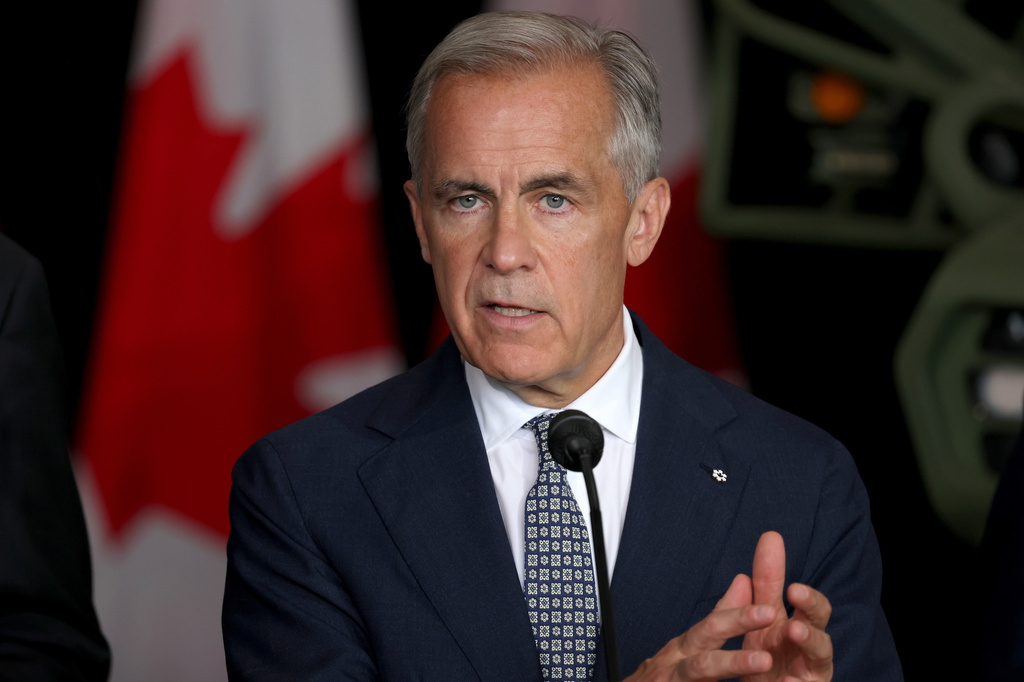
The tariffs, which will take effect next month, are part of a series of actions under Section 301 of the Trade Act of 1974. The U.S. claims that Canada has not effectively enforced its prohibition against forced labor imports, despite existing legislation aimed at curbing such practices.

Carney noted that Canada has already introduced a bill to enhance enforcement against forced labor, which includes creating a public list of products linked to forced labor. He argued that this should exempt Canada from additional tariffs.
The U.S. tariffs come as part of a larger trade strategy, with President Trump asserting that these measures are necessary to address human rights abuses and unfair trade practices. "Today’s action will begin to correct what is both a human rights abuse and distortive trade practice," said U.S. Trade Representative Jamieson Greer.
As tensions rise, Carney has expressed that Canada is in a stronger position than before, indicating a readiness to negotiate while preparing for potential retaliation against U.S. actions.
“The Section 301 tariffs target over 60 nations, with Canada, Mexico, UK facing 10% and others 12.5%; oil, gas and USMCA goods are exempt. Carney said 'there's a full range of things we can do' but it would be 'counterproductive to respond in advance,' though he has spoken with Trump to intensify trade talks.”

 Global News
 CHEK News
 The Globe and Mail



