
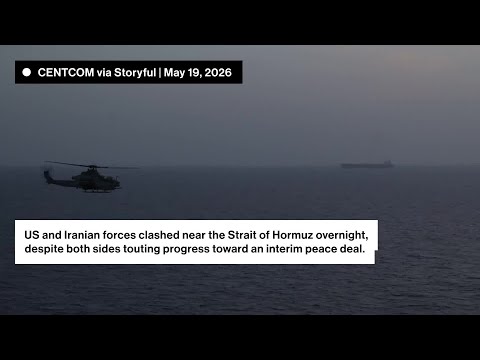
- The US is touting progress toward a peace deal with Iran to end the nearly three-month war, even amid fresh hostilities and uncertainty over the vital Strait of Hormuz.
- Iran’s Foreign Ministry condemned the US attacks as a violation of a ceasefire that’s been in place since early April.
- One contentious issue under discussion is Iran’s $24 billion in frozen assets, with Tehran wanting half that amount released upon the signing of an agreement.
- Republican Senator Lindsey Graham wants a blockade of Iranian ports to remain in place and more strikes to further weaken the Iranian military.
- Trump wants Iran to commit to handing over or destroying its stocks of highly-enriched uranium, which the US fears could be used to build an atomic bomb.
- Even if the two sides are able to reach a deal — and that’s already a big ‘if’ — there is little hope they can then reach a stable peace.
As tensions escalate in the Strait of Hormuz, the US is advocating for a peace deal with Iran to address the ongoing conflict.
Recent discussions have centered on Iran’s $24 billion in frozen assets, with Tehran insisting on the release of half upon agreement confirmation.3
Meanwhile, Iran's Foreign Ministry has labeled US military actions a breach of the longstanding ceasefire initiated in early April.
Furthermore, former President Trump has pressured Iran to relinquish its stocks of highly-enriched uranium, which the US suspects could be weaponized.5
Nonetheless, analysts express skepticism regarding the viability of a lasting peace arrangement. In their view, the possibility of a solid agreement remains slim, emphasizing the complications in reaching a conclusive settlement. Even if the two sides are able to reach a deal — and that’s already a big ‘if’ — there is little hope they can then reach a stable peace.6
“The US is advocating for progress toward a peace deal with Iran despite escalating tensions. Key issues include Iran's frozen assets and military conditions.”

 Yahoo Finance