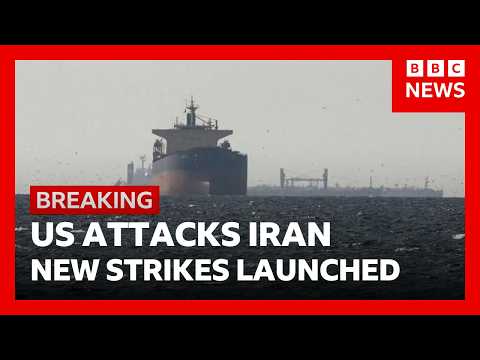
- The US has completed its latest strikes against Iranian targets, according to a US defense official.
- These strikes were launched in direct response to continued Iranian aggression against commercial shipping, following an attack on the Panama-flagged tanker Kiku.
- US military aircraft targeted Iranian military surveillance infrastructure, communication systems, air defense sites, drone storage facilities, and minelayer capabilities.
- Explosions were reported in southern Iran around the village of Tahrui, near the port of Sirik, which was also the focal point of Friday’s US attacks.
- The latest attacks followed a similar pattern to previous strikes, indicating a sustained military response from the US.
- The escalation in military actions began with an Iranian attack on a commercial vessel near the Strait of Hormuz, which US President Donald Trump described as a 'foolish violation' of an agreement to end hostilities.
- The US military's actions are part of a broader strategy to maintain security in the Strait of Hormuz, a critical passage for global oil supplies.
The U.S. military conducted strikes against Iranian targets on Saturday, marking a significant escalation in tensions following a drone attack on the Panama-flagged tanker Kiku. The U.S. Central Command (CENTCOM) stated that these actions were taken in direct response to ongoing Iranian aggression against commercial shipping in the region.26
The drone strike on Kiku, which was carrying over 2 million barrels of crude oil, occurred early Saturday morning, prompting the U.S. to target Iranian military infrastructure, including surveillance systems and drone storage facilities. CENTCOM confirmed that the strikes were executed at the direction of the President, emphasizing the U.S. commitment to protecting maritime interests.

The escalation began with an Iranian attack on a commercial vessel near the Strait of Hormuz, which President Trump condemned as a “foolish violation” of a ceasefire agreement established on June 17. Following the attack on the Kiku, the U.S. had previously launched strikes in response to an earlier Iranian assault on the M/V Ever Lovely, indicating a pattern of retaliatory military actions.

Iran has also claimed to have targeted U.S. military assets in the region, further complicating the situation. The ongoing conflict highlights the fragile state of maritime security in the Strait of Hormuz, a critical passage for global oil shipments.7
As tensions rise, the international community watches closely, with potential implications for global oil markets and regional stability.
“The US has conducted multiple strikes against Iranian targets in response to drone attacks on commercial vessels. This escalation is testing the ceasefire agreement and impacting shipping through the Strait of Hormuz.”