
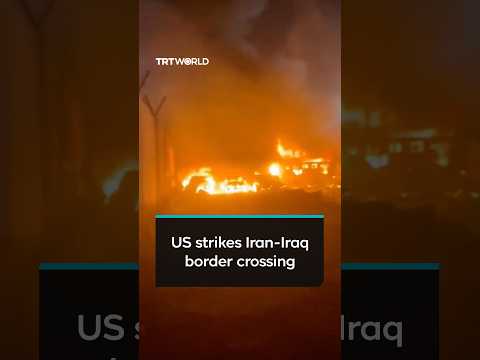
- The US completed its 13th night of strikes on Iran, with U.S. Central Command stating the strikes were aimed to degrade Iran's ability to threaten civilian mariners in the Strait of Hormuz.
- Bahrain activated its sirens and warned residents to shelter from detected fire, as Gulf states face frequent fire from escalating U.S.-Iran clashes over the Strait of Hormuz.
- The US Senate rejected a War Powers resolution aimed at requiring congressional approval for the Iran war, voting 47-49.
- An early morning drone attack on Khorramabad, Iran, injured two people, as reported by Iran's Fars news agency.
- A US missile strike near Ahvaz, Iran, killed four people and injured five, according to Iran's Tasnim news agency.
- Yemen's Iran-backed Houthi rebels targeted two Saudi oil tankers in the Red Sea, raising fears of a wider conflict as Brent crude oil spiked more than 6% to about $100 a barrel.
- Iraqi Prime Minister Ali al-Zaidi visited Tehran to call for peace and dialogue, promising not to allow Iraqi territory to be used for attacks on Iran.
The U.S. military's ongoing strikes against Iran have intensified, with the latest operations targeting Revolutionary Guard bases, resulting in significant casualties. Four people were killed and five injured in a missile strike near Ahvaz, while two others were injured in drone attacks in Lorestan province.67
The U.S. Central Command stated that these strikes aim to “further degrade Iran’s ability to threaten civilian mariners and commercial vessels” in the strategically vital Strait of Hormuz, through which a substantial portion of the world’s oil flows.1234
In response to the escalating conflict, Bahrain activated its sirens, warning residents of incoming fire as tensions rise in the region. The Gulf states have faced increased attacks, with the U.S. and Iran exchanging fire over control of shipping routes.
The situation has also affected global oil prices, with Brent crude rising over 6% to approximately $100 a barrel amid fears of disrupted shipments. The conflict has seen Yemen's Iran-backed Houthis targeting Saudi oil tankers, further complicating the already tense maritime environment.89
Iran maintains that it has the right to manage traffic in the Strait of Hormuz, which has historically been toll-free. Iranian officials have condemned U.S. actions, warning that “ensuing chaos will not be pretty or peaceful.” Prime Minister Ali al-Zaidi of Iraq has called for peace and dialogue, emphasizing the need to prevent Iraqi territory from being used for attacks on Iran.
“The US Senate rejected a War Powers resolution aimed at requiring congressional approval for the Iran war, voting 47-49. Meanwhile, Yemen's Iran-backed Houthi rebels targeted two Saudi oil tankers in the Red Sea, spiking Brent crude oil more than 6% to about $100 a barrel.”

 AP News



