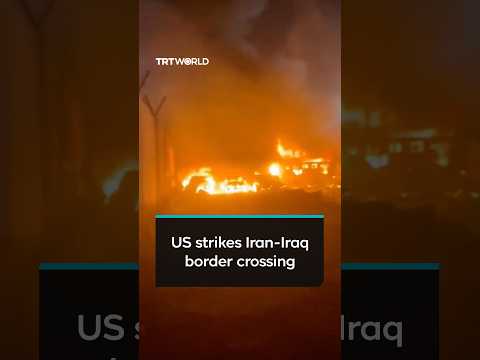
- The US has completed its 13th consecutive night of strikes on Iran, continuing military operations amid ongoing tensions.
- At least four people were killed following strikes on several areas in Iran early Friday, particularly in the western coastal province of Khuzestan.
The U.S. military has conducted its 13th consecutive night of strikes on Iran, resulting in at least four fatalities in the western coastal province of Khuzestan.123
Iran's military claimed responsibility for launching attack drones at U.S. targets in Bahrain and Jordan, escalating the conflict further.
President Trump has indicated that damage to ships will be compensated using Iranian assets controlled by the U.S., a statement that has drawn sharp criticism from Iranian officials.
Iranian Foreign Minister Abbas Araghchi condemned the U.S. stance, stating, “seizing another nation’s assets to pay for unrelated future claims is an incendiary precedent.”

In response to the ongoing military actions, Iran has rejected a ceasefire deal proposed by the Iraqi prime minister, emphasizing that they are not interested in temporary agreements that do not address control over the strategic Strait of Hormuz.
As tensions rise, oil prices have surged, with Brent crude settling above $100 per barrel for the first time in two months, following attacks on Saudi ships by Houthi rebels.
The United Kingdom has also expressed concerns, stating it will protect its territory from potential Iranian retaliation against U.S. bombers operating from UK bases.
Four killed, five injured in US missile strike near Iran’s Ahvaz.
“Iran rejected a US ceasefire deal presented by Iraqi PM, saying it was not interested in a temporary deal that left the Strait of Hormuz unresolved. Meanwhile, Brent crude settled above $100 a barrel after Houthi rebels targeted Saudi ships in the Red Sea, rising 7% to $100.69.”