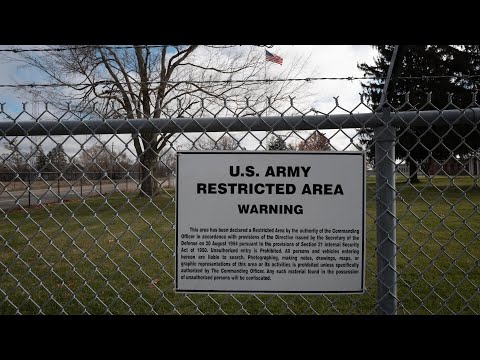
- Federal officials on Tuesday urged residents near an Iowa ammunition plant to evacuate ahead of a controlled detonation of lead explosives Wednesday, acknowledging the risks of a plan that has been met with safety and environmental concerns.
- The blast, inside reinforced concrete bunkers, could spread lead plume as far as 100 miles from the site, prompting the American Lung Association to advise staying indoors for one to two days and the Health & Human Services Department to recommend evacuation for children and pregnant women from the plume's path into neighboring Missouri.
Federal officials have urged residents near an Iowa ammunition plant to evacuate ahead of a controlled detonation of five tons of lead azide, an unstable explosive, scheduled for Wednesday morning. The detonation, which has faced legal challenges, is intended to safely dispose of the hazardous material.1
Concerns about the detonation have escalated, particularly regarding the potential for a toxic plume of lead dust to spread up to 100 miles from the site. The American Lung Association has advised those near the blast to remain indoors for one to two days afterward, while the Health & Human Services Department has recommended that children and pregnant women evacuate from the plume's path, which could extend into neighboring Missouri.23
The lead azide is so unstable that it risks detonating on its own, especially with falling temperatures in Iowa increasing the likelihood of an uncontrolled explosion. Such an event could lead to more dangerous and unpredictable outcomes, potentially causing worse lead pollution.

Residents have expressed anger and alarm over the lack of clear information and poor communication from the Army regarding the detonation. The situation has even drawn the attention of President Donald Trump, who has reached out to the incoming Democratic governor-elect, Rob Sand, regarding the potential fallout from the operation.
Despite these concerns, the detonation is set to proceed with court approval, taking place inside reinforced concrete bunkers to mitigate risks.
“The blast inside reinforced concrete bunkers could send a lead plume up to 100 miles, prompting the American Lung Association to advise staying indoors for one to two days. The Health & Human Services Department recommends evacuation for children and pregnant women from the path into Missouri.”