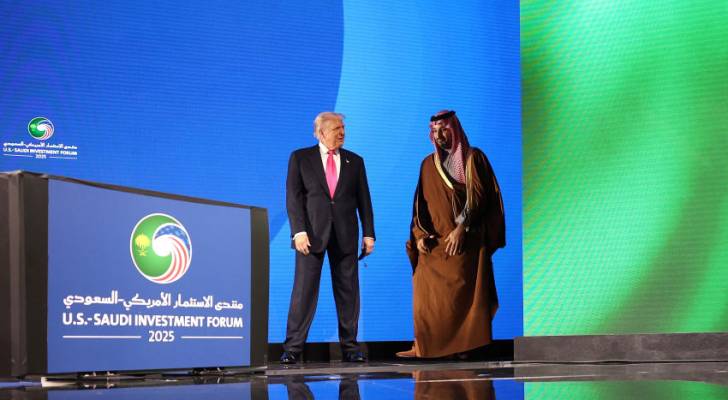
- The US Department of Energy announced that the US and Saudi Arabia had reached an agreement on a thirty-year civil nuclear deal, also called the '123 Agreement', which will meet Saudi energy needs.
- Trump stated that the deal was 'totally tied' to Saudis joining the Abraham Accords, which involves recognizing Israel.
- The '123 agreement' allows peaceful nuclear cooperation with other countries and is tied to the Treaty on the Non-Proliferation of Nuclear Weapons (NPT).
- The Secretary of Energy shall aggressively pursue at least 20 new 123 Agreements by the close of the 120th Congress to enable the United States nuclear industry to access new markets.
- The nuclear construction industry is likely to be more than $70 billion by 2030.
- Saudi Arabia has large reserves of uranium and has nuclear ambitions, having financed Pakistan's nuclear programme.
- The main danger for Saudi Arabia comes from Iran, not Israel, and they have cooperated with Israel in clandestine intelligence-sharing activities.
- India signed a 123 Agreement with the US in 2008, which is due to expire in 2048.
The US Department of Energy announced a landmark thirty-year civil nuclear deal with Saudi Arabia, termed the '123 Agreement', designed to fulfill the kingdom's growing energy requirements. This agreement is pivotal as it aligns with the Abraham Accords, which aim to foster peace and cooperation in the Middle East.123410
The '123 Agreement' derives its name from a section of the US Energy Act that facilitates peaceful nuclear cooperation with other nations. The deal is expected to significantly bolster the nuclear construction industry, projected to exceed $70 billion by 2030. Saudi Arabia's ambitions in nuclear energy are underscored by its substantial uranium reserves and past financial support for nuclear programs, notably in Pakistan.78
Former President Trump emphasized that the deal was 'totally tied' to Saudi Arabia's participation in the Abraham Accords, highlighting the strategic importance of this agreement in countering regional threats, particularly from Iran. The Secretary of Energy has also indicated a push for at least 20 new 123 Agreements to expand the US nuclear industry's reach into new markets.59
As the geopolitical landscape evolves, this agreement marks a significant step in US-Saudi relations and the broader dynamics of nuclear energy in the region.
“The deal allows peaceful nuclear cooperation and is linked to the Treaty on the Non-Proliferation of Nuclear Weapons. With Saudi Arabia's large uranium reserves and nuclear ambitions, the nuclear construction industry is projected to exceed $70 billion by 2030.”